The gazetteer
Places
الأماكن
Ancient ports and hill towns, holy cities and camps. Every place in Palestine carries a biography — and a name in Arabic that long predates the map it was put on.
42 places · 5 kinds · 20 with photographs
Holy cities
1
The coast
3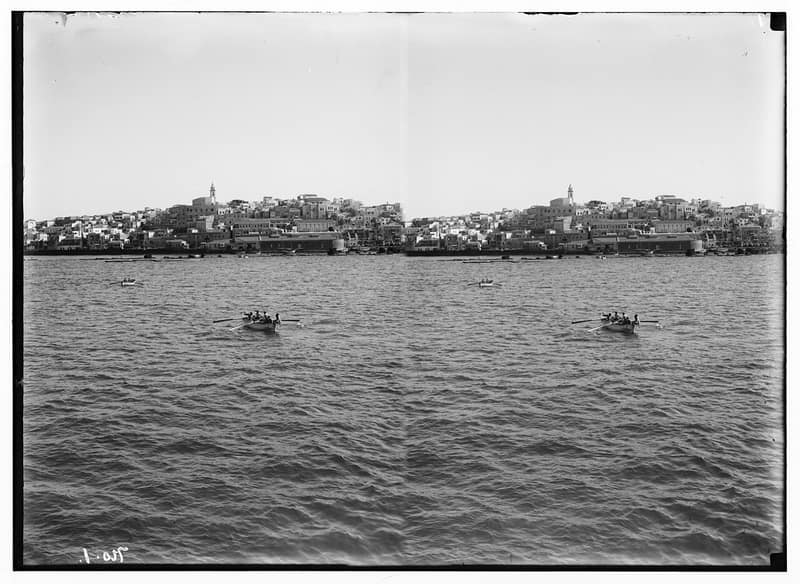
Jaffa
يافاCoastalCentral coast, historic Jaffa District
Jaffa — Yafa, the Bride of the Sea — was Palestine's gateway and its orange capital until 1948, when most of its seventy thousand people were driven out by land and sea. A Palestinian community endures in Ajami, and the city's name still opens every account of the Nakba.
Image: Matson Photo Service, Library of Congress (public domain), via Wikimedia Commons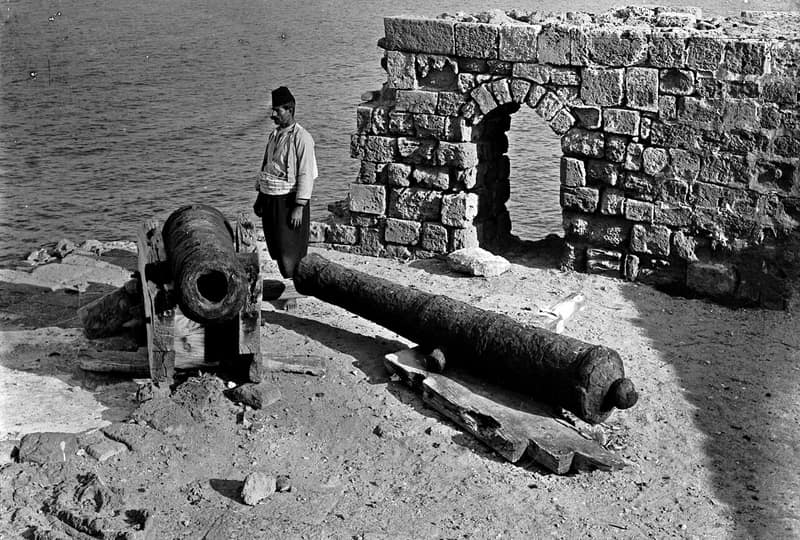
Acre
عكاCoastalWestern Galilee coast
Acre — Akka — is the walled city that broke Napoleon: a Phoenician port, the Crusaders' last capital, and an Ottoman citadel-town whose Old City is a UNESCO World Heritage site. Most of its people were expelled in 1948; among its exiled children was Ghassan Kanafani.
Image: Matson Photo Service, Library of Congress (public domain), via Wikimedia Commons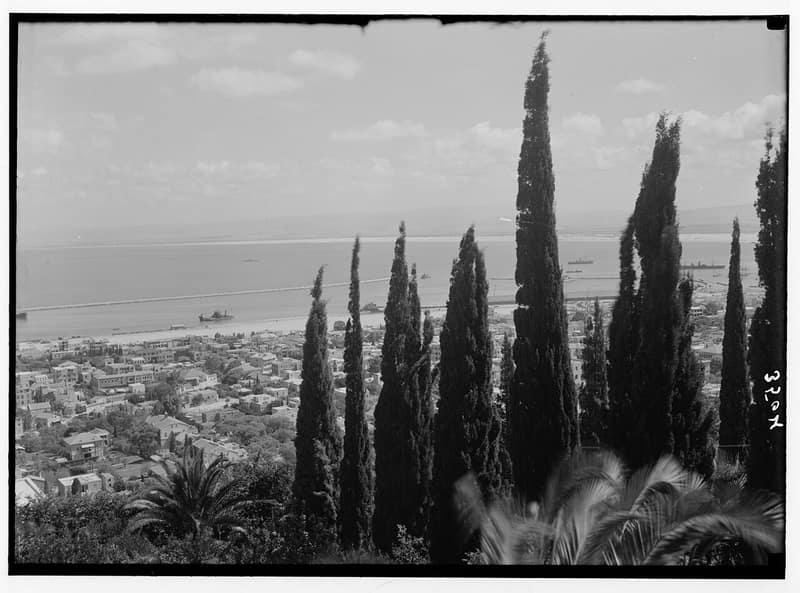
Haifa
حيفاCoastalHaifa Bay, northern coast
Haifa grew under the Mandate into Palestine's great industrial port, a mixed Arab-Jewish city climbing Mount Carmel — until April 1948 emptied most of its Palestinian neighborhoods by sea. Kanafani's Returning to Haifa made it the literature's city of return.
Image: Matson Photo Service, Library of Congress (public domain), via Wikimedia Commons
Cities
22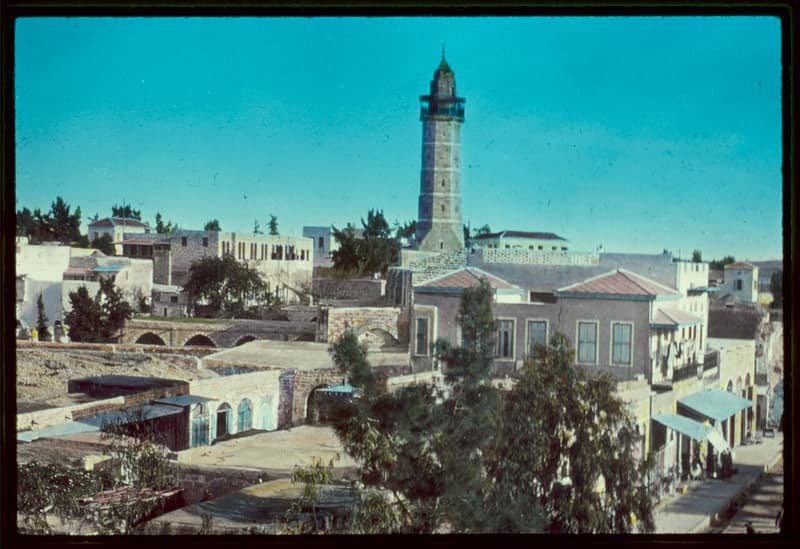
Gaza City
غزةCityGaza Strip
Gaza City is among the oldest cities on earth — Philistine stronghold, Mamluk and Ottoman provincial center, home of the Great Omari Mosque. Besieged since 2007, it has since October 2023 been subjected to destruction on a scale that has shattered its ancient fabric.
Image: Matson Photo Service, Library of Congress (public domain), via Wikimedia Commonsal-Bireh
البيرةCityRamallah and al-Bireh Governorate, central West Bank
Ramallah's Muslim twin, at the top of the Jerusalem road — a Canaanite name meaning the wells, a Crusader church, 35,910 people in the 2007 census, and the Israeli Civil Administration's West Bank headquarters sitting on 1,422 dunums of its confiscated land.
Bethlehem
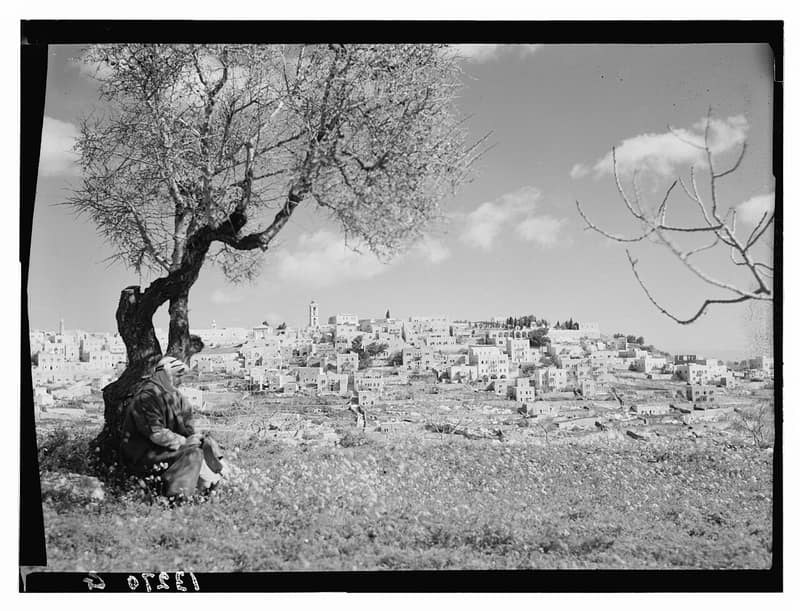
بيت لحمCityBethlehem Governorate, West Bank
Bethlehem — Beit Lahm — carries a double weight: the birthplace of Jesus beneath the sixth-century Church of the Nativity, and a town pressed between settlements and the separation wall that now seals it off from Jerusalem, five miles away.
Image: Matson Photo Service, Library of Congress (public domain), via Wikimedia Commons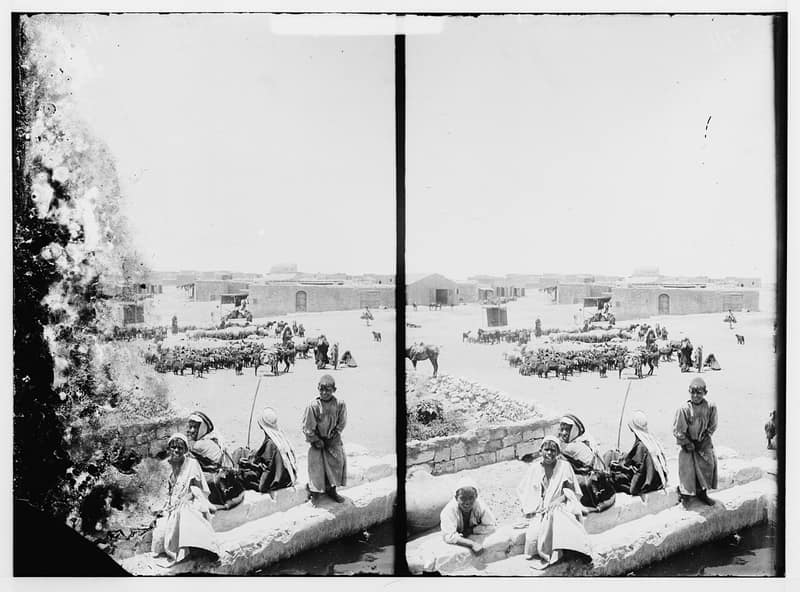
Bir al-Saba
بئر السبعCityNaqab (Negev)
Bir al-Saba — Beersheba, the 'well of the seven' — was the Ottomans' planned capital of the Naqab and the market town of its Bedouin tribes until October 1948, when the town fell and most of the Naqab's people were driven into exile. The wells remain; so does the Bedouin struggle for the land around them.
Image: Matson Photo Service, Library of Congress (public domain), via Wikimedia Commons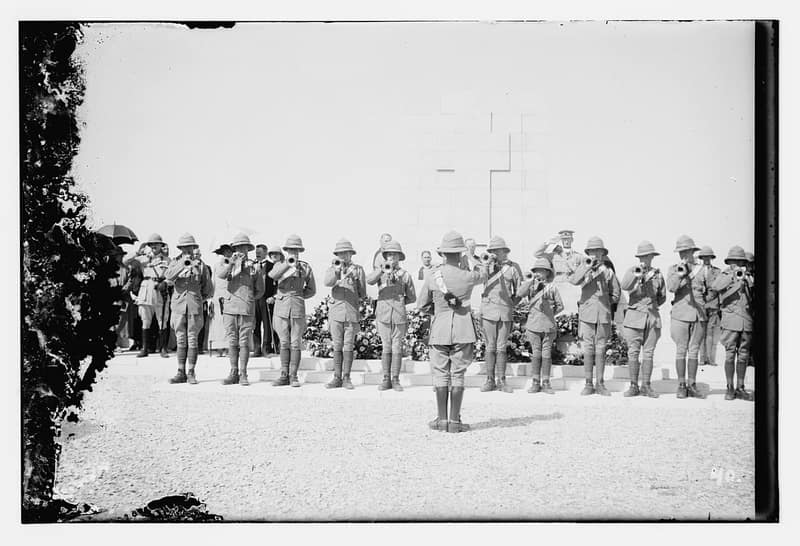
Deir al-Balah
دير البلحCityGaza Strip
Deir al-Balah — the 'Monastery of Dates' — grew around a fourth-century monastery on the ancient coast road, hid a Bronze Age cemetery beneath its soil, and after 1948 became town and refugee camp together in the narrow heart of the Gaza Strip.
Image: War cemetery consecration at Gaza–Belah, 28 April 1925; G. Eric and Edith Matson Photograph Collection, Library of Congress (public domain), via Wikimedia Commons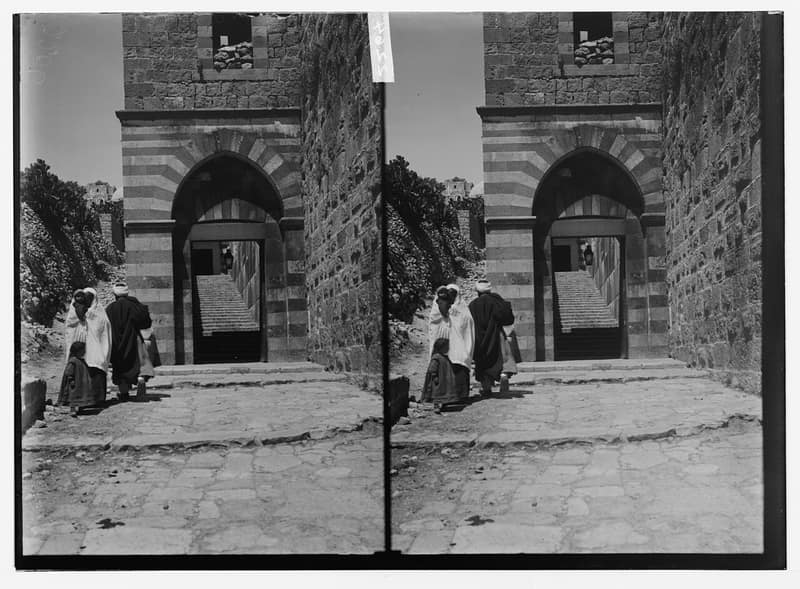
Hebron
الخليلCityHebron Governorate, southern West Bank
Hebron — al-Khalil, the city of Abraham — is one of the oldest living cities in the world, built around the Ibrahimi Mosque over the Cave of the Patriarchs, famed for its glass and its hospitality, and divided since 1997 into the sharpest microcosm of the occupation.
Image: Matson Photo Service, Library of Congress (public domain), via Wikimedia Commons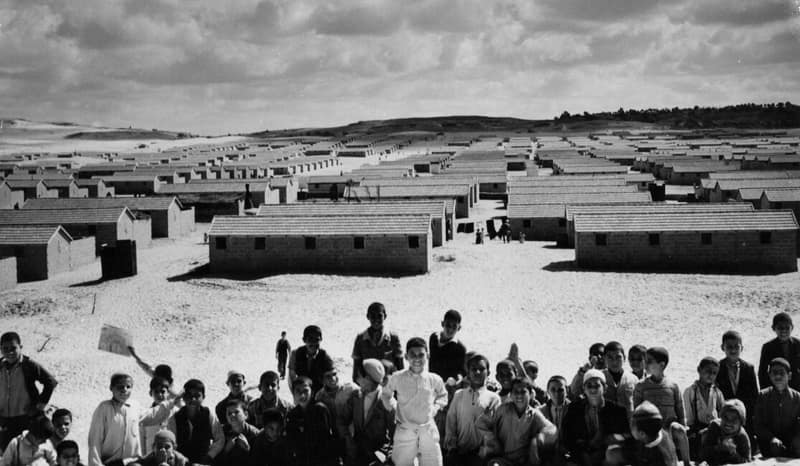
Jabalia
جبالياCityGaza Strip
Jabalia, the market town on the rise northeast of Gaza City, became after 1948 the site of the largest refugee camp in the Strip; the first intifada began in its alleys in December 1987, and the war since 2023 has returned to it again and again.
Image: Jabalia refugee camp, Gaza, 1950; photographer unknown (public domain), via Wikimedia Commons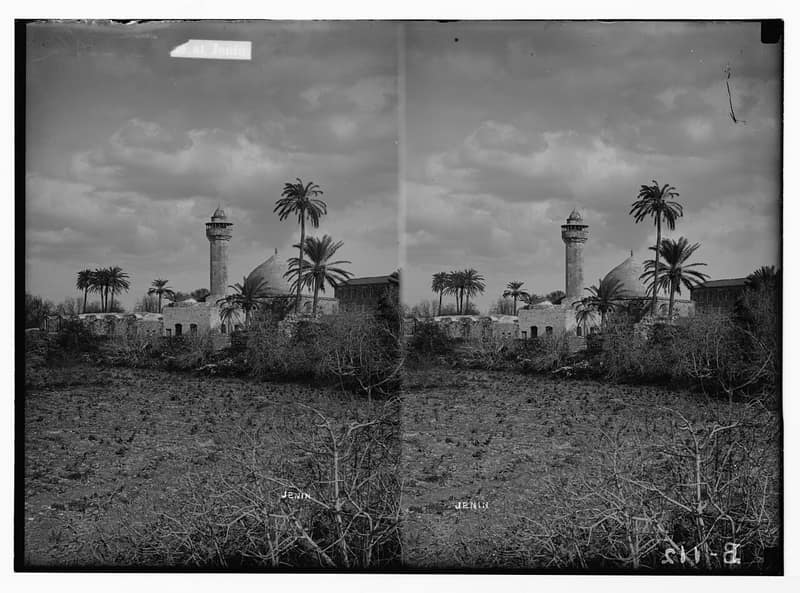
Jenin
جنينCityNorthern West Bank
Jenin guarded the pass to the Jezreel plain for millennia, defied the British in the 1936 revolt, and held off Israel in June 1948; its refugee camp, born of the Nakba, fought the army for ten days in April 2002. The raids still come. The memory holds.
Image: Matson Photo Service, Library of Congress (public domain), via Wikimedia Commons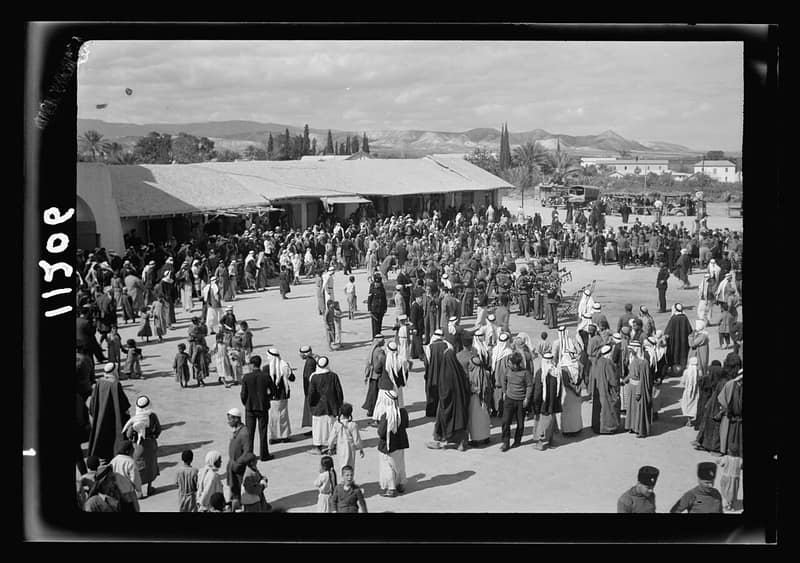
Jericho
أريحاCityJordan Valley, West Bank
Jericho — Ariha, the city of palms, some 250 metres below the sea — has lived beside its spring for roughly ten thousand years, longer perhaps than any city on earth. In living memory its valley twice filled with refugees; the camps of 1948, Aqabat Jabr and Ein as-Sultan, are still there.
Image: Matson Photo Service, Library of Congress (public domain), via Wikimedia Commons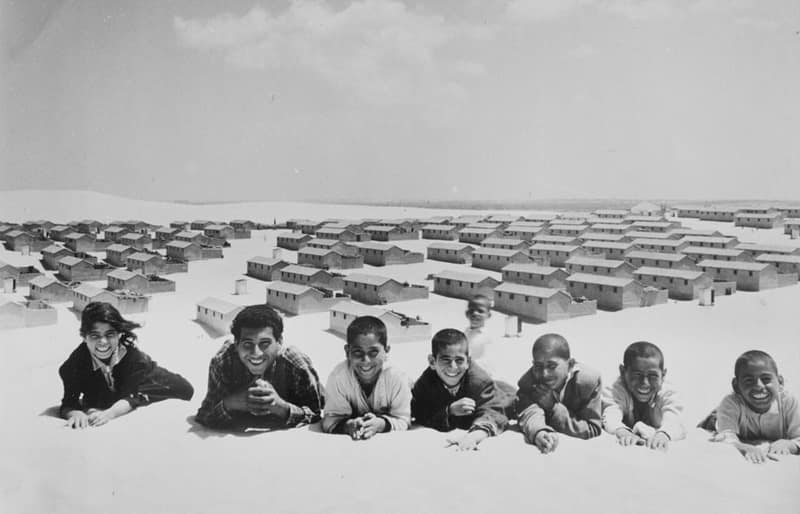
Khan Younis
خان يونسCityGaza Strip
Khan Younis began in 1387 as a Mamluk caravanserai on the Egypt road and grew into the Gaza district's second town; 1948 made its refugee camp one of the Strip's largest, November 1956 left it a massacre to mourn, and the war since 2023 has left much of the city in ruins.
Image: UNRWA photo, 1955 (public domain), via Wikimedia CommonsLydda
اللدCityCentral Palestine
A railway city of some 18,000 people, allotted to the Arab state under the partition plan, taken in the fighting of 10–12 July 1948 and emptied on the 13th. Its Monday market served the whole district; its airport was the country's international gateway; the town that remained was renamed Lod.
Nablus
نابلسCityNablus Governorate, northern West Bank
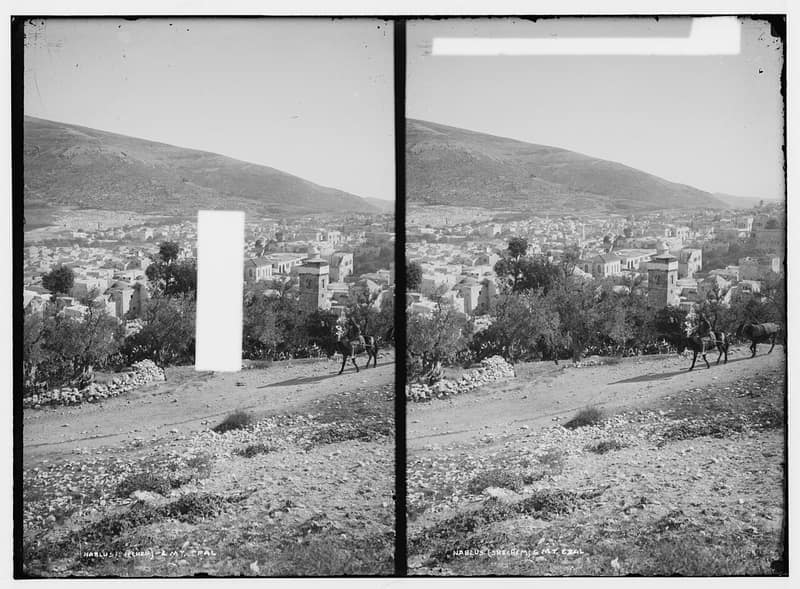
Nablus — Roman Flavia Neapolis, nestled between Mount Gerizim and Mount Ebal — is the northern West Bank's proud commercial heart, famed for its Old City, its olive-oil soap and its knafeh, and shadowed by Balata, the West Bank's most populous refugee camp.
Image: Matson Photo Service, Library of Congress (public domain), via Wikimedia Commons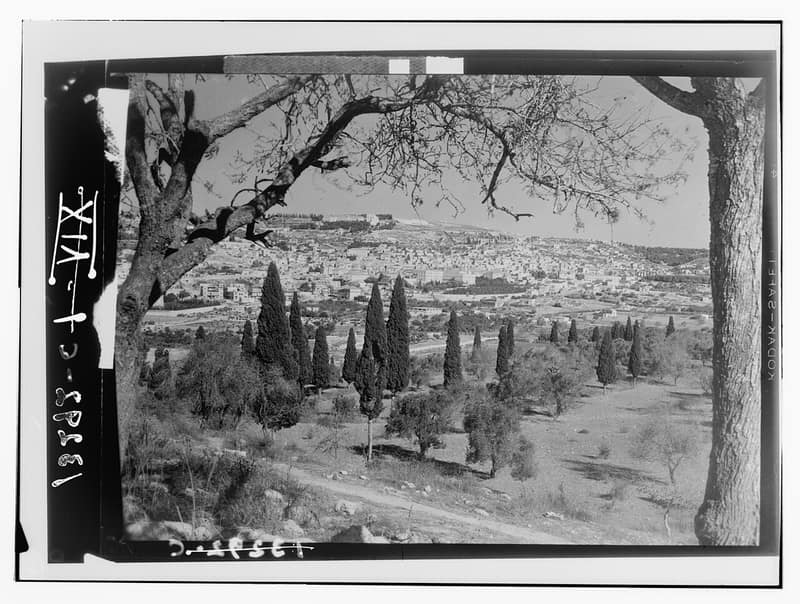
Nazareth
الناصرةCityLower Galilee
Nazareth — al-Nasira, the childhood home of Jesus — is the city that survived 1948: ordered emptied, it was spared by a single officer's refusal, and grew into the largest Palestinian city in Israel and the cultural capital of the Palestinians of '48.
Image: Matson Photo Service, Library of Congress (public domain), via Wikimedia CommonsQalqilya
قلقيليةCityWest Bank
Qalqilya, the orange-growing market town at the western edge of the West Bank, was gutted in 1967 and rebuilt by its returning people; since 2003 the separation wall has closed around it on three sides, leaving a whole city a single gate.
Rafah
رفحCityGaza Strip
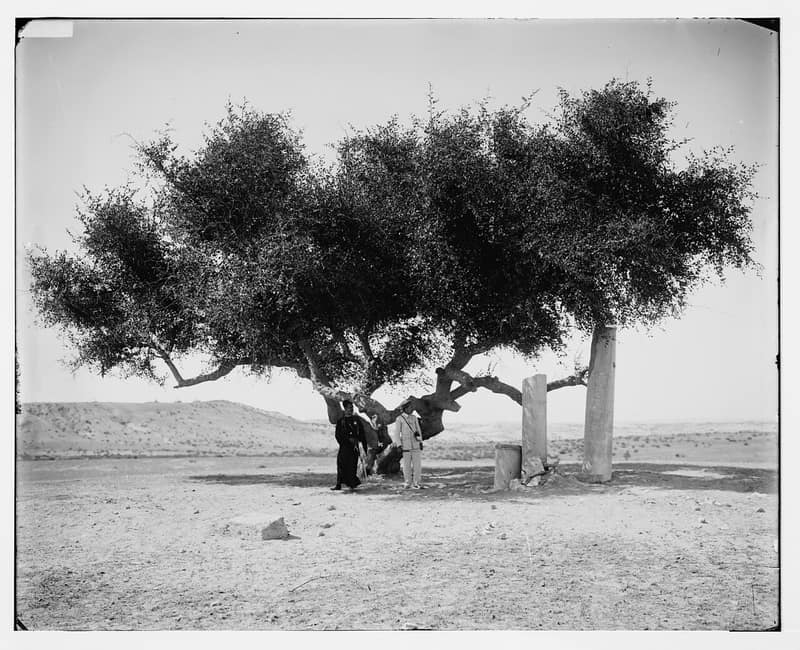
Rafah is ancient Raphia, the border town where armies have met since the pharaohs; 1948 filled it with refugees, 1956 left it a massacre to mourn, and the 2024 assault on the city — then sheltering over a million displaced people — was ordered halted by the International Court of Justice.
Image: G. Eric and Edith Matson Photograph Collection, Library of Congress (public domain), via Wikimedia Commons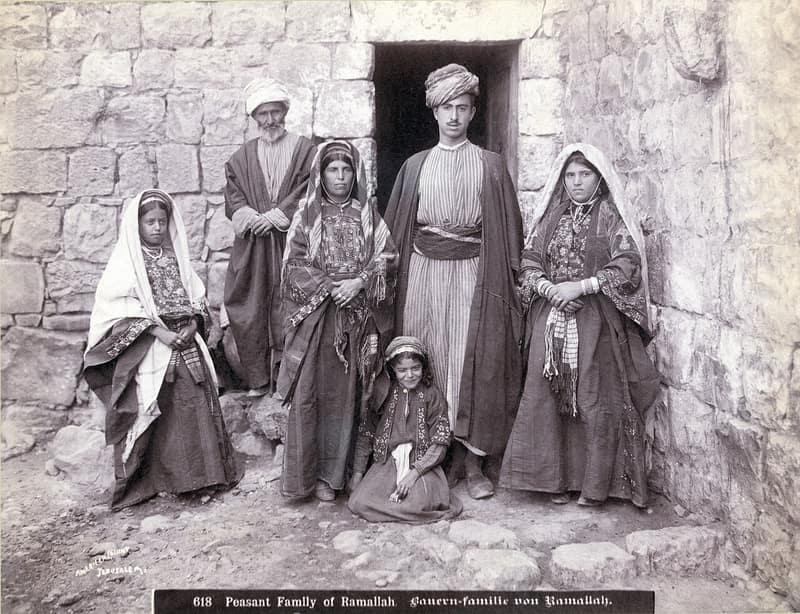
Ramallah
رام اللهCityRamallah and al-Bireh Governorate, central West Bank
Ramallah, twin city of al-Bireh in the hills north of Jerusalem, grew from a sixteenth-century Christian village into the de facto administrative capital of Palestine — seat of the Authority, home of its cultural life, and the burial place of Mahmoud Darwish.
Image: American Colony (Jerusalem) Photo Dept., Library of Congress (public domain), via Wikimedia CommonsRamle
الرملةCityCentral Palestine
The one major city in Palestine founded by Muslim rulers rather than inherited from earlier civilisations — built early in the eighth century as the capital of Jund Filastin, and named for the sand it stood on. Assigned to the Arab state in 1947, it was occupied on 12 July 1948 and its people expelled the following day.
Safed
صفدCityUpper Galilee
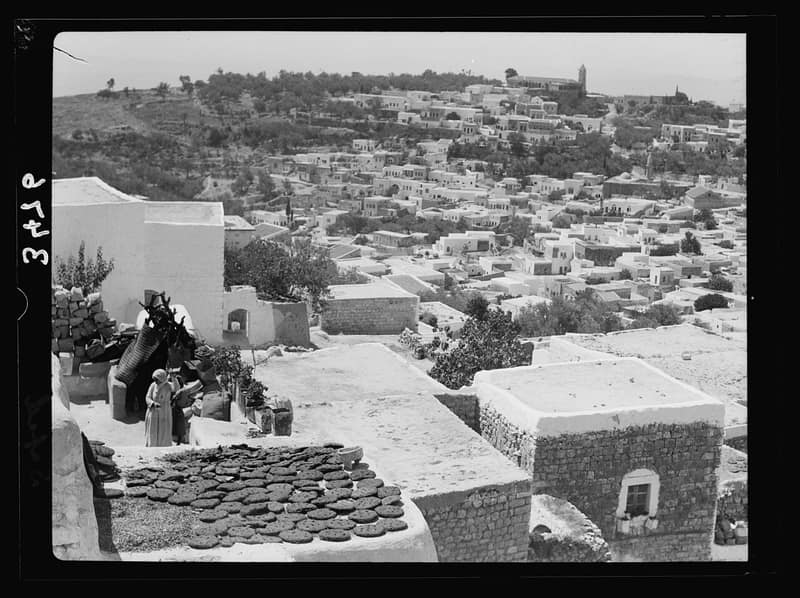
Safed — Safad, the city on the hill — was a Galilee town of mystics, weavers and rebels until May 1948, when nearly all of its roughly ten thousand Palestinians fled or were driven out as the town fell. Its stone Arab quarter survives as an artists' colony, and its refugees carry Safad with them still.
Image: Matson Photo Service, Library of Congress (public domain), via Wikimedia CommonsSakhnin
سخنينCityLower Galilee
A Galilee town in the valley below the Battuf. Three of the six people killed on the first Land Day, 30 March 1976, were from Sakhnin, and the town was the centre of the day's heaviest confrontations. The general strike that produced them was the first time since 1948 that the Palestinians inside Israel acted as a national collective.
Tiberias
طبرياCitySea of Galilee
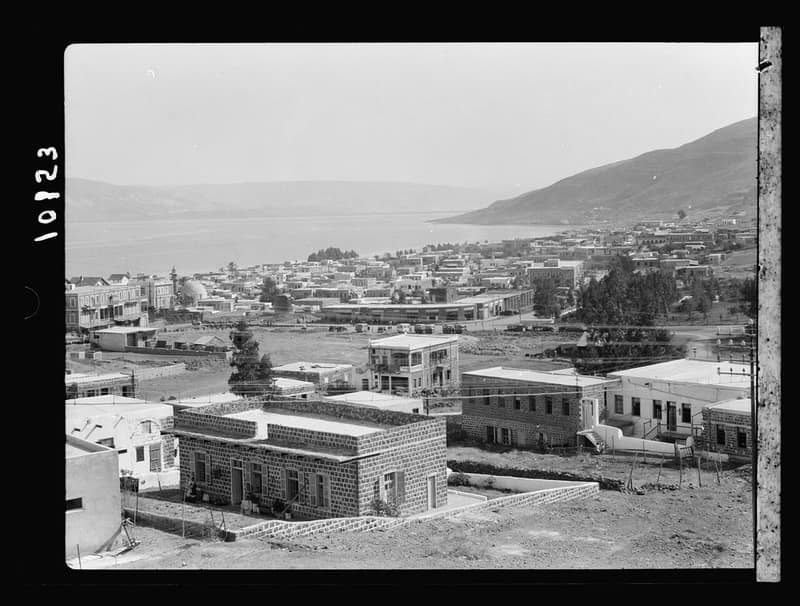
Tiberias — Tabariyya — was sacred to Jews since the Sanhedrin sat by its shore, and Palestine's most evenly mixed city, until April 1948, when its entire Arab population was convoyed out in two days. The childhood town of Fayez Sayegh; most of its Ottoman old city was later demolished.
Image: Matson Photo Service, Library of Congress (public domain), via Wikimedia Commons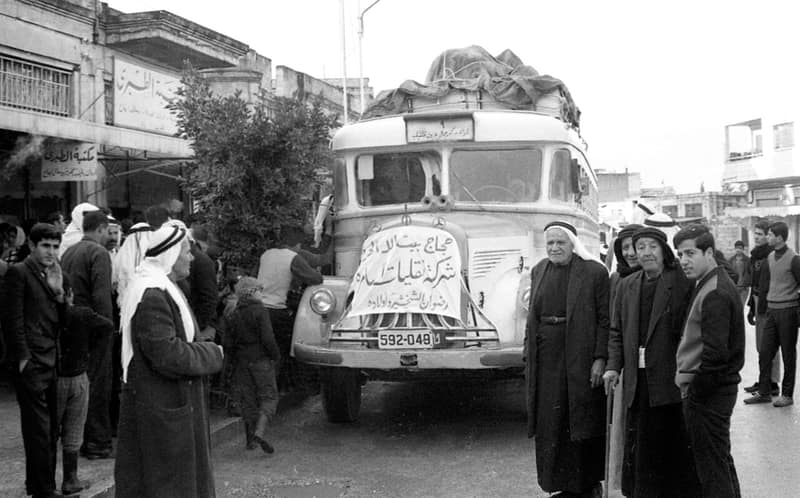
Tulkarm
طولكرمCityWest Bank
Tulkarm — the 'Mount of the Vineyard' — was the market town where the Samarian hills meet the coastal plain, until the 1949 armistice line took most of its fields; its refugee camp is among the largest in the West Bank, and its streets have known every army of the last century.
Image: Pilgrims setting out from Tulkarem on the annual hajj to Mecca, 1971; Dan Hadani collection, National Library of Israel (CC BY 4.0), via Wikimedia CommonsUmm al-Fahm
أم الفحمCityWadi Ara, the Triangle
Umm al-Fahm was not conquered in 1948 — it was handed over. Under the armistice signed at Rhodes in April 1949 the Little Triangle passed from Iraqi-held ground to Israel, and its people woke up as citizens of a state they had not fought for, under military rule, with most of their land taken.
Towns
10al-Araqib
العراقيبTownNaqab (Negev)
A Bedouin village north of Bir al-Saba that Israel does not recognise and has demolished, by the Negev Coexistence Forum's count, more than 181 times since July 2010 — the two hundred and tenth demolition came in 2022. Its people were moved off in 1953 for six months of army training and never permitted back; they have never accepted that they left.
ar-Ram
الرامTownJerusalem Governorate, West Bank
A town of 18,356 people on the Jerusalem–Ramallah road, cut from the city it was a suburb of by six kilometres of wall. ARIJ's field survey found that around 20,000 people had left ar-Ram since 2000 — more than the town's own recorded population.
Beit Hanina
بيت حنيناTownJerusalem Governorate, occupied East Jerusalem
The next town north of Shu'fat on the Ramallah road, and the one the wall divided by name: Beit Hanina inside the Israeli-declared municipal boundary, Beit Hanina al-Balad — the old village it grew out of — left on the other side of the barrier, six kilometres and a checkpoint away from its own fields.
Beit Hanoun
بيت حانونTownGaza Strip
Beit Hanoun, the farming town at Gaza's northern border, fed its people from citrus groves and fields older than memory; the shelling of November 2006 made its name known worldwide, and the war since 2023 has levelled much of it.
Kufr 'Aqab
كفر عقبTownJerusalem Governorate, occupied East Jerusalem
The last Jerusalem address before Ramallah, and the clearest thing the wall ever said. All of Kufr 'Aqab lies inside the municipal boundary Israel declared in 1967; the barrier leaves 92 per cent of it outside. Building inspectors have not entered since 2005, and by 2012 the neighbourhood accounted for 83 per cent of all new construction in the whole city of Jerusalem.
Masafer Yatta
مسافر يطاTownSouth Hebron Hills, West Bank
A cluster of hamlets of cave-dwellers and shepherds in the South Hebron Hills, declared a live-fire training area — Firing Zone 918 — in the 1980s. In May 2022 Israel's High Court ruled there was no legal barrier to expelling the roughly 1,150 people who live there.
Qalandiya
قلندياTownJerusalem Governorate, West Bank
One name, four things: a village of about a thousand people, a refugee camp of 16,344 registered refugees, an airport that was Jerusalem's and is now a military camp, and the busiest checkpoint in the West Bank. Ninety-eight per cent of the village's land is Area C; the wall isolates 59 per cent of it.
Sheikh Jarrah
الشيخ جرّاحTownOccupied East Jerusalem
Two kilometres north of the Old City, on the road that becomes the road to Ramallah: the quarter of Jerusalem's Muslim notables, and the place where refugee families rehoused by Jordan and UNRWA in 1956 have been evicted a second time — under an Israeli law that lets Jews reclaim pre-1948 property in East Jerusalem while denying Palestinians the equivalent right inside Israel.
Shu'fat
شعفاطTownJerusalem Governorate, occupied East Jerusalem
A village on the ridge north of Jerusalem, on the Ramallah road, swept inside the municipal boundary Israel declared in 1967 — and then cut in half by the wall. Shu'fat holds the only refugee camp inside that boundary: 16,419 registered refugees on 0.203 square kilometres, holding Jerusalem residency, paying Jerusalem taxes, and crossing a checkpoint to reach the city they legally live in.
Umm al-Hiran
أم الحيرانTownNaqab (Negev)
A Bedouin village of Israeli citizens in the Naqab, marked for demolition so that a Jewish town called Hiran could be built on the same ground. On 18 January 2017 police shot dead a local teacher, Yaqub Musa Abu al-Qi'an, during the demolition operation, and then called him a terrorist.
Refugee camps
6Balata Camp
مخيّم بلاطةRefugee campNablus, West Bank
Laid out in 1950 on rented farmland east of Nablus for 4,484 refugees, Balata became the most crowded refugee camp in the West Bank — a quarter square kilometre holding the descendants of some 111 destroyed towns and villages, and the place where organised refugee-rights politics in the West Bank began.
Dheisheh Camp
مخيّم الدهيشةRefugee campBethlehem, West Bank
Established in 1949 on a third of a square kilometre south of Bethlehem, Dheisheh gathered the survivors of as many as 79 villages from six subdistricts — Hebron, Jerusalem, Ramla, Gaza, Bir al-Sabi' and Jaffa; Zakariyya, Bayt Nattif, Ras Abu Ammar, al-Walaja and al-Qabu among them — into one of the most politically formidable camps in Palestine.
Jerash Camp (Gaza Camp)
مخيّم جرشRefugee campJerash, Jordan
Built in March 1968 for 11,500 Palestinians driven out of Gaza in the June war, Jerash camp is known in Jordan simply as the Gaza Camp. Nearly nine in ten of its residents come from the Gaza Strip — and unlike other Palestinians in Jordan, they hold no citizenship, which has made it the poorest camp in the kingdom.
Nahr el-Bared Camp
مخيّم نهر الباردRefugee campNorth Lebanon
Lebanon's second-largest Palestinian camp, founded in December 1949 for refugees from the Galilee, was destroyed in 2007 in four months of fighting between the Lebanese army and Fatah al-Islam. Nearly 6,000 homes and businesses were wrecked or badly damaged, and the camp has still not been fully rebuilt.
Shatila Camp
مخيّم شاتيلاRefugee campBeirut, Lebanon
A tent pitched on Beirut's outskirts by one man from Majd al-Kroum in 1949 became the camp whose name the world learned in September 1982. Shatila is the densest Palestinian camp in Lebanon: barely 70,000 square metres, destroyed twice, rebuilt vertically, and now shared with Syrians, Lebanese and migrant workers.
Yarmouk Camp
مخيّم اليرموكRefugee campDamascus, Syria
Eight kilometres south of Damascus, Yarmouk was the capital of the Palestinian diaspora in Syria — its streets named for Haifa, Safad, Lubya and Jerusalem, home before 2011 to some 160,000 Palestinian refugees. The Syrian war emptied it — Al Jazeera counts some 160,000 forced to flee over its course — and those who stayed endured siege and starvation.