Ramallah
رام الله
Ramallah, twin city of al-Bireh in the hills north of Jerusalem, grew from a sixteenth-century Christian village into the de facto administrative capital of Palestine — seat of the Authority, home of its cultural life, and the burial place of Mahmoud Darwish.
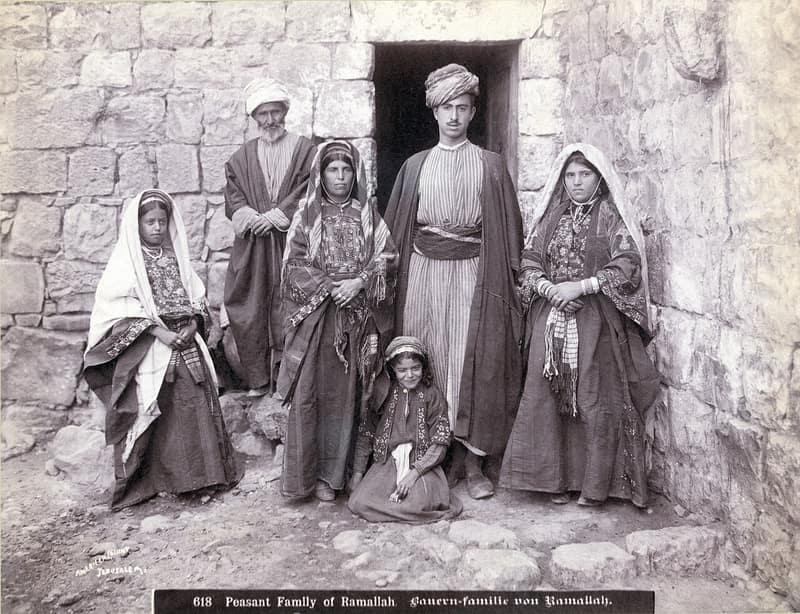
Ramallah is young by Palestinian standards. An ancient tell nearby — Tall al-Nasbah, the probable site of biblical Mizpah — testifies to older settlement, but the town itself was founded in the sixteenth century by Christian families who crossed the Jordan from Karak. Set on a breezy crest of the hills some 870 metres above the sea, it long served as a summer resort; historically Christian-majority, it grew together with its Muslim twin, al-Bireh, into a single urban whole.
The twentieth century remade it three times. Under the British Mandate it was a prosperous market town; under Jordanian rule after 1948 it absorbed refugees and swelled; after 1967 it fell under Israeli occupation. Then came Oslo: in the 1990s Ramallah became the seat of the Palestinian Authority — its ministries and presidency, the Muqata’a compound with Yasser Arafat’s tomb, the representative offices of foreign states, the headquarters of organizations and banks. With Jerusalem closed to most West Bank Palestinians, Ramallah became, by default, the administrative capital of Palestine.
It also became the country’s cultural capital in exile-in-place: the cafés and restaurants of al-Tireh and the old town, the Khalil Sakakini Cultural Center in its restored Ottoman mansion, the Al-Kasaba theatre, galleries and publishers. On the hill of al-Masyoun stands the Mahmoud Darwish Museum, its garden holding the tomb of the national poet, who returned from exile in the 1990s, lived his last years in the city, and was buried here in 2008 on a rise overlooking the road toward Jerusalem.
Ramallah is the Palestinian present tense: ambitious and crowded, cosmopolitan and surveilled, ringed by checkpoints and raided periodically, yet building its institutions and burying its poets with state honors. It holds the space of a capital — provisionally, stubbornly — until the question of Jerusalem is settled.
Sources
Cited works
2- britannica.com — Ramallah(opens in a new tab)https://www.britannica.com/place/Ramallah
- ramallah.ps — The Mahmoud Darwish Museum(opens in a new tab)https://www.ramallah.ps/en/Article/9295/The-Mahmoud-Darwish-Museum
Cite this page
Every claim above carries its sources — citation is the point.
- Chicago
“Ramallah.” Places, FALASTEEN.AI. Accessed 22 August 2026. https://falasteen.ai/places/ramallah.- MLA
“Ramallah.” Places, FALASTEEN.AI, 2026, https://falasteen.ai/places/ramallah. Accessed 22 August 2026.- BibTeX
@misc{falasteen-ramallah,
  title        = {Ramallah},
  howpublished = {\url{https://falasteen.ai/places/ramallah}},
  organization = {FALASTEEN.AI — A Living Archive for Palestine},
  year         = {2026},
  note         = {Accessed 2026-08-22}
}