FALASTEEN · The complete table of contents

Contents

الفهرس

A room of the archive

The Majlis

المجلس

The curated walks

Exhibitions

المعارض

Each exhibition takes one thread — a year, a village, a craft, a song — and walks it from first record to last poem, drawing on every collection in the archive. Enter, and go stop by stop.

Exhibitions
8
Stops in all
92
Rooms drawn on
villages (16) · figures (14) · culture (12) · timeline (9) · poets (9) · places (8) · poems (8) · testimonies (7) · glossary (4) · research (2) · books (2) · arguments (1)
Exhibition i
Now showing

Gaza: Siege and Sumud

The record of the strip

One of the oldest cities on earth, under the most documented siege of the modern era — and the people who keep teaching, writing, and reporting through it.

Stops
9
Drawn from
5 timeline events · 1 place · 1 figure · 1 poet · 1 culture entry
Enter the exhibition

Cover image: Gaza, central section. Matson Photo Service, Library of Congress (public domain), via Wikimedia Commons
Exhibition ii
Exhibition

Red Tuesday and the Songs of the Prison

Acre, 1930, and the movement that dates itself from the gallows

Three men hanged at Acre prison in June 1930, the funeral song that carried their names out of the yard, and the line Palestinian prisoners still draw from that morning to their own cells.

Stops
12
Drawn from
4 poems · 2 timeline events · 2 poets · 1 place · 1 glossary term · 1 research entry · 1 figure
Enter the exhibition

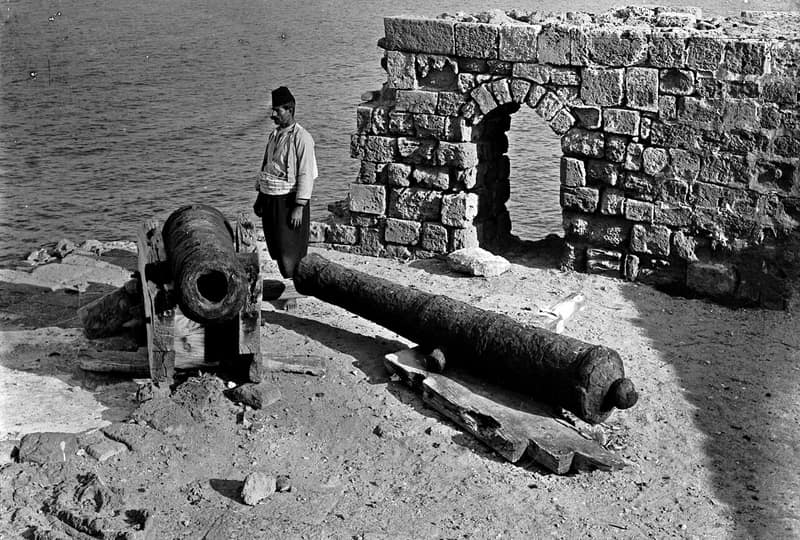
Cover image: Acre from the bay, c. 1900–1920. Matson Photo Service, Library of Congress (public domain), via Wikimedia Commons
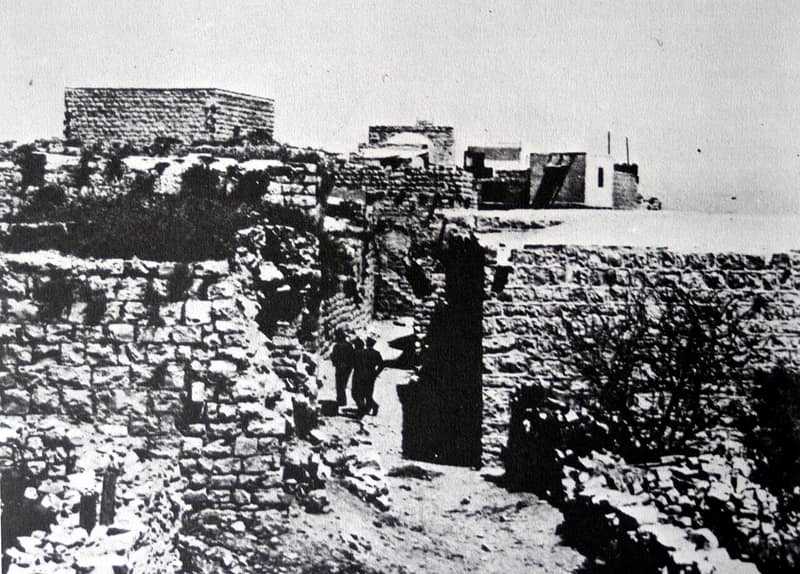
Exhibition iii
Exhibition

The Poets of Exile

A people carried by its poems

From Darwish's identity card to Alareer's kite — how Palestinian poets turned dispossession into some of the most enduring verse of the modern era.

Stops
8
Drawn from
5 poets · 3 poems
Enter the exhibition

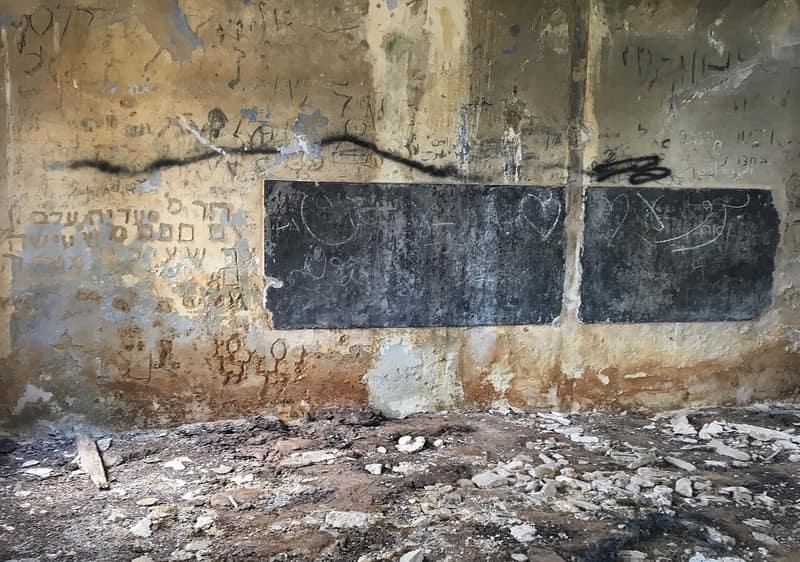
Cover image: The surviving school of al-Birwa, Darwish's village. Wafaa Khatib, CC BY-SA 4.0, via Wikimedia Commons

Exhibition iv
Exhibition

The Record of 1948

The Nakba, documented

A guided walk through the year that remade Palestine: the villages emptied, the survivors who testified, the documents that answer the denials.

Stops
8
Drawn from
2 villages · 1 timeline event · 1 glossary term · 1 testimony · 1 argument · 1 place · 1 book
Enter the exhibition

Cover image: Deir Yassin before 1949. Institute for Palestine Studies photo collection, from Walid Khalidi's Before Their Diaspora (1984), public domain, via Wikimedia Commons

Exhibition v
Exhibition

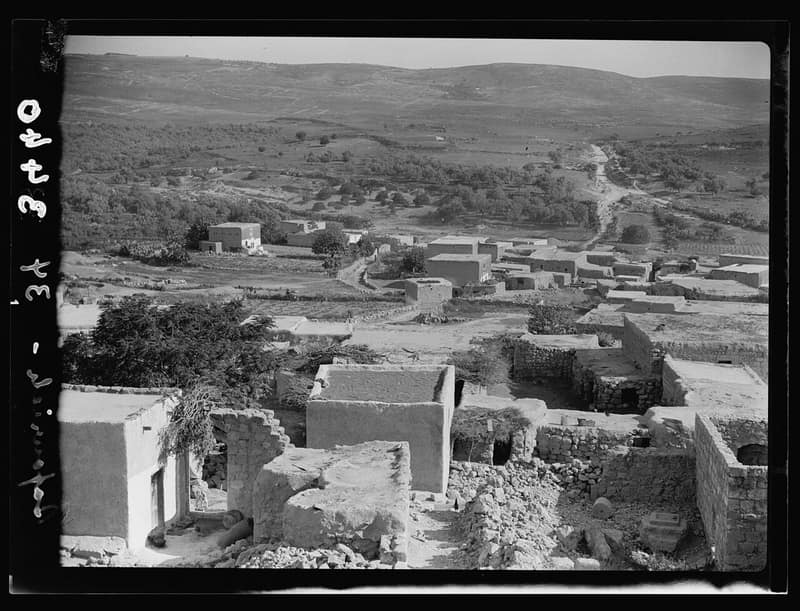
The Villages of the Galilee

Taken last, emptied fastest

The Galilee was the last part of Palestine to fall in 1948 and the part emptied most quickly. A walk through the Safad, Acre, Nazareth and Tiberias districts — and then to the people who never left, and were made absent anyway.

Stops
14
Drawn from
8 villages · 2 places · 2 testimonies · 1 glossary term · 1 timeline event
Enter the exhibition

Cover image: Saffuriyya, the largest village of the Nazareth district, before 1948. Matson Photo Service, Library of Congress (public domain), via Wikimedia Commons
Exhibition vi
Exhibition

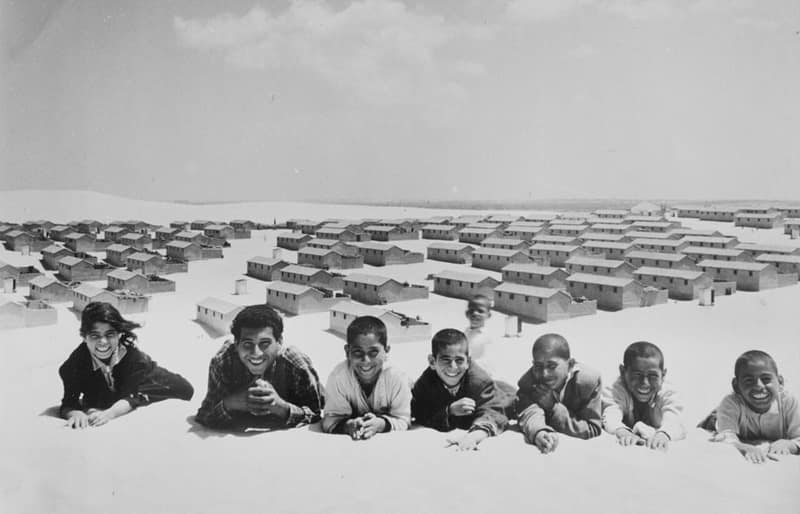
Gaza, by Name

The district before the Strip

Before Gaza was a strip it was a district: grain villages, a weaving town, orchards along the coast road. This walk names the places that were emptied into it, and the camps their people built on top of themselves.

Stops
14
Drawn from
6 villages · 3 testimonies · 3 places · 1 glossary term · 1 research entry
Enter the exhibition

Cover image: Khan Younis refugee camp, 1955. UNRWA photo (public domain), via Wikimedia Commons
Exhibition vii
Exhibition

The Women of the Movement

Organisers, prisoners, witnesses

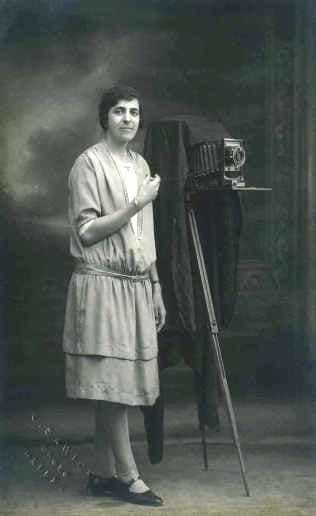
A union founded in Jerusalem in July 1965, the first woman in Fatah, a parliamentarian held in a two-metre cell — and the photographer who was already recording Palestinian life two decades before the Nakba.

Stops
13
Drawn from
9 figures · 1 testimony · 1 poet · 1 poem · 1 book
Enter the exhibition

Cover image: Karimeh Abbud, the first woman photographer in Palestine (1893–1940). Public domain, via Wikimedia Commons

Exhibition viii
Exhibition

What a People Made

Thread, soap, glass, bread, story, step

Two Palestinian practices sit on UNESCO's Representative List of the Intangible Cultural Heritage of Humanity; neither of them needed the certificate. A walk through the things Palestinians make, and the people who kept the record of how.

Stops
14
Drawn from
11 culture entries · 3 figures
Enter the exhibition

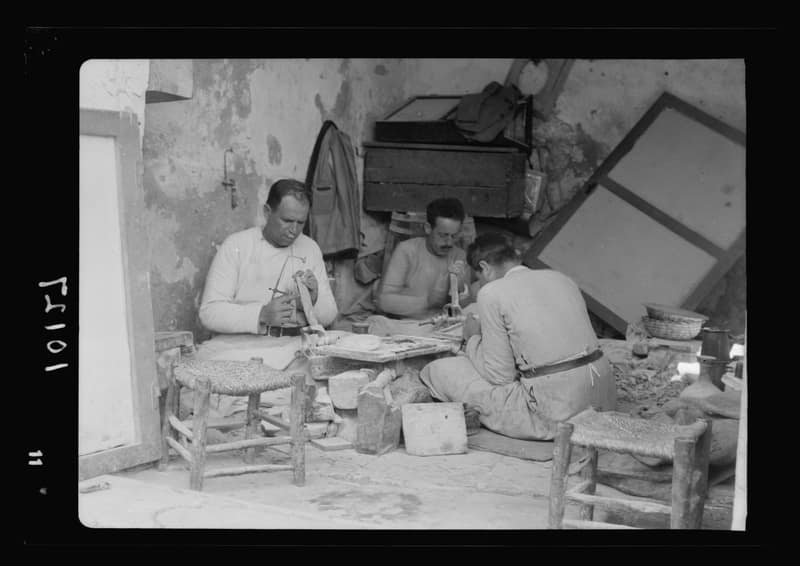
Cover image: Mother-of-pearl workers, Bethlehem. Matson (G. Eric and Edith) Photograph Collection, Library of Congress (public domain), via Wikimedia Commons
An exhibition here is what it is in a museum: a curated route through holdings that already stand on their own. Every stop is a full record elsewhere in the archive — a place, a poem, a dated event — and each keeps its own sources. The exhibition only supplies the order and the thread.

Browse the full archive →