Exhibition 8 of 8
What a People Made
Thread, soap, glass, bread, story, step
Two Palestinian practices sit on UNESCO's Representative List of the Intangible Cultural Heritage of Humanity; neither of them needed the certificate. A walk through the things Palestinians make, and the people who kept the record of how.
14 stops · walked in order
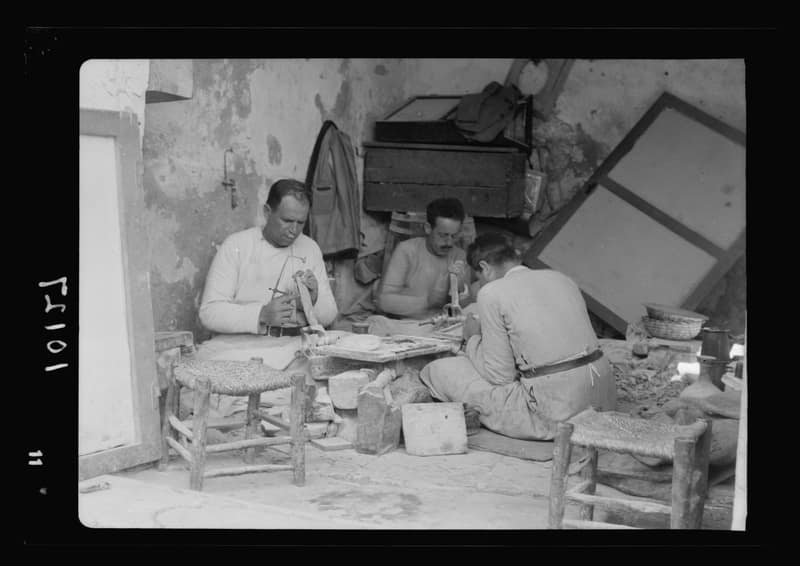
Cover image: Mother-of-pearl workers, Bethlehem. Matson (G. Eric and Edith) Photograph Collection, Library of Congress (public domain), via Wikimedia Commons
The Palestinian objects most often reproduced abroad — the embroidered dress, the checkered scarf, the soap, the glass — are usually shown as emblems. They were first of all products: made to a standard, by named workshops and named families, sold in identifiable markets, and answerable to the economics of the places that made them. This exhibition walks through the making rather than the symbolism.
Two of the practices here carry UNESCO inscriptions, which is useful mainly as external corroboration of what the practitioners already knew. The Palestinian Hikaye was inscribed on the Representative List of the Intangible Cultural Heritage of Humanity in 2008; UNESCO’s own description records that it is “a narrative expression practised by women,” told on winter evenings to small groups of women and children, and that men rarely attend because it is considered inappropriate. The art of embroidery in Palestine followed in 2021, described as a village practice in which “women gather in each other’s homes to practise embroidery and sewing, often with their daughters,” where pattern and colour communicate the wearer’s region, marital status and means. Both entries describe transmission between women, in houses, without institutions — which is precisely the kind of knowledge a dispossession is most likely to break.
That is what makes the collectors and the recorders part of the making rather than a footnote to it. Widad Kawar assembled more than two thousand Palestinian and Jordanian dresses over fifty years, and the collection matters because 1948 scattered the villages whose grammar the dresses encoded: without the record, a Ramallah chest panel and a Bethlehem couched-gold panel become simply old cloth. Rim Banna went after the children’s songs of the Galilee for the same reason and on the same logic. Neither was preserving a relic. Both were keeping a system legible.
The crafts in the middle of this walk each have a specific industrial history and a specific injury. Nablus soap was a Levantine export industry, boiled from olive oil and stacked in drying towers, and it was reduced by earthquake, by the closing of its markets behind new borders, and by occupation. Hebron glass and Palestinian pottery survived by staying small and familial. The Armenian ceramics of Jerusalem exist because survivors of the Armenian genocide were brought to the city in 1919 to retile the Dome of the Rock and stayed to found workshops — a craft founded by refugees, in a city that would shortly produce more.
The last stops are the ones that need a crowd. A hikaye needs a room of listeners; dabke needs a line of people standing on the same ground; a zajal duel needs an audience that knows the form well enough to judge it. These are the practices that dispersal damages most directly, and they are the practices that Palestinians have most stubbornly reassembled in camps, in exile, and on stage. The exhibition is titled for what a people made. The harder claim underneath it is that the making is what the people is.
Sources
Drawn from 11 culture entries · 3 figures.
- 01
TatreezCulture
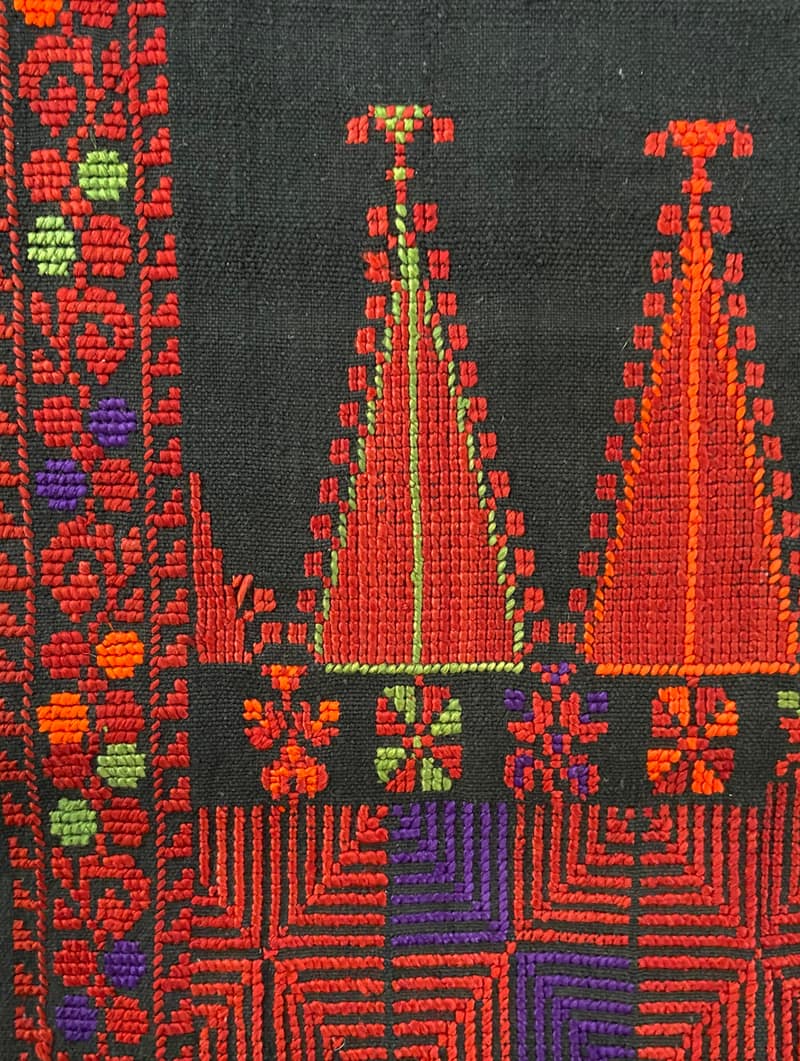
Start with the thread. UNESCO inscribed Palestinian embroidery in 2021; the practice it describes — women embroidering together, at home, with their daughters — long predates the list.
Palestinian cross-stitch embroidery, inscribed by UNESCO in 2021, encoding village, region, and memory in thread.
Open this record↑ StartStop 2 ↓ - 02
The ThobeCulture
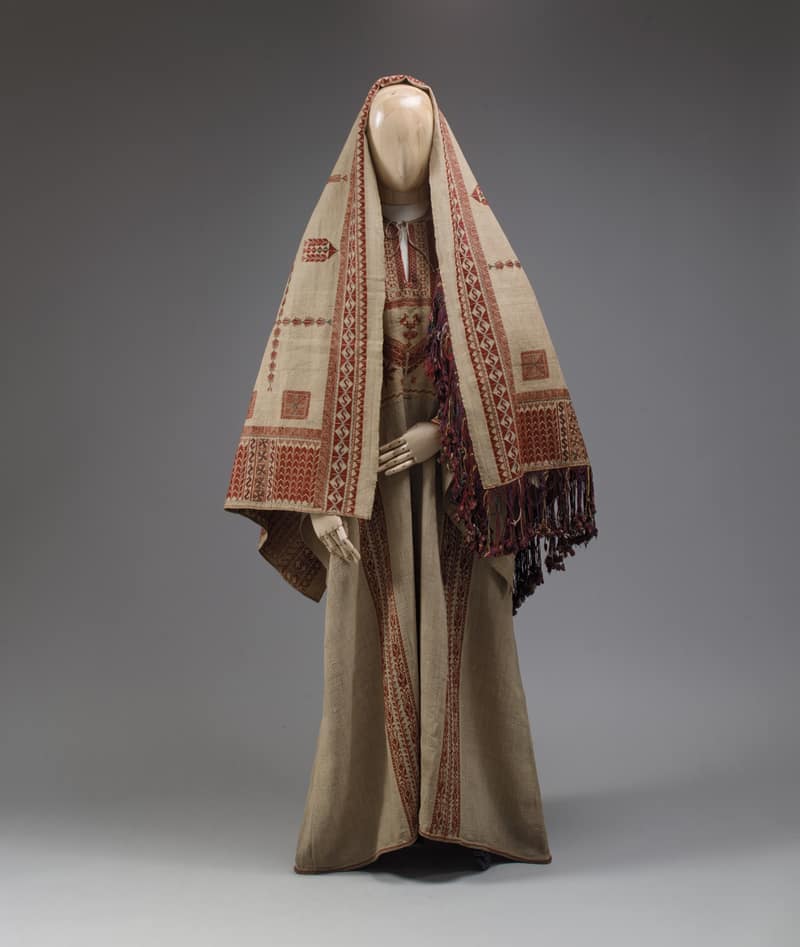
What the thread was for. The chest panel, the Ramallah coin headdress, the couched gold of Bethlehem: a dress you could read a district off.
The Palestinian dress and its regional grammar — the chest panel, the coin headdress of Ramallah, the gold-couched malak of Bethlehem — and what happened to that geography after 1948.
- 03
Widad KawarFigure
1931–
The woman who spent fifty years assembling more than two thousand dresses, because 1948 had scattered the geography that made them legible.
Over fifty years she assembled more than two thousand Palestinian and Jordanian dresses and textiles, saving a village-by-village record of dress that 1948 had otherwise scattered.
- 04
Bethlehem Mother-of-PearlCulture
Nacre carved into crosses and models of the Nativity — four centuries of Bethlehem trade, and for much of it a women's trade.
Nacre carved into crosses, rosaries, and models of the Church of the Nativity — a Bethlehem trade at least four centuries old, and for much of it a women's trade.
- 05
Nabulsi SoapCulture
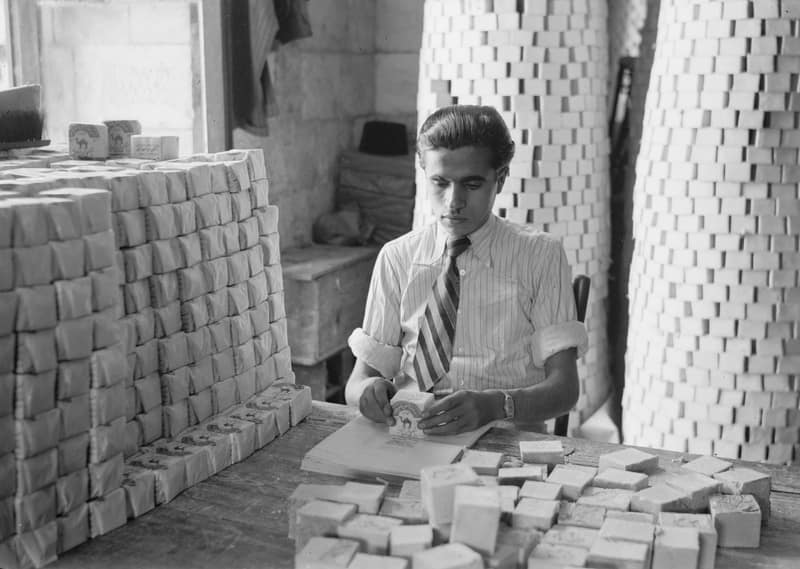
Olive oil cured into ivory cubes and stacked in drying towers. Nablus was the soap capital of the Levant; earthquake, border and occupation dismantled it.
Ivory cubes of olive oil soap stacked in drying towers — an industry that made Nablus the soap capital of the Levant, and that has been dismantled by earthquake, border, and occupation.
- 06
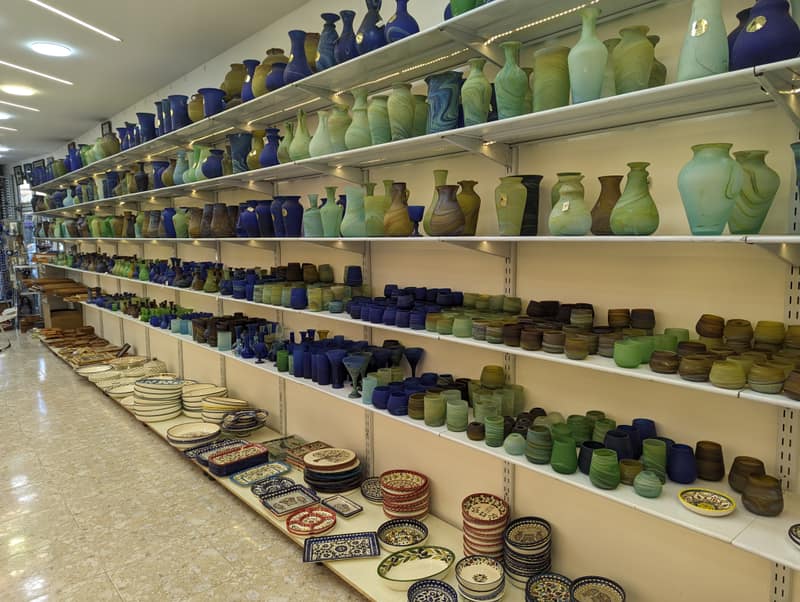
Hebron GlassCulture
Blue, green and amber, blown by hand in family workshops beside the old city — one of the few Palestinian industries still working where it always did.
The hand-blown glass of Hebron — blue, green, and amber vessels shaped for centuries in family factories beside the old city.
- 07
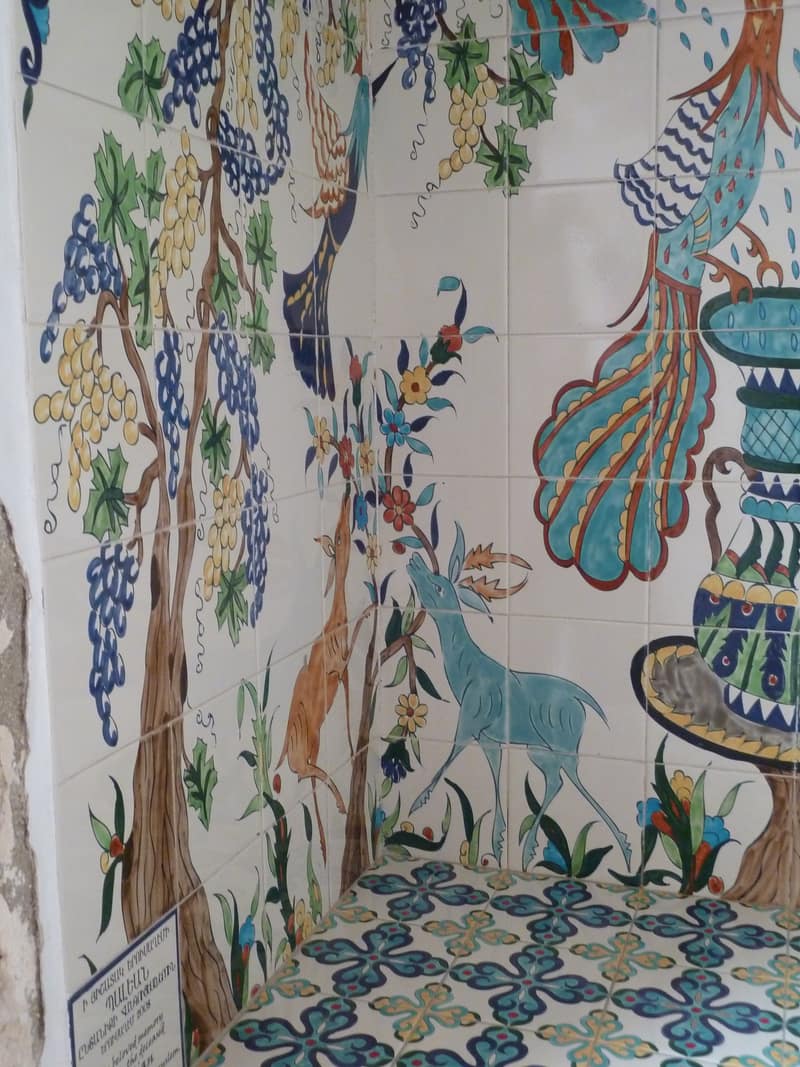
Armenian Ceramics of JerusalemCulture
A craft founded by survivors of one genocide, brought to Jerusalem in 1919 to retile the Dome of the Rock, and left behind as a Palestinian tradition.
A craft born from two catastrophes: Armenian genocide survivors brought to Jerusalem in 1919 to retile the Dome of the Rock, whose workshops became a Palestinian tradition.
- 08
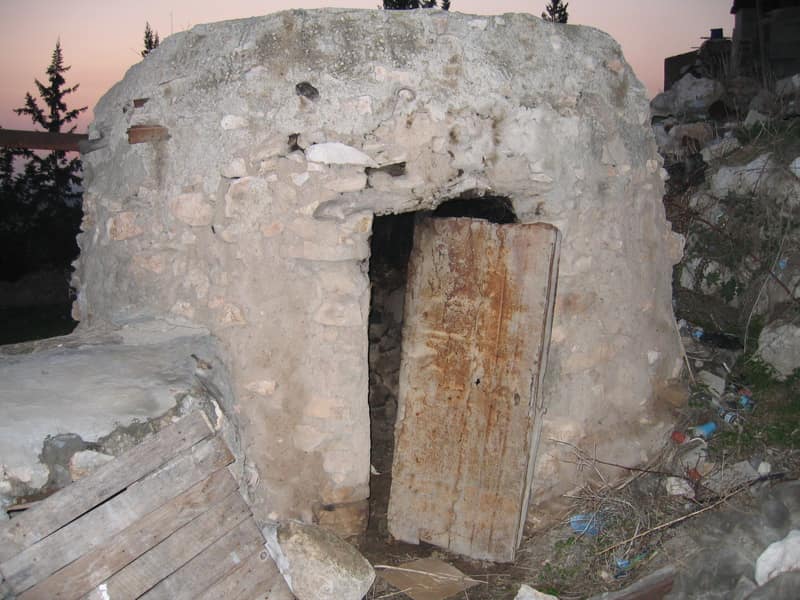
The TaboonCulture
The oven before the dish: a clay dome with a stone floor that dimples the loaf, and a bread-making that was shared labour among women.
The clay oven of the Palestinian village, its floor lined with stones that dimple the bread — the vessel that made taboon bread, and made bread-making a shared women's labour.
- 09
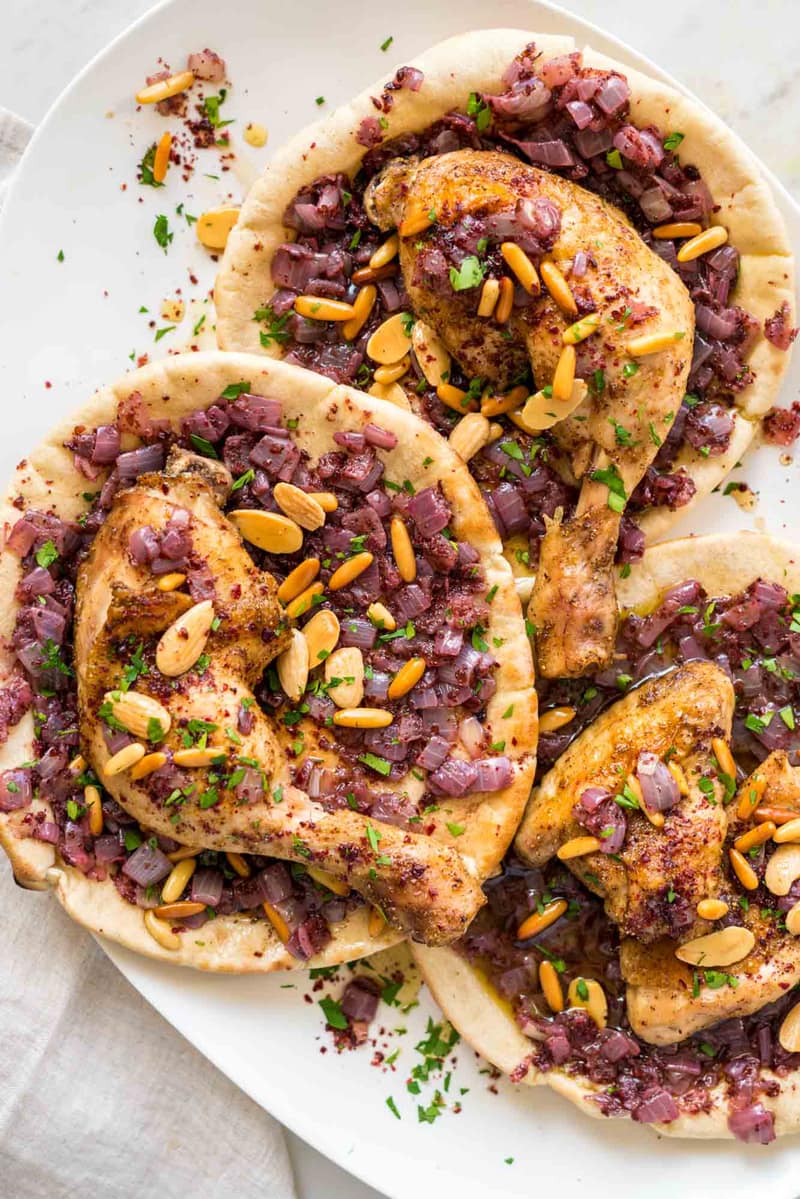
Musakhan and MaqlubaCulture
What went on the bread, and what got turned out of the pot. Two dishes that carry the sumac and olive oil of the northern hills.
Two emblematic dishes of the Palestinian table: sumac-and-onion chicken over taboon bread, and the 'upside-down' rice pot.
- 10
The Palestinian HikayeCulture
UNESCO's other Palestinian inscription, from 2008: the winter-evening tale told by women to women and children, and a critique of the household delivered from inside it.
The winter-evening tale told by women to women and children — a folk narrative form inscribed by UNESCO in 2008, and a critique of society delivered from inside the household.
- 11
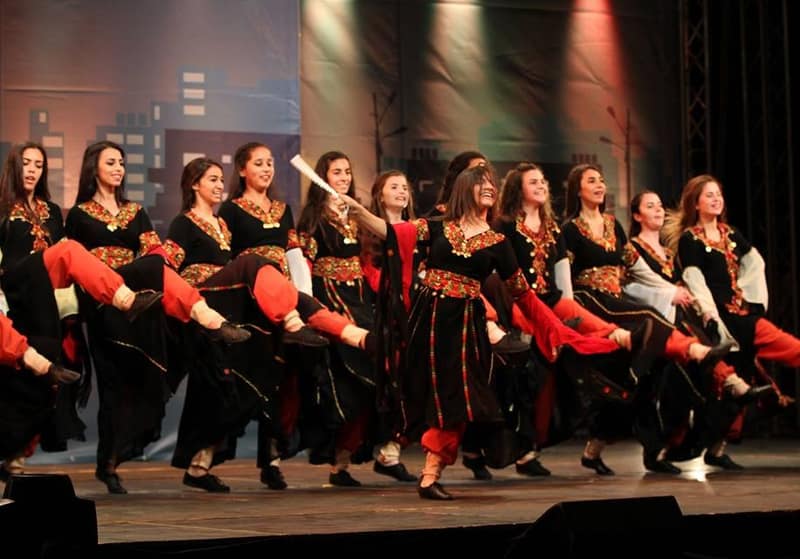
DabkeCulture
The line dance whose stamping steps are the point — a communal form that requires a community to be standing in one place.
The communal line dance of Palestine and the Levant, performed at weddings and celebrations, with stamping steps that shake the earth.
- 12
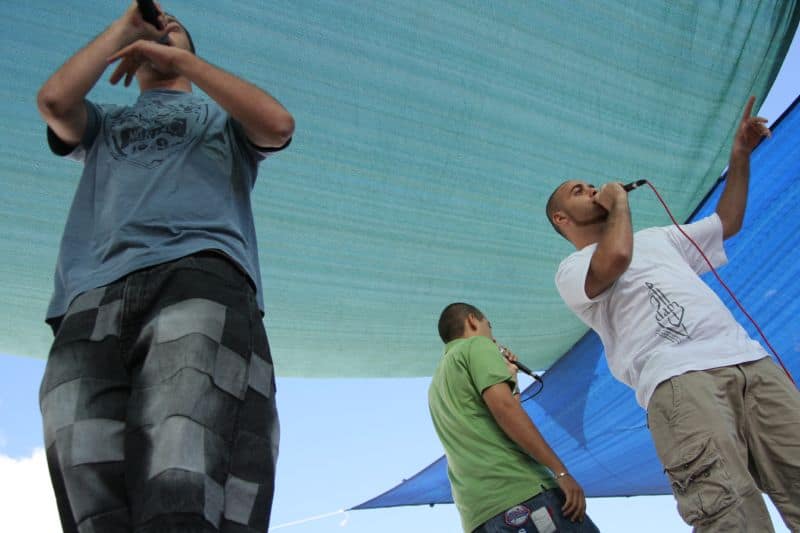
Palestinian MusicCulture
From the improvised verse of zajal and the mawwal's lament to the hip-hop of DAM: the same argument in four centuries of registers.
From the improvised verse of zajal and the laments of the mawwal to the hip-hop of DAM — a music that carries memory, celebration, and defiance.
- 13
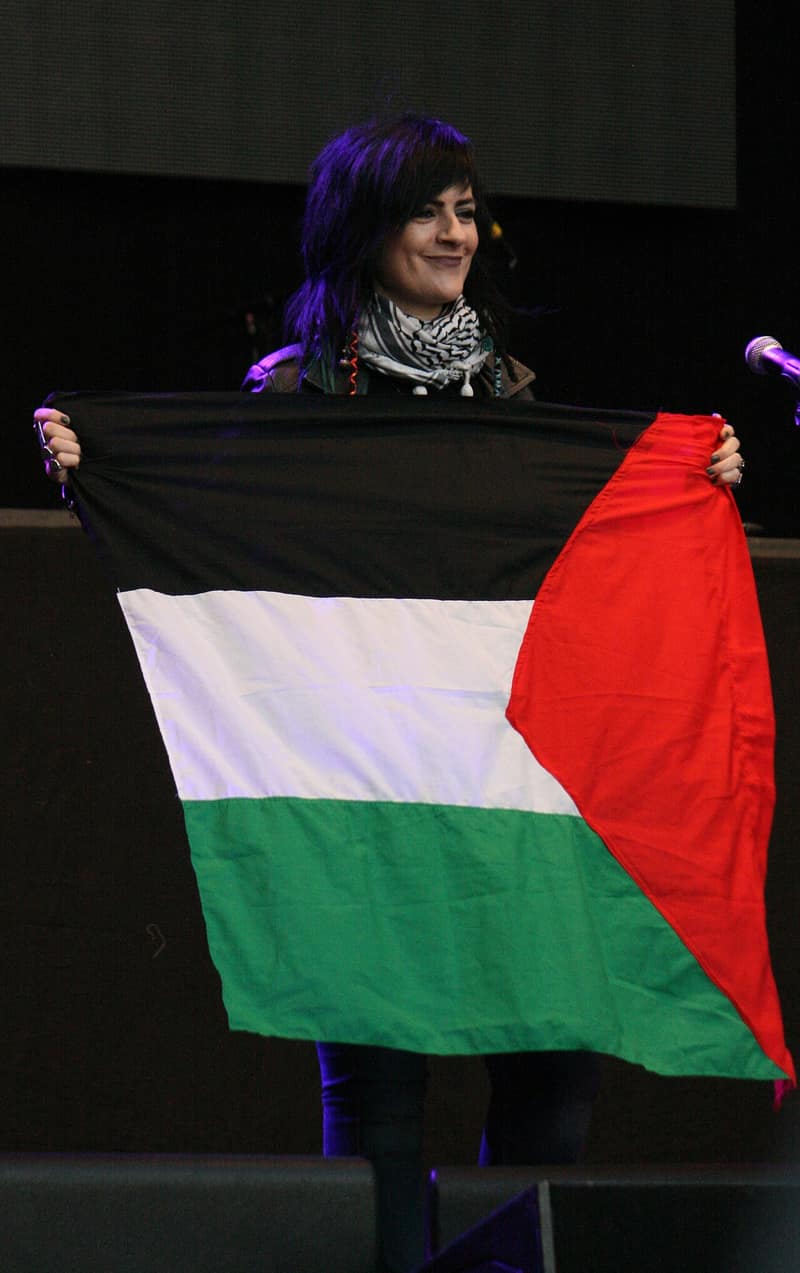
Rim BannaFigure
1966–2018
The Nazareth singer who went looking for the Palestinian children's songs that were being forgotten, and recorded them before they were.
The Nazareth singer who went looking for the Palestinian children's songs that were being forgotten, recorded them, and set modern Palestinian poetry to her own melodies.
- 14
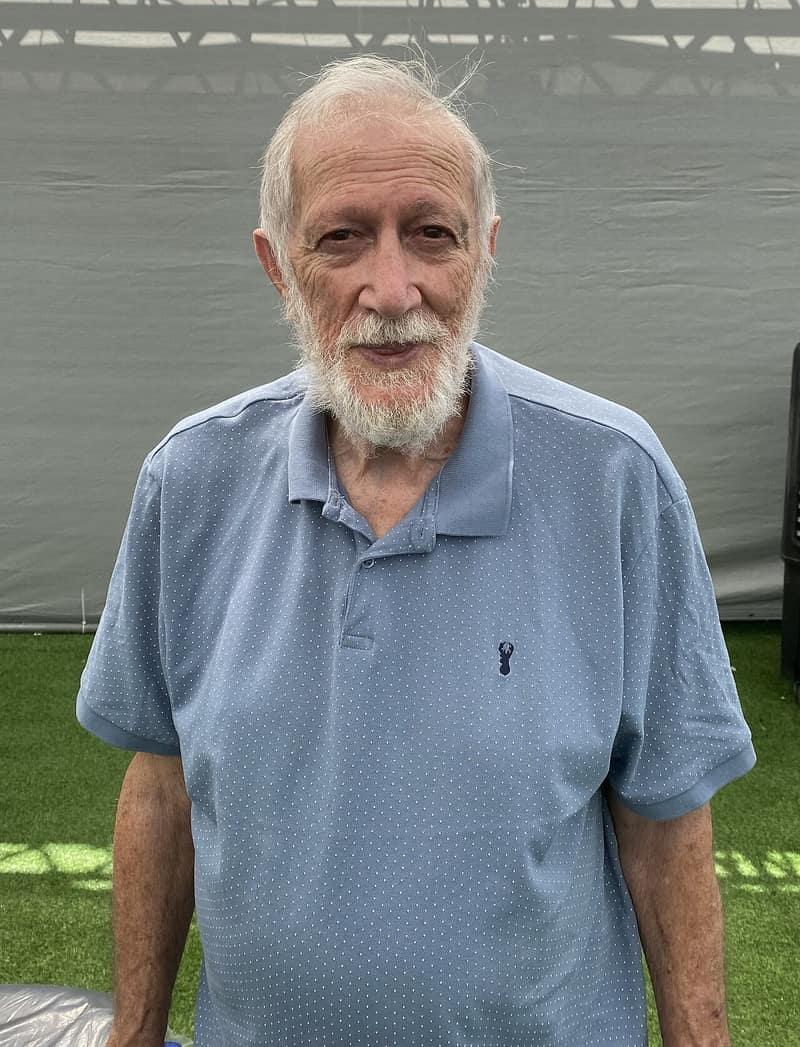
Sliman MansourFigure
1947–
End with the painter. Porters, peasants and olive trees — the images that taught contemporary Palestinian art what its subject was.
Palestinian painter whose images of porters, peasants, and olive trees made him a founding figure of contemporary Palestinian art.
Open this record↑ Stop 13End of the walk
End of the walk
You have passed 14 stops across 2 rooms of the archive. Every one of them is a full record with its own sources — the exhibition supplied only the order.
Exit through the archive
Cite this page
Every claim above carries its sources — citation is the point.
- Chicago
“What a People Made.” Exhibitions, FALASTEEN.AI. Accessed 22 August 2026. https://falasteen.ai/exhibitions/what-a-people-made.- MLA
“What a People Made.” Exhibitions, FALASTEEN.AI, 2026, https://falasteen.ai/exhibitions/what-a-people-made. Accessed 22 August 2026.- BibTeX
@misc{falasteen-what-a-people-made,
  title        = {What a People Made},
  howpublished = {\url{https://falasteen.ai/exhibitions/what-a-people-made}},
  organization = {FALASTEEN.AI — A Living Archive for Palestine},
  year         = {2026},
  note         = {Accessed 2026-08-22}
}