Exhibition 7 of 8
The Women of the Movement
Organisers, prisoners, witnesses
A union founded in Jerusalem in July 1965, the first woman in Fatah, a parliamentarian held in a two-metre cell — and the photographer who was already recording Palestinian life two decades before the Nakba.
13 stops · walked in order
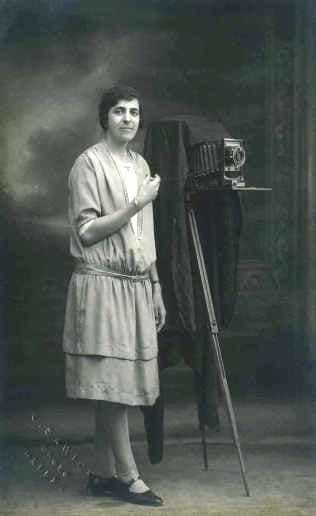
Cover image: Karimeh Abbud, the first woman photographer in Palestine (1893–1940). Public domain, via Wikimedia Commons
The Palestinian national movement is usually narrated through its men, and the archive that results is not so much hostile to women as structurally incapable of seeing them: it indexes armed formations, party congresses and negotiating delegations, and the work women did was mostly done in unions, welfare societies, classrooms, clinics and prisons. This exhibition follows that second organisational history, which is older than the parties and outlasted several of them.
Its institutional centre is the General Union of Palestinian Women. Issam Abd al-Hadi of Nablus — elected secretary-general of the Arab Women’s Union there in 1949, and a member of the First Palestine National Congress of 1964 out of which the PLO issued — took part in the conference held in Jerusalem in July 1965 that established the GUPW, and was elected its president. In March 1969 she was arrested with her daughter Fayha’ and tortured, charged with materially aiding the resistance and hiding wanted fighters, and in late April both were deported to Jordan. She rebuilt the union in exile, was re-elected president at its second congress at Suq al-Gharb in Lebanon in August 1974, became the first woman on the PLO’s Central Council that same year, and remained the union’s president until May 2009. That is a working life of forty-four years in one office, most of it conducted outside the country it was for.
The lives around her run through the same institutions from different directions. Intissar al-Wazir joined Fatah in 1959 as its first woman member and spent decades building the PLO’s provision for the families of prisoners and the dead. Samiha Khalil founded In’ash al-Usra — the Family Revival Society — and turned it into a source of income and training for thousands of families under occupation, which is why she was arrested six times and why she was credible enough, in 1996, to be the only person who ever stood against Yasser Arafat in an election. Leila Khaled took the other route, and is now the one photograph most people can name; the walk includes her because a movement’s history is not improved by tidying its armed wing out of it.
Imprisonment is the thread that ties the twentieth century in this exhibition to the twenty-first. In his history of the Palestinian prisoners’ movement, Ra’fat Hamdouna records that Israel has arrested “thousands of women, including mothers, minors and elderly, who participated in the resistance, or raised their voices demanding the restitution of their rights and their stolen land.” Khalida Jarrar’s five imprisonments — through her father’s death, and through her daughter’s funeral, which she was not permitted to attend — are the same sentence in the present tense. Ahed Tamimi’s memoir is the next generation writing it down at sixteen.
The walk ends with two women killed at work. Shireen Abu Akleh had reported for Al Jazeera for a quarter of a century when she was shot covering a raid in Jenin in May 2022; Razan al-Najjar was a twenty-one-year-old volunteer paramedic from Khan Younis, killed while treating the wounded at the Gaza fence in 2018. Neither was carrying a weapon and both were doing the specific job the movement in this exhibition invented for itself: stay, document, treat, testify. That is what the record shows the women of this movement were mostly doing, and it is why the record is worth walking.
Sources
Drawn from 9 figures · 1 testimony · 1 poet · 1 poem · 1 book.
- Karimeh AbbudFigure
- Ghada KarmiTestimony
- Issam Abdul HadiFigure
- Intissar al-Wazir (Umm Jihad)Figure
- Leila KhaledFigure
- Samiha KhalilFigure
- Fadwa TouqanPoet
- Enough for MePoem
- Hanan AshrawiFigure
- Khalida JarrarFigure
- They Called Me a Lioness: A Palestinian Girl's Fight for FreedomBook
- Shireen Abu AklehFigure
- Razan al-NajjarFigure
- 01
Karimeh AbbudFigure
1893–1940
Begin before the movement. She was photographing Palestinian families two decades before the Nakba, and stamping the prints “Lady Photographer” herself.
The first woman photographer in Palestine, who stamped her prints 'Karimeh Abbud — Lady Photographer' and left a portrait record of Palestinian life two decades before the Nakba.
Open this record↑ StartStop 2 ↓ - 02
Ghada KarmiTestimony
Nine years old in Qatamon in April 1948, days after Deir Yassin. A few summer clothes, and a belief that it would be weeks.
A Jerusalem childhood ended in April 1948: days after Deir Yassin, nine-year-old Ghada Karmi's family packed a few summer clothes and left their Qatamon home, believing they would be back within weeks.
- 03
Issam Abdul HadiFigure
1928–2013
The Nablus organiser elected president at the conference that founded the General Union of Palestinian Women in Jerusalem in July 1965 — and president again from 1974 until 2009.
The Nablus women's organizer who led the General Union of Palestinian Women from its founding in 1965 until 2009, was tortured and deported by Israel in 1969, and became the first woman on the PLO's Central Council.
- 04
Intissar al-Wazir (Umm Jihad)Figure
1941–
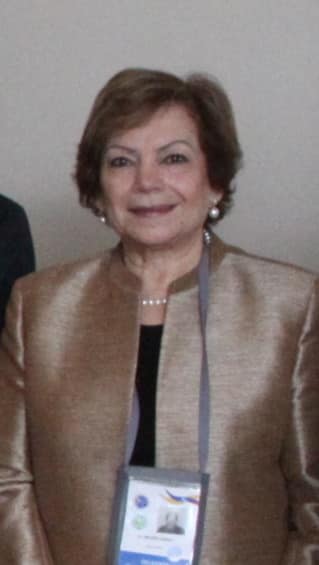
Fatah's first woman member, in 1959. She built the PLO's institutions for the families of prisoners and the dead, and watched her husband assassinated beside her in Tunis.
The Gaza City militant who became Fatah's first woman member in 1959, built the PLO's institutions for the families of martyrs and prisoners, survived her husband Khalil al-Wazir's assassination beside her in Tunis, and returned from decades of exile as minister of social affairs.
- 05
Leila KhaledFigure
1944–
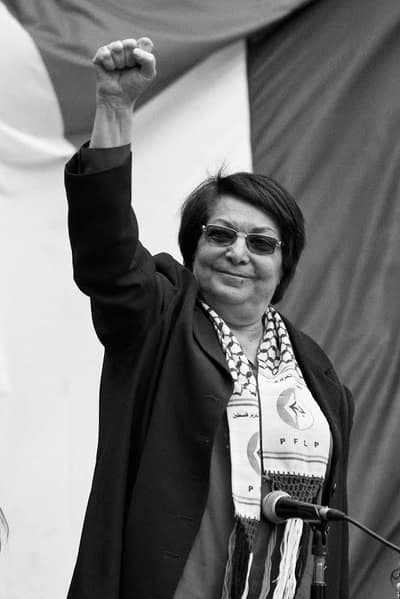
Driven out of Haifa at four; two hijackings for the PFLP in 1969 and 1970; on the front's political bureau since 2005. The most photographed and least read woman in this walk.
Driven from Haifa at four, she hijacked two airliners for the PFLP in 1969 and 1970 and has sat on the front's political bureau since 2005.
- 06
Samiha KhalilFigure
1923–1999
The Oak Tree of Palestine, who built In'ash al-Usra into a lifeline under occupation, was arrested six times, and took twelve percent of the vote against Yasser Arafat in 1996.
The 'Oak Tree of Palestine' from Anabta, who built the Family Revival Society into a lifeline for thousands of families under occupation, was arrested six times, and took 12 percent of the vote against Yasser Arafat in 1996.
- 07
Fadwa TouqanPoet
1917–2003
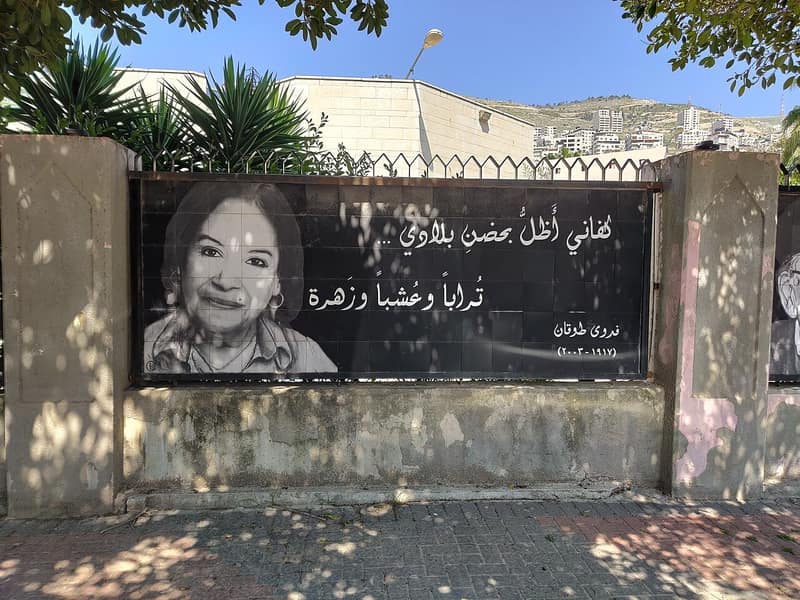
Her schooling was cut short and her brother Ibrahim taught her at home. She became the leading Palestinian woman poet of the century out of that arrangement.
One of the most celebrated female poets of the Arab world, Touqan gave voice to love, loss, and the Palestinian struggle from her home in Nablus.
- 08
Enough for MePoem
Fadwa Touqan
The poem cut into her gravestone in Nablus. Read it as the closing statement it was chosen to be.
Touqan's brief late poem asks for one thing only — to die on her country's soil and remain there as dust, grass, and a flower. Its lines are carved on her gravestone in Nablus.
- 09

Hanan AshrawiFigure
1946–
The scholar who became the negotiating era's most recognisable Palestinian voice — and one of the few who kept explaining, in public, what was actually being signed.
Palestinian legislator and scholar who became one of the most recognisable voices of the Palestinian cause during the 1990s peace negotiations.
- 10
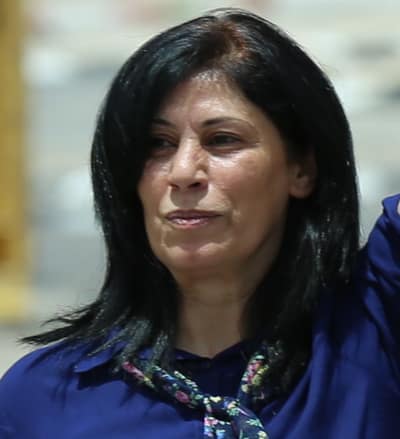
Khalida JarrarFigure
1963–
Elected to the Legislative Council in 2006 with the prisoners' portfolio. Imprisoned five times, held through her father's death, refused her daughter's funeral.
The Nablus-born parliamentarian and Addameer director, arrested five times and held for years in administrative detention and solitary confinement — denied even her daughter's funeral — who emerged from each imprisonment restating the same demand: freedom from colonial domination.
- 11
They Called Me a Lioness: A Palestinian Girl's Fight for FreedomBook
Ahed Tamimi and Dena Takruri
Ahed Tamimi, jailed at sixteen after a viral confrontation in Nabi Saleh. The same arrest pattern, one generation on, written from inside it.
The memoir of Ahed Tamimi, jailed at sixteen after a viral confrontation with Israeli soldiers — a girlhood in Nabi Saleh and an intimate portrait of life under occupation.
- 12
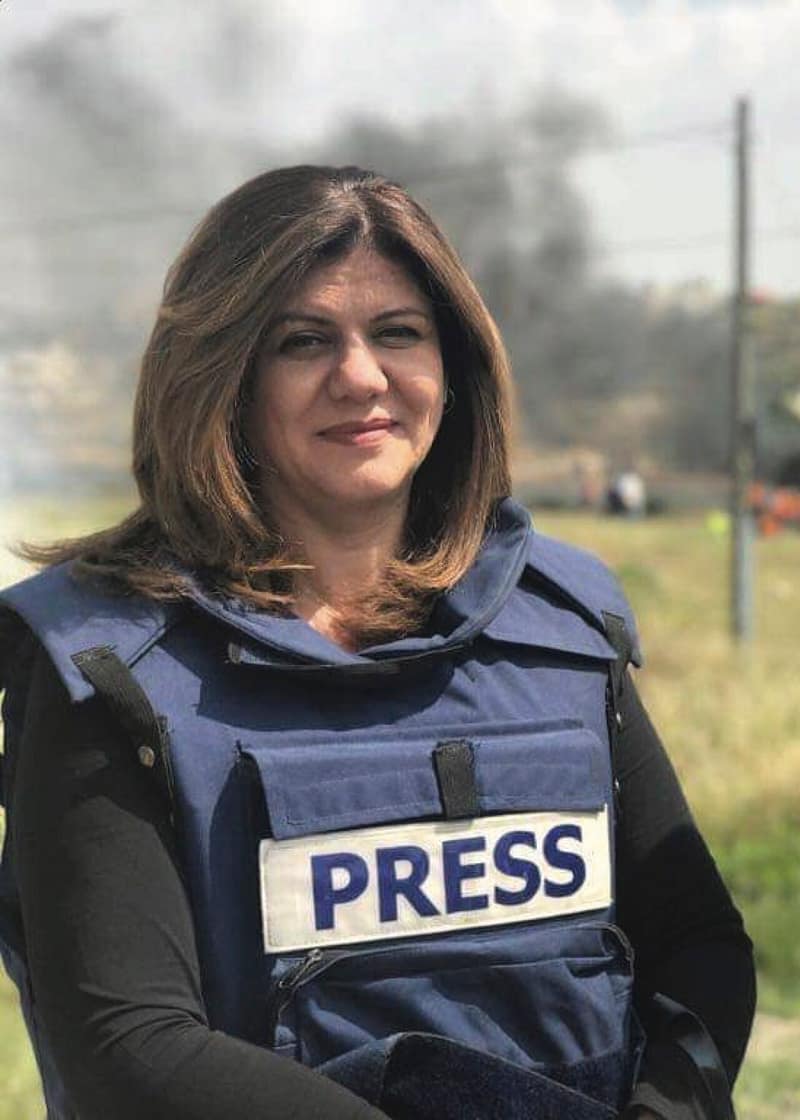
Shireen Abu AklehFigure
1971–2022
Twenty-five years of Al Jazeera broadcasts, and a household name across the Arab world, killed while covering a raid in Jenin in May 2022.
Veteran Al Jazeera correspondent and household name across the Arab world, killed while covering an Israeli raid in Jenin in 2022.
- 13
Razan al-NajjarFigure
1996–2018
Twenty-one, a volunteer paramedic from Khan Younis, shot dead while treating the wounded at the Gaza fence in 2018. End here.
A 21-year-old volunteer paramedic from Khan Younis, shot dead by an Israeli sniper while tending to wounded protesters in Gaza in 2018.
Open this record↑ Stop 12End of the walk
End of the walk
You have passed 13 stops across 5 rooms of the archive. Every one of them is a full record with its own sources — the exhibition supplied only the order.
Exit through the archive
Cite this page
Every claim above carries its sources — citation is the point.
- Chicago
“The Women of the Movement.” Exhibitions, FALASTEEN.AI. Accessed 22 August 2026. https://falasteen.ai/exhibitions/the-women-of-the-movement.- MLA
“The Women of the Movement.” Exhibitions, FALASTEEN.AI, 2026, https://falasteen.ai/exhibitions/the-women-of-the-movement. Accessed 22 August 2026.- BibTeX
@misc{falasteen-the-women-of-the-movement,
  title        = {The Women of the Movement},
  howpublished = {\url{https://falasteen.ai/exhibitions/the-women-of-the-movement}},
  organization = {FALASTEEN.AI — A Living Archive for Palestine},
  year         = {2026},
  note         = {Accessed 2026-08-22}
}