The documented record
The Record
المحضر
Dehumanisation is not a figure of speech in the history of mass atrocity. It is a stage in it, and it is documented. This page sets out what was said by people holding office, in their own words, on the record, with the date and the venue — and then what the courts, the United Nations and the human rights organisations made of it. It begins, deliberately, with the people who were spoken about.
Every statement in movement II is quoted verbatim from one of two documents in the same proceedings: the application South Africa filed at the International Court of Justice on 29 December 2023, which compiled this record for the Court, or the Court's own order of 26 January 2024, which quotes three of these statements at greater length and in different wording. The two are not interchangeable, so each statement names the document its text comes from. Nothing here is paraphrased, and nothing appears without a source.
The people
الناسBefore the statements, the people the statements were about. This archive holds 72,835 names in its Registry, each with its own permalink, and writes individual records for a small number of them. Read a few first. The rest of this page will make a different kind of sense afterwards.
Hind Rajab
هند رجب2017–2024 · Tel al-Hawa, Gaza City
Six-year-old from Gaza City
Refaat Alareer
رفعت العرعير1979–2023 · Gaza City
Poet, professor of English literature at the Islamic University of Gaza, editor of 'Gaza Writes Back'
Razan al-Najjar
رزان النجارc. 1997–2018 · East of Khan Younis, Gaza
Volunteer paramedic during Gaza's Great March of Return
Hussam Abu Safiya
حسام أبو صفيةc. 1973– · Kamal Adwan Hospital, Beit Lahia, northern Gaza
Pediatrician and director of Kamal Adwan Hospital
Shireen Abu Akleh
شيرين أبو عاقلة1971–2022 · Jenin refugee camp, occupied West Bank
Veteran Al Jazeera Arabic correspondent; Palestinian-American
Khaled Nabhan
خالد نبهانc. 1970–2024 · Nuseirat refugee camp, central Gaza
Grandfather whose farewell to his slain granddaughter became a symbol of Gaza's grief
The Registry holds every documented name — 72,835 of them, from the Gaza Ministry of Health lists as parsed and published by Tech for Palestine, each record carrying a name in Arabic and English, an age and a date of birth. This archive writes fuller records for 38 people. That ratio is itself part of the record: the work of restoring a life to each name has barely begun.
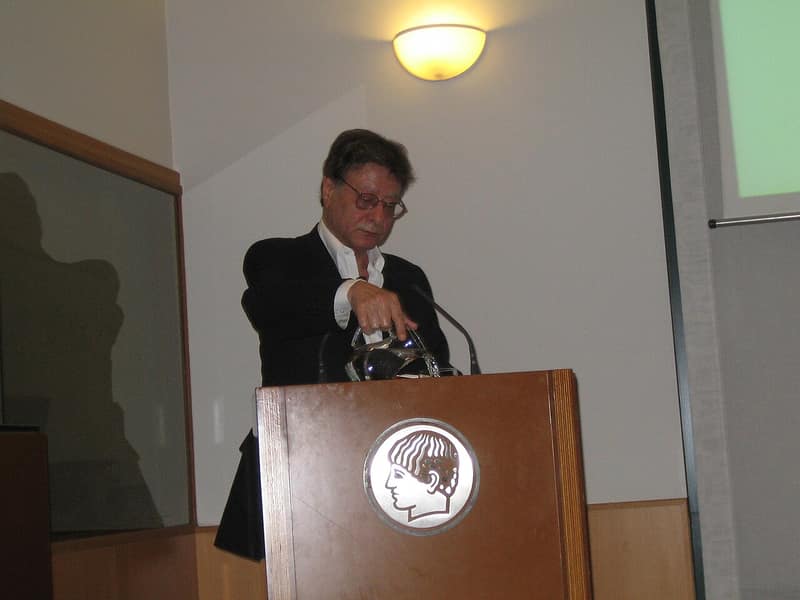
A poet
Mahmoud Darwish
محمود درويش1941–2008 · born in Al-Birwa, Palestine
The national poet of Palestine, Darwish turned exile, memory, and resistance into some of the most widely read Arabic poetry of the modern era.
The village he was born in
Al-Birwa
البروةAcre district · depopulated 1948
Al-Birwa, on a rocky hill east of Acre, was a farming village of some 1,500 people — Muslims and Christians — and the birthplace of the poet Mahmoud Darwish. Captured in July 1948, it was destroyed almost entirely; a school, two shrines, and three houses are all that remain.
A testimony
“We were only wearing the clothing we had on because we are coming back tomorrow. We are coming back. Now we just want to be far from the shooting.”
What was said out loud
ما قيل علناًThese are not leaked remarks or private confidences. They were made in televised addresses, cabinet meetings, formal addresses to the Knesset, press conferences for foreign media, official army channels and public posts — by people holding office at the time they spoke. They are presented here as they stand in the ICJ record: speaker, office, date, venue, words, and the document the words are taken from. Three are quoted from the Court's own order rather than from the application, and each says so on its card.
Two different things are marked, and the difference is not decorative. A statement markedreproduced by the Court was set out as a block quotation by the International Court of Justice in its order of 26 January 2024, at paragraph 52. A statement marked referred to by the Court was reported there in indirect speech, with only fragments quoted — the Court used less of it than appears below. Both were part of the Court's reasons for finding the claimed rights plausible; only one is the Court's own wording.
Cabinet ministers and the head of state
Yoav Gallant
Minister of Defence
9 October 2023
Israeli army 'situation update'
referred to by the CourtQuoted fromSouth Africa’s application, 29 December 2023
“[I]mposing a complete siege on Gaza. No electricity, no food, no water, no fuel. Everything is closed. We are fighting human animals and we are acting accordingly.”
The application records that the Minister “advised that Israel was” doing this; the bracketed capital marks the only alteration. The Court did not set this statement out. At paragraph 52 it reported the announcement in indirect speech, quoting only that the Minister had ordered a “complete siege” of Gaza City and that there would be “no electricity, no food, no fuel” and that “everything [was] closed”. It did not quote “no water”, and it did not attribute the words “human animals” to this date.
Yoav Gallant
Minister of Defence
10 October 2023
Speaking to Israeli troops on the Gaza border
reproduced by the CourtQuoted fromICJ order of 26 January 2024, paragraph 52
“I have released all restraints . . . You saw what we are fighting against. We are fighting human animals. This is the ISIS of Gaza. This is what we are fighting against . . . Gaza won't return to what it was before. There will be no Hamas. We will eliminate everything. If it doesn't take one day, it will take a week, it will take weeks or even months, we will reach all places.”
The Court quotes this address at greater length than the application does, and the difference is worth stating exactly. The application evidences the same remarks more briefly — that the Minister had “released all the restraints”, and that “Gaza won’t return to what it was before. We will eliminate everything. If it doesn’t take one day, it will take a week. It will take weeks or even months, we will reach all places”. It does not contain “There will be no Hamas”, it does not contain “This is the ISIS of Gaza” anywhere, and the words “human animals” appear in it under the previous day, 9 October, not this one. The text above is the Court’s and is identified as such.
Isaac Herzog
President of Israel
12 October 2023
Press conference for foreign media
reproduced by the CourtQuoted fromICJ order of 26 January 2024, paragraph 52
“We are working, operating militarily according to rules of international law. Unequivocally. It is an entire nation out there that is responsible. It is not true this rhetoric about civilians not aware, not involved. It is absolutely not true. They could have risen up. They could have fought against that evil regime which took over Gaza in a coup d’état. . . . And we will fight until we’ll break their backbone.”
The opening claim of legality is part of the quotation and is kept here: it stands in the same breath as the attribution of responsibility to an entire nation. The ellipsis marks the omission of “But we are at war. We are at war. We are at war. We are defending our homes. We are protecting our homes. That’s the truth. And when a nation protects its home, it fights.” Over one million of the people in Gaza to whom this referred are children. The application evidences the same press conference in shorter and slightly different wording, from the ITV News report of 13 October 2023; the Court’s fuller text is used here.
Israel Katz
Minister of Energy and Infrastructure
13 October 2023
Posted on X (formerly Twitter)
reproduced by the CourtQuoted fromICJ order of 26 January 2024, paragraph 52
“We will fight the terrorist organization Hamas and destroy it. All the civilian population in [G]aza is ordered to leave immediately. We will win. They will not receive a drop of water or a single battery until they leave the world.”
The opening sentence is restored from the Court’s text, and it sharpens rather than softens what follows: the Minister names the armed group he intends to destroy, and then addresses the order to the entire civilian population. The application quotes the same post from the second sentence onward, and without the Court’s bracketed capital in “[G]aza”.
Benjamin Netanyahu
Prime Minister
16 October 2023
Formal address opening the Knesset winter assembly
Quoted fromSouth Africa’s application, 29 December 2023
“a struggle between the children of light and the children of darkness, between humanity and the law of the jungle”
Evidenced from the Israeli Ministry of Foreign Affairs press release of the same date. The application records that the Prime Minister returned to this theme repeatedly, including in a letter to Israeli soldiers and officers on 3 November 2023.
Benjamin Netanyahu
Prime Minister
28 October 2023
Televised address as the ground invasion was prepared
Quoted fromSouth Africa’s application, 29 December 2023
“you must remember what Amalek has done to you, says our Holy Bible. And we do remember”
The application sets out the biblical passage invoked, I Samuel 15: “Now go, attack Amalek, and proscribe all that belongs to him. Spare no one, but kill alike men and women, infants and sucklings, oxen and sheep, camels and asses”. The Prime Minister referred to Amalek again in his letter to soldiers and officers of 3 November 2023.
Bezalel Smotrich
Minister of Finance
8 October 2023
Meeting of the Israeli Cabinet
Quoted fromSouth Africa’s application, 29 December 2023
“[w]e need to deal a blow that hasn't been seen in 50 years and take down Gaza.”
Itamar Ben-Gvir
Minister for National Security
10 November 2023
Televised address
Quoted fromSouth Africa’s application, 29 December 2023
“[t]o be clear, when we say that Hamas should be destroyed, it also means those who celebrate, those who support, and those who hand out candy — they’re all terrorists, and they should also be destroyed.”
The application’s own date is kept here, and its own evidence does not quite agree with it: the application dates the address to 10 November 2023, while its footnote 456 cites an interview with Itamar Ben-Gvir on Channel 12 broadcast on 11 November 2023. The discrepancy is one day and is recorded rather than resolved.
Avi Dichter
Minister of Agriculture
11 November 2023
Television interview
Quoted fromSouth Africa’s application, 29 December 2023
“[w]e are now actually rolling out the Gaza Nakba”
The application notes that in the Nakba of 1948 over 80 per cent of the Palestinian population of the new Israeli state was forced from or fled their homes.
Nissim Vaturi
Deputy Speaker of the Knesset; member of the Foreign Affairs and Security Committee
7 October 2023
Posted on X (formerly Twitter)
Quoted fromSouth Africa’s application, 29 December 2023
“[n]ow we all have one common goal — erasing the Gaza Strip from the face of the earth. Those who are unable will be replaced.”
Army officers and soldiers
Major General Ghassan Alian
Coordinator of Government Activities in the Territories (COGAT)
9 October 2023
Video statement published by COGAT's official channel
Quoted fromSouth Africa’s application, 29 December 2023
“Hamas became ISIS and the citizens of Gaza are celebrating instead of being horrified. Human animals are dealt with accordingly. Israel has imposed a total blockade on Gaza, no electricity, no water, just damage. You wanted hell, you will get hell.”
Colonel Yogev Bar-Sheshet
Deputy Head of COGAT
4 November 2023
Filmed in Beit Lahia, broadcast on Israeli television
Quoted fromSouth Africa’s application, 29 December 2023
“[w]hoever returns here, if they return here after, will find scorched earth. No houses, no agriculture, no nothing. They have no future”
A second officer recorded in the same broadcast, Colonel Erez Eshel (Reserve), said: “Vengeance is a great value. There is vengeance over what they did to us … This place will be a fallow land. They will not be able to live here”.
Israeli soldiers in uniform, filmed inside Gaza
Israel Defense Forces
7 December 2023
Video circulated on social media
Quoted fromSouth Africa’s application, 29 December 2023
“we know our motto: there are no uninvolved civilians”
The soldiers also chanted “to wipe off the seed of Amalek”. The application records that by the date this was filmed, 17,177 Palestinians in Gaza had been killed, an estimated 70 per cent of them women and children; on 7–8 December 2023, 350 people were killed in 24 hours — approximately one Palestinian killed every four minutes.
South Africa's application submits that these statements “indicate in and of themselves a clear intent to destroy Palestinians in Gaza as a group ‘as such’” and “constitute clear direct and public incitement to genocide, which has gone unchecked and unpunished.” That is a party's pleading, and it is recorded here as such. What the Court and the investigating bodies concluded is set out in movement IV.
Read the application in full — 84 pages, paragraphs 101–107 (PDF) →What dehumanisation does
ما يفعله التجريد من الإنسانيةGenocide studies treats dehumanising language as an early-warning indicator rather than as mere offensiveness, because of what it does to the people who hear it. Gregory H. Stanton, founding president of Genocide Watch, built a stage model of genocide from a comparative study of the Cambodian, Armenian and Nazi genocides — first presented in 1987, later given to the United States State Department, and published since 2012 as the Ten Stages of Genocide: classification, symbolization, discrimination,dehumanization, organization, polarization, preparation, persecution, extermination and denial.
Stanton's own words for the fourth stage are worth quoting rather than paraphrasing: “The fourth is Dehumanization, when perpetrators call their victims rats, or cockroaches, cancer, or disease. Portraying them as non-human makes eliminating them a ‘cleansing’ of the society, rather than murder.” Denying a group its membership of humanity is what allows killing to be experienced by the killers as something other than murder. The stages are not a timetable and Stanton does not claim they run strictly in sequence; the model exists for prevention, which is why it treats speech as a signal to act on rather than a thing to deplore.
A stage model is not a legal test, and the distinction matters. The crime of genocide is defined by Article II of the 1948 Convention and requires specific acts committed with intent to destroy a protected group as such. Stanton's stages describe how societies arrive at that point; the Convention defines what must be proved once they have. Both are relevant to reading this record and neither substitutes for the other.
Gregory H. Stanton, The Ten Stages of Genocide →Who read the statements this way, and when
“These actions amount to war crimes and crimes against humanity, including genocide and incitement to genocide.”
Three Palestinian human rights organisations — Al-Haq, Al Mezan and the Palestinian Centre for Human Rights — filed a communication with the International Criminal Court under Article 15 of the Rome Statute, announced on 9 November 2023 — their statement of that date records the filing as having been made “[l]ate last night” — seven weeks before South Africa went to the International Court of Justice. They asked the Prosecutor to “[c]onsider the inclusion of crimes against humanity, notably apartheid, and the crime of genocide, in the ongoing investigation into the situation in the State of Palestine”, and to issue arrest warrants “especially President Isaac Herzog, Prime Minister Benyamin Netanyahu, Defence Minister Yoav Gallant and others”. Those are the same three officials the UN Commission of Inquiry named for incitement to genocide twenty-two months later. The same three organisations had already sent an urgent appeal to fourteen UN Special Procedures and to the Commission of Inquiry on 11 October 2023, four days into the campaign.
“as a textbook case of genocide unfolding in front of our eyes. I say this as a scholar of genocide, who has spent many years writing about Israeli mass violence against Palestinians.”
He set out the Convention's definition and wrote: “In its murderous attack on Gaza, Israel has loudly proclaimed this intent” — quoting Minister Gallant's declaration of 9 October 2023.
“Yes, it is genocide. It is so difficult and painful to admit it, but despite all that, and despite all our efforts to think otherwise, after six months of brutal war we can no longer avoid this conclusion.”
“. . . by May of 2024, it became apparent that these statements were not only made in the heat of the moment following the massacre by Hamas, but were actually being implemented in a manner that would make it impossible for people to live in Gaza, make the entire Gaza Strip uninhabitable and make life there impossible . . .”
Bartov did not regard the campaign as genocidal at its outset and changed his assessment later — which is why his account of when and why is worth reading closely. The “statements” are the same body of material set out in movement II.
Where the scholars differ is on threshold and timing, not on the evidentiary record: Segal reached his assessment within a week, Goldberg after six months, Bartov by May 2024. Lee Mordechai, an associate professor of history at the Hebrew University of Jerusalem, took a different route again — from March 2024 he compiledBearing Witness to the Israel-Gaza War, a continuously updated and fully footnoted compilation of the evidence, written first in Hebrew, with a chapter devoted to dehumanisation; it has since grown past his own compilation into a multi-contributor project, Witnessing the Gaza War, with a testimony archive and a searchable database alongside the document itself.
What matters about this group is not that it is largely Israeli and Jewish. It is that scholars working inside Israeli and Jewish institutions, in Hebrew and in English, arrived at the same conclusion as the Palestinian human rights organisations that had documented the conduct first and put it before the International Criminal Court weeks before any state did. The documentation of the conduct is Palestinian — Al-Haq, Al Mezan and PCHR assembling it and filing it, and the people of Gaza living it. The convergence is what makes that record hard to dismiss, because it removes the two exits a hostile reader usually takes: that the documentation is partisan, or that no one inside the accused society sees it.
What the courts and the investigators found
ما وجدته المحاكمThe exact legal language matters, and overstating it is the one thing that would let a reader dismiss this page. Each finding below is given in the terms the body itself used, with what it did not decide stated alongside.
- 01
International Court of Justice
26 January 2024
Order on provisional measures, South Africa v. Israel (case 192)
The Court found “that at least some of the rights claimed by South Africa and for which it is seeking protection are plausible”, namely “the right of the Palestinians in Gaza to be protected from acts of genocide”. It ordered Israel, by fifteen votes to two, to take all measures within its power to prevent the commission of acts within Article II of the Genocide Convention, and by sixteen votes to one to “take all measures within its power to prevent and punish the direct and public incitement to commit genocide”.
Read the document →Precisely what this is
This is not a ruling that genocide has occurred. Provisional measures preserve rights pending a decision on the merits, which has not been given. The Court also reproduced the statements of Minister Gallant, President Herzog and Minister Katz in the order itself. Judge ad hoc Barak — Aharon Barak, chosen by Israel under Article 31 of the Court’s Statute — voted in favour of the measures on incitement and on humanitarian assistance.
- 02
UN Special Rapporteur on the occupied Palestinian territories
25 March 2024
Anatomy of a Genocide (A/HRC/55/73), Francesca Albanese
The report “concludes that there are reasonable grounds to believe that the threshold indicating that Israel has committed genocide has been met”, in respect of three acts: killing members of the group, causing serious bodily or mental harm, and deliberately inflicting conditions of life calculated to bring about physical destruction. It found that these acts “were approved and given effect following statements of genocidal intent issued by senior military and government officials”.
Read the document →Precisely what this is
A Special Rapporteur is an independent expert appointed by the Human Rights Council and does not speak for the United Nations. This is an expert mandate holder’s threshold finding, not a judicial determination. On the date: 25 March 2024 is the date on the advance unedited version presented to the Council’s fifty-fifth session, which sat from 26 February to 5 April 2024; the final edited version of the same document, A/HRC/55/73, carries 1 July 2024. The earlier date is used here because it is when the report entered the record. The wording quoted above is that of the final edited version linked here; the advance version of 25 March reads “the threshold indicating Israel’s commission of genocide is met”.
- 03
International Court of Justice
28 March 2024
Order on additional provisional measures
Reaffirming its January order, the Court ordered Israel, unanimously, “in view of the worsening conditions of life faced by Palestinians in Gaza, in particular the spread of famine and starvation”, to “take all necessary and effective measures to ensure, without delay, in full co-operation with the United Nations, the unhindered provision at scale” of basic services and humanitarian assistance.
Read the document →Precisely what this is
The measure on humanitarian access was adopted unanimously — no judge dissented, including the judge ad hoc chosen by Israel.
- 04
International Court of Justice
24 May 2024
Order on further provisional measures (the Rafah order)
By thirteen votes to two, the Court ordered Israel to “[i]mmediately halt its military offensive, and any other action in the Rafah Governorate, which may inflict on the Palestinian group in Gaza conditions of life that could bring about its physical destruction in whole or in part”, to keep the Rafah crossing open, and to ensure unimpeded access to Gaza for any UN-mandated body investigating allegations of genocide.
Read the document →Precisely what this is
The Court reaffirmed its earlier measures and stated that they “should be immediately and effectively implemented”.
- 05
International Court of Justice
19 July 2024
Advisory Opinion on the legal consequences of Israel’s policies and practices in the Occupied Palestinian Territory
The Court was of the opinion, by eleven votes to four, “that the State of Israel’s continued presence in the Occupied Palestinian Territory is unlawful”, and that Israel is under an obligation to bring it to an end as rapidly as possible; by fourteen votes to one, that Israel must cease all new settlement activity and evacuate all settlers, and must make reparation. It held that Israel’s legislation and measures “impose and serve to maintain a near-complete separation in the West Bank and East Jerusalem between the settler and Palestinian communities” and “constitute a breach of Article 3 of CERD”, the article by which states condemn racial segregation and apartheid.
Read the document →Precisely what this is
This is a separate case (186) concerning the occupation, not the Gaza proceedings, and it makes no finding on genocide. Advisory opinions state the law authoritatively but are not binding judgments against a party. And the Article 3 finding stops one step short of the word most often attached to it: having observed that the article “refers to two particularly severe forms of racial discrimination: racial segregation and apartheid”, the Court held that Israel’s legislation and measures “constitute a breach of Article 3 of CERD” without deciding which of the two they amount to. A reader who cites this as a judicial finding of apartheid is citing more than the Court decided.
- 06
Amnesty International
5 December 2024
'You Feel Like You Are Subhuman': Israel's Genocide Against Palestinians in Gaza
Amnesty stated that its research “has found sufficient basis to conclude that Israel has committed and is continuing to commit genocide against Palestinians in the occupied Gaza Strip”, and that “in looking at the broader picture of Israel’s military campaign and the cumulative impact of its policies and acts, genocidal intent is the only reasonable conclusion”. Secretary General Agnès Callamard said: “Month after month, Israel has treated Palestinians in Gaza as a subhuman group unworthy of human rights and dignity, demonstrating its intent to physically destroy them.” Anticipating the standard objection, she addressed it directly: “Israel has repeatedly argued that its actions in Gaza are lawful and can be justified by its military goal to eradicate Hamas. But genocidal intent can co-exist alongside military goals and does not need to be Israel’s sole intent.”
Read the document →Precisely what this is
This is a determination by a non-governmental organisation on its own assessment of the evidence. It is not a judicial finding and has no legal effect — the same limit this page states for the Special Rapporteur applies here, and for the same reason. Amnesty names the test it applied, that genocidal intent is “the only reasonable conclusion”, and whether the evidence meets that test is exactly what is disputed: Amichai Cohen and Yuval Shany argue it does not, while Adil Haque, publishing the same day on the same platform, argues Amnesty applies settled law and holds itself to “the highest standard of proof known to public international law”. Both are linked below.
- 07
Human Rights Watch
19 December 2024
Extermination and Acts of Genocide: Israel Deliberately Depriving Palestinians in Gaza of Water
Human Rights Watch found that “Israeli authorities have intentionally deprived Palestinian civilians in Gaza of adequate access to water since October 2023, most likely resulting in thousands of deaths and thus committing the crime against humanity of extermination and acts of genocide”, and concluded that they “have intentionally created conditions of life calculated to bring about the physical destruction of Palestinians in Gaza in whole or in part”. It went further on both counts than that sentence alone shows: it found that “[t]he pattern of conduct, coupled with statements suggesting that some Israeli officials wished to destroy Palestinians in Gaza, may amount to the crime of genocide”, and separately that “some statements from senior Israeli officials calling for cutting water, fuel, and aid, in tandem with their actions, have amounted to direct and public incitement to genocide”.
Read the document →Precisely what this is
The wording is deliberate and should be cited as written, including the word “may”. On the crime of genocide itself Human Rights Watch found only that the conduct “may” amount to it; what it found outright in this report was acts of genocide, the ongoing crime against humanity of extermination, and — as a completed finding, not a possibility — direct and public incitement to genocide by some senior officials. It did not there issue a full determination that the crime of genocide, with its requirement of specific intent, had been established.
- 08
B'Tselem — an Israeli human rights organisation
28 July 2025
Our Genocide
B’Tselem concluded that “Israel is taking coordinated action to intentionally destroy Palestinian society in the Gaza Strip”, reaching that conclusion from Israeli policy and its outcomes together with the statements of senior Israeli politicians and military commanders about the goals of the campaign. Physicians for Human Rights Israel published a parallel report the same day.
Read the document →Precisely what this is
Like Amnesty’s, this is a determination by a non-governmental organisation on its own assessment of the evidence. It is not a judicial finding, it establishes no legal liability, and no court has adopted it. B’Tselem also does not claim neutrality, and says so: it is an Israeli organisation writing in Hebrew for an Israeli readership about its own state, and the possessive in the title is the argument rather than a rhetorical flourish. That standpoint is a limit on how the report should be read and, at the same time, the reason it is hard to dismiss as hostile. Founded in 1989 by Israeli academics, attorneys, journalists and members of the Knesset; until this report, Israeli human rights organisations had largely declined to use the word.
- 09
UN Independent International Commission of Inquiry
16 September 2025
Legal analysis of the conduct of Israel in Gaza pursuant to the Genocide Convention (A/HRC/60/CRP.3)
The Commission concluded “on reasonable grounds that the Israeli authorities and Israeli security forces have committed and are continuing to commit” four of the five acts of genocide: killing members of the group; causing serious bodily or mental harm; deliberately inflicting conditions of life calculated to bring about physical destruction; and imposing measures intended to prevent births. On intent, it concluded that statements by Israeli authorities “are direct evidence of genocidal intent”, that the pattern of conduct is circumstantial evidence of it, and “that genocidal intent was the only reasonable inference that could be drawn from the totality of the evidence”. It concluded that Israeli President Isaac Herzog, Prime Minister Benjamin Netanyahu and then Defence Minister Yoav Gallant “have incited the commission of genocide and that Israeli authorities have failed to take action against them to punish this incitement”. Its conclusion, at paragraph 255, is that “the State of Israel bears responsibility for the failure to prevent genocide, the commission of genocide and the failure to punish genocide against the Palestinians in the Gaza Strip”.
Read the document →Precisely what this is
This is the furthest any United Nations body has gone, and it is still not a court. The Commission applied the standard of proof it uses for all its investigations, “reasonable grounds to conclude”, and states that the standard for finding an accused guilty of genocide in a criminal trial is “beyond reasonable doubt”. It set out plainly what it did not do: “This report does not examine individual criminal responsibility under the Rome Statute”, and it notes that “there is no international criminal tribunal that has yet made findings on the individual criminal responsibility for the crime of genocide in this situation”. Its scope is bounded in time (7 October 2023 to 31 July 2025) and place (the Gaza Strip). And it had “not fully assessed” statements by other officials, including Ministers Ben-Gvir and Smotrich — two of the speakers quoted in movement II — considering that those too should be assessed.
Where this is contested, and by whom
The genocide determinations are disputed, and the dispute belongs in the record. On 16 December 2024, eleven days after Amnesty International's report, Amichai Cohen of the Israel Democracy Institute and Yuval Shany, who holds the Hersch Lauterpacht Chair in International Law at the Hebrew University of Jerusalem and formerly sat on the UN Human Rights Committee, published a critique on Just Security. Their objection is evidentiary rather than factual: they argue that “taking the extra step of claiming based on that available factual record that a genocide has occurred requires a higher standard of proof than the report contains, both with regard to the actus reus and themens rea.”
That critique is not the last word, and Just Security did not present it as one. Its editor's note reads: “For a competing view, see Adil Haque, The Amnesty International Report on Genocide in Gaza, published simultaneously with this article.” Haque, professor of law at Rutgers, argues that “Amnesty correctly applies existing law”, that the Convention and the Srebrenica case law do not require group destruction to be a state's sole intent, and that far from adopting a loose test Amnesty “chose to hold itself to the highest standard of proof known to public international law”. The two pieces were published the same day and are best read together; the disagreement is about whether this evidence satisfies the standard, not about what the standard is.
The standard they invoke — that genocidal intent must be the only reasonable inference available from the evidence — is the same standard the UN Commission of Inquiry applied in September 2025 when it concluded “that genocidal intent was the only reasonable inference that could be drawn from the totality of the evidence.” All three arguments are linked here so a reader can weigh them rather than be told the answer. It should also be said plainly that the merits of South Africa v. Israel have not been decided: the International Court of Justice has ruled on provisional measures only.
What is asked of the reader
ما يُطلب من القارئNothing on this page asks to be believed. Every document is linked in full text, most of them to the filings and orders themselves, and a reader who doubts any sentence here can check it against the source in a few minutes. That is the only claim this archive makes for itself.
What it asks is narrower. When a person holding office says of a population that they are human animals, or that an entire nation is responsible, or that there are no uninvolved civilians, the words are doing work — and the work they do is to make what follows thinkable. The counter to it is not louder language. It is particularity: a name, a face, a village, a poem, a voice recorded before it was lost. That is what the rest of this archive is for.
Into the archive
The Registry
السجلAll 72,835 documented names, each with its own permalink.
Village memory
ذاكرة القرىThe record of 189 depopulated villages — what stood there, who lived there, and when it ended.
Testimonies
شهاداتSurvivors of 1948 in their own words, sourced to the oral-history archives that recorded them.
Oral history
التاريخ الشفويThe door into the recorded voices — how to listen, and where the archives are.
Gaza
غزةThe documented record of the present, kept as it is compiled.
The arguments
الحججThe claims most often made, answered from sources a hostile reader can check.
How this page is written: the subject is a documented state practice and the recorded speech of people holding public office. It is never a people, an ethnicity or a religion, and no claim here is made against Jews as a collective — a great deal of the evidence assembled above was produced by Israeli and Jewish scholars, jurists, journalists and human rights organisations working from their own state's record, and the documentation of what was done in Gaza — the casualties, the destruction, the testimony — was made by Palestinians, by Palestinian human rights organisations and by the people of Gaza, who also put it before an international court before any state did. The statements in movement II are a separate kind of evidence: they are the speakers' own words, reported at the time by the Israeli and international press the application cites. Every quotation is verbatim from a primary document linked on this page, with speaker, date and venue, and each statement in movement II names which of the two ICJ documents its wording is taken from. Where a body stopped short of a conclusion, that is stated. Where the conclusion is contested, the contest is recorded and both sides are linked.
How this archive works →Cite this page
Every claim above carries its sources — citation is the point.
- Chicago
“The Record — what was said, what it does, and what was found.” The Documented Record, FALASTEEN.AI. Accessed 22 August 2026. https://falasteen.ai/the-record.- MLA
“The Record — what was said, what it does, and what was found.” The Documented Record, FALASTEEN.AI, 2026, https://falasteen.ai/the-record. Accessed 22 August 2026.- BibTeX
@misc{falasteen-the-record,
  title        = {The Record — what was said, what it does, and what was found},
  howpublished = {\url{https://falasteen.ai/the-record}},
  organization = {FALASTEEN.AI — A Living Archive for Palestine},
  year         = {2026},
  note         = {Accessed 2026-08-22}
}