Exhibition 5 of 8
The Villages of the Galilee
Taken last, emptied fastest
The Galilee was the last part of Palestine to fall in 1948 and the part emptied most quickly. A walk through the Safad, Acre, Nazareth and Tiberias districts — and then to the people who never left, and were made absent anyway.
14 stops · walked in order
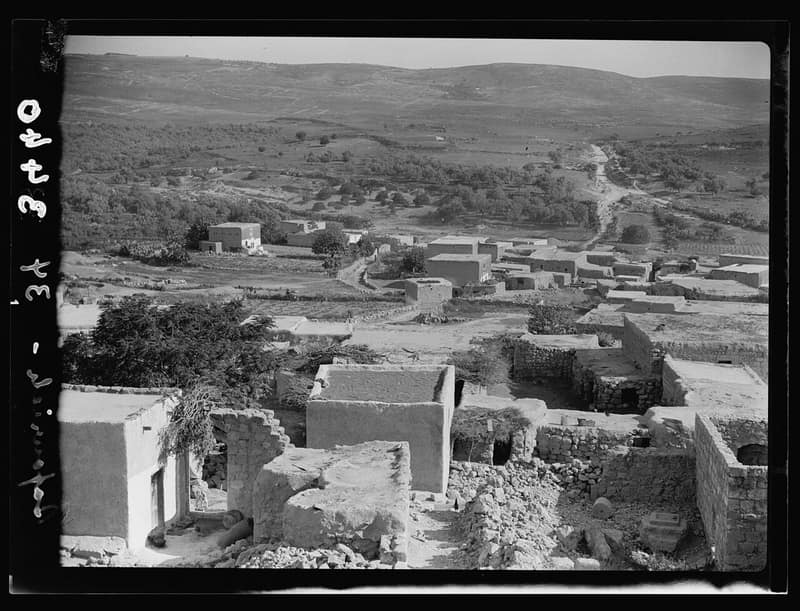
Cover image: Saffuriyya, the largest village of the Nazareth district, before 1948. Matson Photo Service, Library of Congress (public domain), via Wikimedia Commons
The Galilee was the last region of Palestine to be taken in 1948 and the one emptied most quickly. Its two great sweeps were Operation Dekel in July and Operation Hiram at the end of October, and between them they cleared the Acre, Safad, Nazareth and Tiberias districts almost entirely. This walk moves through them in roughly that order, village by village, because the scale of what happened is only legible one place at a time.
Each stop is a settlement with a name, an acreage and a population recorded in the Mandate’s own statistics. Saffuriyya was the largest village of the Nazareth district, layered over ancient Sepphoris. Al-Birwa held about fifteen hundred Muslims and Christians on a rocky hill east of Acre. Lubya was among the largest villages of Tiberias and twice beat back attacks before it fell. Al-Ghabisiyya had signed a non-aggression pact with its Jewish neighbours, which did not prevent the Carmeli Brigade from attacking it in May. These were not encampments. They were towns with schools, mosques, churches, olive presses and cemeteries, and the sites were afterwards planted with pines, built over, or left to the cactus that still traces the field boundaries.
Two of the villages here were not emptied by battle at all. The people of Iqrit and Kafr Bir’im were told by the army to leave for a matter of weeks, for security reasons, on the Lebanese border. “We were put in army vehicles and driven to the village of Rama, and told we would be allowed to return within 15 days,” Lutfallah Atallah of Iqrit told Al Jazeera in 2013. Israel’s Supreme Court backed the villagers’ right to return — Iqrit’s in 1951, Kafr Bir’im’s two years later — and both villages were then destroyed anyway — Iqrit’s houses some six months after its ruling, expressly so the ruling could not be enforced, and Kafr Bir’im from the air in 1953. Only Kafr Bir’im’s church was left intact. Both communities are still in the country. Both are still not in their villages.
The category the state built for that situation is the last thing this walk asks you to look at. A present absentee — nifkadim nokhahim — is a Palestinian who never left, who holds Israeli citizenship, and whose land was nonetheless classified as absentee property and taken. It is a legal position with no counterpart elsewhere: present in the state, absent from one’s own field. Michael Kardoush, who left Nazareth in 1954 rather than live under military government, put the sensation more plainly than any statute — you are still in the same place, and you ask whether the air and the sky are yours.
Land Day closes the walk because it is where the Galilee answered. On 30 March 1976 a general strike against land confiscation was met with gunfire and six Palestinian citizens of Israel were killed, three of them from Sakhnin. It was the first mass mobilisation by the Palestinians who had remained since 1948, and it is now marked every year, everywhere Palestinians are. The villages in this exhibition are gone. The claim on them is not.
Sources
Drawn from 8 villages · 2 places · 2 testimonies · 1 glossary term · 1 timeline event.
- 01
SafedPlace
Upper Galilee
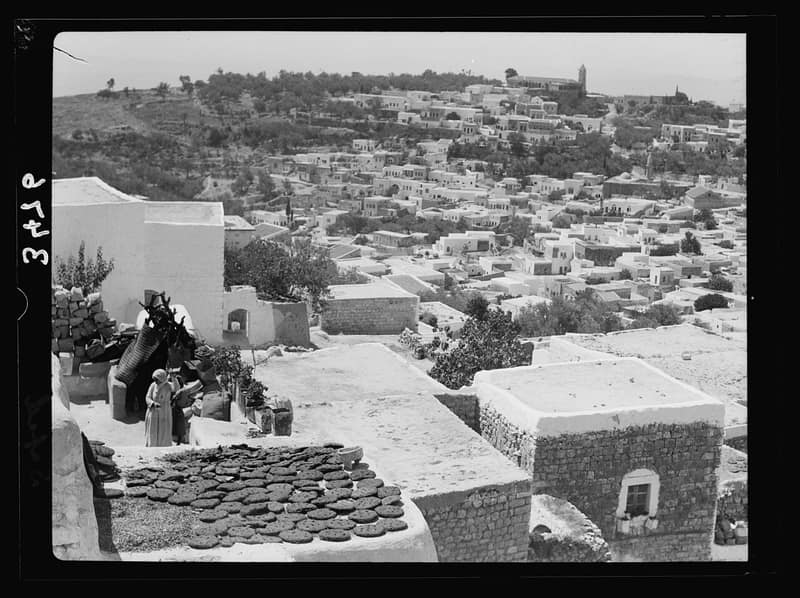
Begin on the hill. A town of mystics, weavers and rebels, and about ten thousand Palestinians, almost none of whom were in it by the end of May 1948.
Safed — Safad, the city on the hill — was a Galilee town of mystics, weavers and rebels until May 1948, when nearly all of its roughly ten thousand Palestinians fled or were driven out as the town fell. Its stone Arab quarter survives as an artists' colony, and its refugees carry Safad with them still.
Open this record↑ StartStop 2 ↓ - 02
Ayn al-ZaytunVillage
Safad
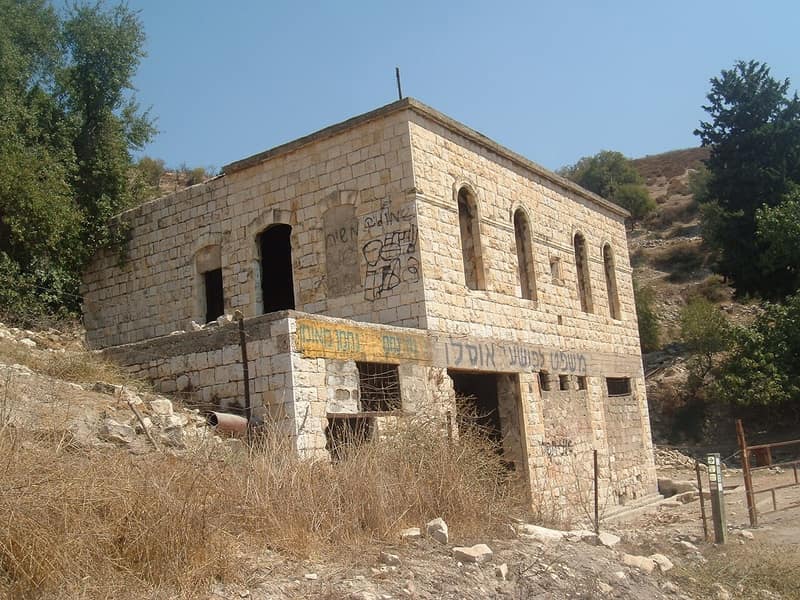
Safad's northern suburb, taken on 1 May 1948 as the prelude to the town — with thirty-seven of its prisoners killed.
Ayn al-Zaytun stood a kilometre and a half north of Safad and was treated as its suburb; 820 people held 1,100 dunums in 1944/45. Palmach troops took it on 1 May 1948 as a prelude to the capture of Safad, and thirty-seven men held as prisoners were probably among some seventy people killed in a gully between the village and the city. The houses were blown up on 2 and 3 May in full view of Safad.
- 03
SafsafVillage
Safad
The first village taken in Operation Hiram, in late October. What happened there was recorded by the former head of the Haganah national staff.
Safsaf, seven kilometres from Safad, was the first village taken in Operation Hiram and the site of one of its massacres. Israel Galili, formerly head of the Haganah national staff, listed fifty-two men tied with a rope, dropped into a well and shot, ten of them killed, and three cases of rape; villagers told Nafez Nazzal that about seventy men were blindfolded and shot one after another in front of them. Its 910 people held 7,391 dunums in 1944/45.
- 04
SaffuriyyaVillage
Nazareth
The largest village of the Nazareth district, built over ancient Sepphoris, bombed from the air in July 1948.
Saffuriyya was the largest village of the Nazareth district — a place layered over ancient Sepphoris — until it was bombed and occupied in July 1948. Its people scattered to Nazareth and to refugee camps in Lebanon; the moshav of Zippori and an archaeological park now occupy its lands.
- 05
Ameen Muhammad Ali (Abu Arab)Testimony
He was thirteen. The raid came while the village was breaking the Ramadan fast — which is to say, while everyone was indoors.
Thirteen years old when Saffuriyya was attacked in July 1948, he describes the air raid that emptied the village during the Ramadan iftar.
- 06
Al-BirwaVillage
Acre
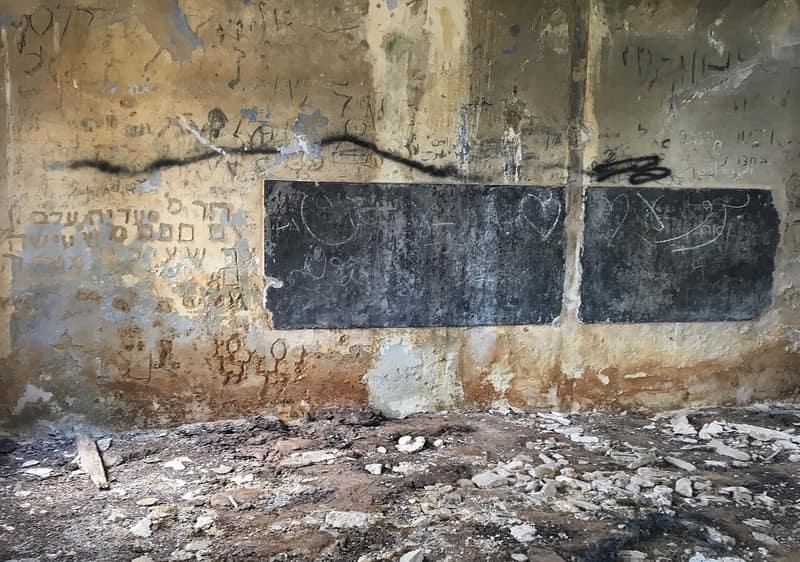
A farming village of about 1,500 Muslims and Christians east of Acre, and the birthplace of Mahmoud Darwish. A school and three ruins survive.
Al-Birwa, on a rocky hill east of Acre, was a farming village of some 1,500 people — Muslims and Christians — and the birthplace of the poet Mahmoud Darwish. Captured in July 1948, it was destroyed almost entirely; a school, two shrines, and three houses are all that remain.
- 07
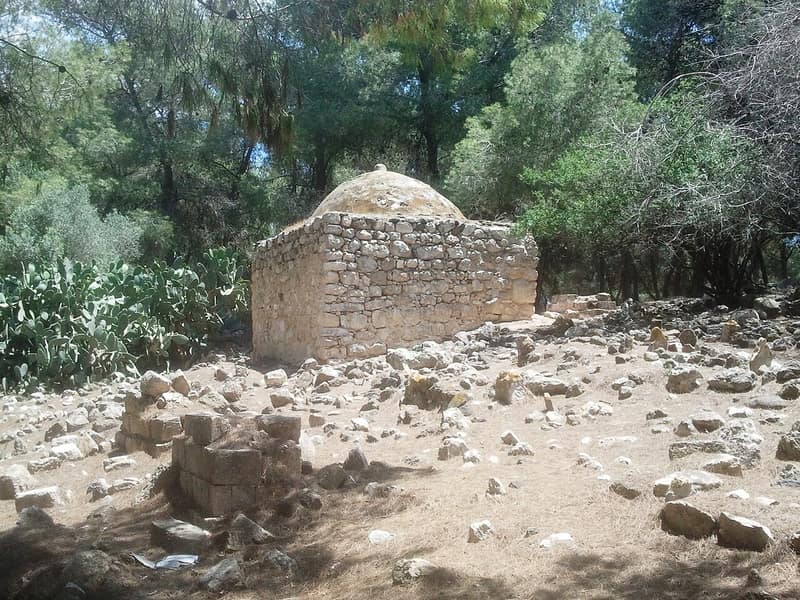
LubyaVillage
Tiberias
One of the largest villages of the Tiberias district. Its ruins lie under a planted pine forest — the standard method for making a site unreadable.
Lubya, one of the largest villages of the Tiberias district, stood on a rocky hill over the Nazareth road and twice beat back attacks before its people fled the fall of Nazareth in July 1948. Its ruins lie under the JNF's Lavi and South Africa pine forests — a landscape of erasure that refugee historians have made one of the best-documented of any village.
- 08
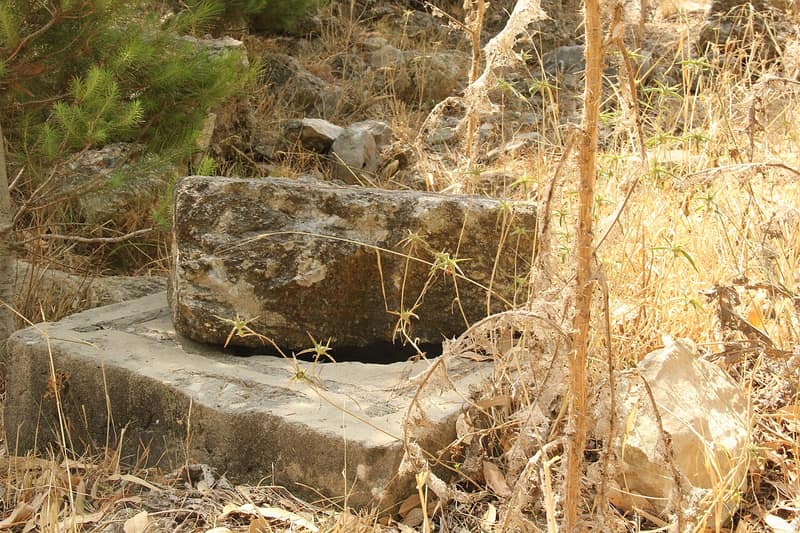
Al-GhabisiyyaVillage
Acre
It had a non-aggression pact with its Jewish neighbours. It was attacked in May 1948 anyway, and its people then spent years losing in Israel's courts.
Al-Ghabisiyya was a village northeast of Acre that had a non-aggression pact with its Jewish neighbors — yet the Carmeli Brigade attacked it anyway in May 1948. Its people fought for years in Israel's courts to return, and lost; only the mosque and cemetery remain, and villagers still pray outside the sealed mosque.
- 09
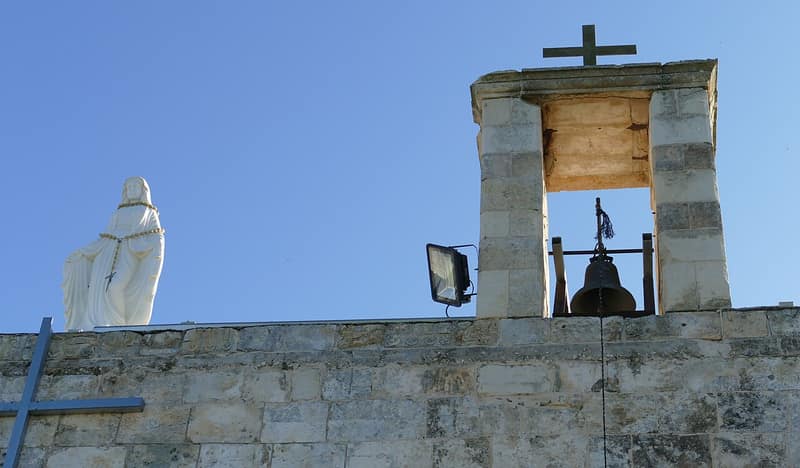
IqritVillage
Acre
Told they could return in a fortnight. The Supreme Court agreed they could return. The army destroyed the village instead.
Iqrit was a Greek Catholic village in the northern Galilee whose residents left in November 1948 on the army's promise that they could return within weeks. Israel's Supreme Court ruled their evacuation illegal — but on Christmas Eve 1951 the village was demolished, and the people of Iqrit have been fighting to go home ever since.
- 10
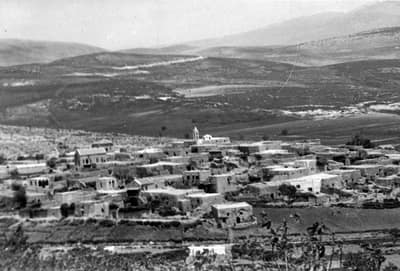
Kafr Bir'imVillage
Safad
The same promise, the same court, the same answer: the village bombed in 1953, the church left standing. Its descendants still hold their feasts in it.
Kafr Bir'im was a Maronite stone-built village in the Upper Galilee, surrounded by gardens, olive groves, and vineyards. Its people were ordered out in November 1948 on a promise of return; instead the village was bombed in 1953, and only its church and bell tower still stand above the ruins.
- 11
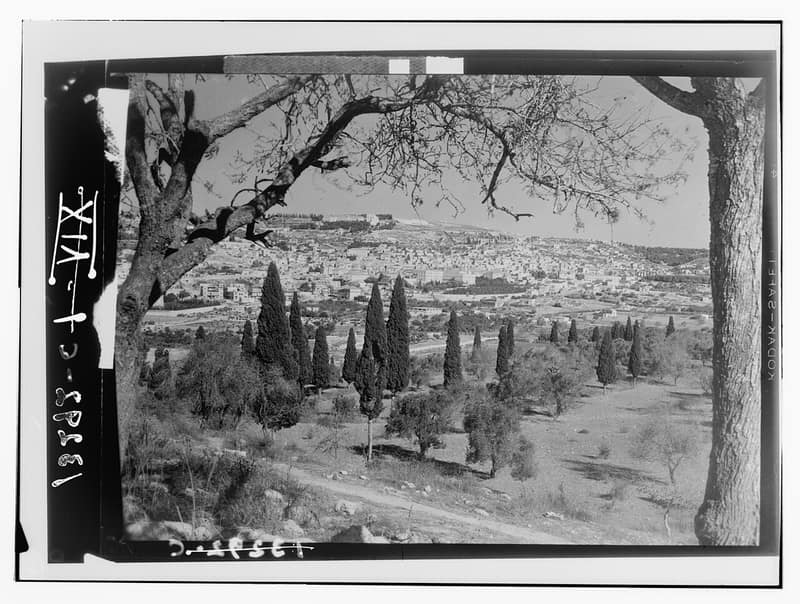
NazarethPlace
Lower Galilee
The Galilee city that survived — ordered emptied, spared by one officer's refusal — and so became the capital of the Palestinians of ’48.
Nazareth — al-Nasira, the childhood home of Jesus — is the city that survived 1948: ordered emptied, it was spared by a single officer's refusal, and grew into the largest Palestinian city in Israel and the cultural capital of the Palestinians of '48.
- 12
Present AbsenteeGlossary
legal
The category invented for those who stayed: an Israeli citizen who never left the country, legally absent from their own field.
Israeli administrative usage — nifkadim nokhahim — for a Palestinian who never left the country and holds Israeli citizenship, but whose land and home were classified as 'absentee property' and taken anyway: present in the state, legally absent from their own field.
- 13
Michael KardoushTestimony
He left Nazareth in 1954 rather than live under military government, walking eighteen kilometres to Lebanon. His question is the exhibition's.
He left Nazareth in 1954 rather than live under the military government imposed on Palestinian citizens of Israel, walking 18 kilometres across the border to Lebanon.
- 14
Land DayTimeline
1976
30 March 1976. Six killed in a general strike against land confiscation in the Galilee — and a national day made out of it.
A general strike against land confiscation in the Galilee is met with gunfire; six Palestinian citizens of Israel are killed, and a new national day is born.
Open this record↑ Stop 13End of the walk
End of the walk
You have passed 14 stops across 5 rooms of the archive. Every one of them is a full record with its own sources — the exhibition supplied only the order.
Exit through the archive
Cite this page
Every claim above carries its sources — citation is the point.
- Chicago
“The Villages of the Galilee.” Exhibitions, FALASTEEN.AI. Accessed 22 August 2026. https://falasteen.ai/exhibitions/the-villages-of-the-galilee.- MLA
“The Villages of the Galilee.” Exhibitions, FALASTEEN.AI, 2026, https://falasteen.ai/exhibitions/the-villages-of-the-galilee. Accessed 22 August 2026.- BibTeX
@misc{falasteen-the-villages-of-the-galilee,
  title        = {The Villages of the Galilee},
  howpublished = {\url{https://falasteen.ai/exhibitions/the-villages-of-the-galilee}},
  organization = {FALASTEEN.AI — A Living Archive for Palestine},
  year         = {2026},
  note         = {Accessed 2026-08-22}
}