Acre district · depopulated 1948 · 2 min read
Al-Ghabisiyya
الغابسية
Al-Ghabisiyya was a village northeast of Acre that had a non-aggression pact with its Jewish neighbors — yet the Carmeli Brigade attacked it anyway in May 1948. Its people fought for years in Israel's courts to return, and lost; only the mosque and cemetery remain, and villagers still pray outside the sealed mosque.
See Al-Ghabisiyya on the Atlas33.0005°N · 35.1500°E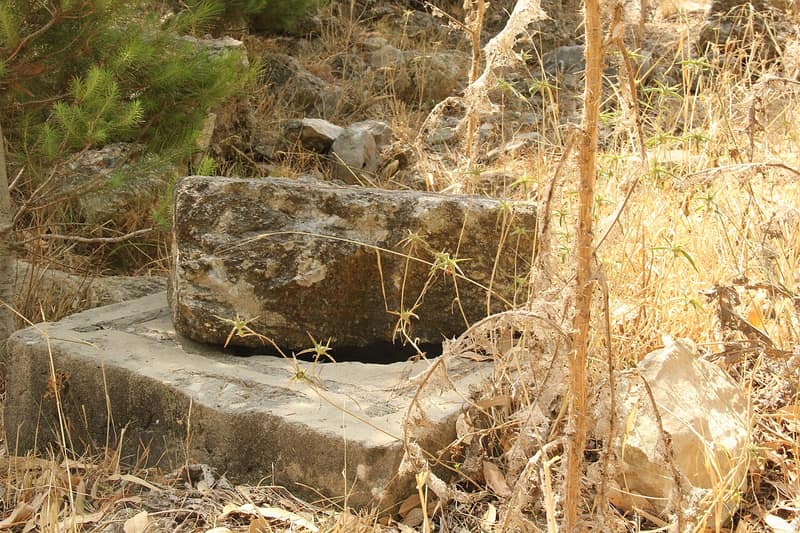
Al-Ghabisiyya stood on the edge of the plain sixteen kilometers northeast of Acre, surrounded by olives, figs, and pomegranate gardens, with a stream running near. A Bronze Age wine press has been found there, and under the Crusaders it was La Gabasie, a fief of Casal Imbert; the Ottoman register of 1596 counted fifty-eight households. Its mosque dated from before 1818, and a water mill served its farmers. The 1945 survey counted 690 people, all Muslims; together with the neighboring villages of Shaykh Dannun and Shaykh Dawud it held 11,771 dunums, including 300 dunums of olive groves in al-Ghabisiyya itself.
The village had a non-aggression pact with the nearby Jewish settlements, and in the early months of the war its people supplied the Haganah with intelligence and ammunition in return for a promise that the village would not be entered or harmed. Despite these agreements, the Carmeli Brigade attacked al-Ghabisiyya on 21 May 1948 as part of Operation Ben-Ami, entering the village, in one account, ‘with guns blazing’ and killing a number of its people — the historian Saleh Abdel Jawad counts it a massacre, and six villagers may have been executed on suspicion of involvement in the Yehiam convoy ambush. The survivors fled to neighboring villages and then, after the conquest of the Galilee, to Lebanon or to Arab towns inside Israel. They tried repeatedly to return: some resettled the village, but on 24 January 1950 the military governor ordered everyone out within forty-eight hours and declared al-Ghabisiyya a closed military area. In 1951 Israel’s High Court ruled the eviction order improper — whereupon the military government sealed the village and issued a new declaration, which the court upheld.
The village’s lands were expropriated and its houses demolished in 1955; only the large mosque and the cemetery remained. In 1994 members of the village committee began renovating the mosque and praying in it, until the Israel Land Administration sealed its entrance in 1996 and removed the Qurans and prayer rugs in 1997. The uprooted villagers, most of whom live nearby as citizens of Israel, still pray in the field outside their sealed mosque, and its millpond and mill ruins stand in the overgrown site.
Sources
Cited works
3- palestineremembered.com — index(opens in a new tab)https://www.palestineremembered.com/Acre/al-Ghabisiyya/index.html
- zochrot.org — en(opens in a new tab)https://www.zochrot.org/villages/village_details/49385/en
- palquest.org — al ghabisiyya(opens in a new tab)https://www.palquest.org/en/place/16811/al-ghabisiyya
Connected in the archive
23 connected records23 records elsewhere in the archive are linked to this one, each by a piece of evidence you can read below.
named in this record — 1 record
One record names the other. A pointer for reading, not a claim that they belong to each other.
- Acreعكا
Evidence — Inferred from the text — read the evidence: Al-Ghabisiyya stood on the edge of the plain sixteen kilometers northeast of Acre, surrounded by olives, figs, and pomegranate gardens, with a stream running near.
names this place — 1 record
One record names the other. A pointer for reading, not a claim that they belong to each other.
- The Villages of the Galilee
Evidence — From a recorded field in this archive: It had a non-aggression pact with its Jewish neighbours. It was attacked in May 1948 anyway, and its people then spent years losing in Israel's courts.
in the same district — 21 records
Filed near each other — the same Mandate district, or the same uncommon subject tags.
- Al-Bassaالبصة
Evidence — From a recorded field in this archive: Both recorded in the Acre district.
- Al-Birwaالبروة
Evidence — From a recorded field in this archive: Both recorded in the Acre district.
- Al-Damunالدامون
Evidence — From a recorded field in this archive: Both recorded in the Acre district.
- Al-Kabriالكابري
Evidence — From a recorded field in this archive: Both recorded in the Acre district.
- Al-Manshiyya (Acre)المَنْشِيَّة
Evidence — From a recorded field in this archive: Both recorded in the Acre district.
- Al-Mansuraالمنصورة
Evidence — From a recorded field in this archive: Both recorded in the Acre district.
- and 15 more
Cite this page
Every claim above carries its sources — citation is the point.
- Chicago
“Al-Ghabisiyya.” Village Memory, FALASTEEN.AI. Accessed 22 August 2026. https://falasteen.ai/memory/al-ghabisiyya.- MLA
“Al-Ghabisiyya.” Village Memory, FALASTEEN.AI, 2026, https://falasteen.ai/memory/al-ghabisiyya. Accessed 22 August 2026.- BibTeX
@misc{falasteen-al-ghabisiyya,
  title        = {Al-Ghabisiyya},
  howpublished = {\url{https://falasteen.ai/memory/al-ghabisiyya}},
  organization = {FALASTEEN.AI — A Living Archive for Palestine},
  year         = {2026},
  note         = {Accessed 2026-08-22}
}