Exhibition 3 of 8
The Poets of Exile
A people carried by its poems
From Darwish's identity card to Alareer's kite — how Palestinian poets turned dispossession into some of the most enduring verse of the modern era.
8 stops · walked in order
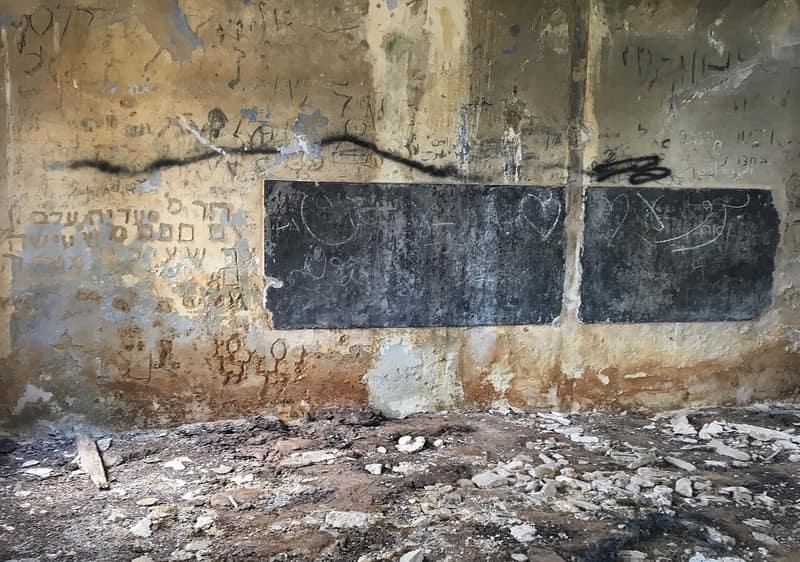
Cover image: The surviving school of al-Birwa, Darwish's village. Wafaa Khatib, CC BY-SA 4.0, via Wikimedia Commons
Palestinian poetry is not decoration on the national question; it is one of the question’s most precise instruments. This exhibition follows the thread from the generation of 1948 — Kanafani, Darwish, Touqan — through the poets of the camps and the diaspora, to the poets of Gaza writing under bombardment now.
Read the poems slowly. They are short. They are also load-bearing.
Drawn from 5 poets · 3 poems.
- 01
Ghassan KanafaniPoet
1936–1972
The commando who never fired a gun — his weapon was the ballpoint pen.
A pioneering voice of Palestinian resistance literature, Kanafani wove journalism, fiction, and political commitment into a single moral project.
Open this record↑ StartStop 2 ↓ - 02
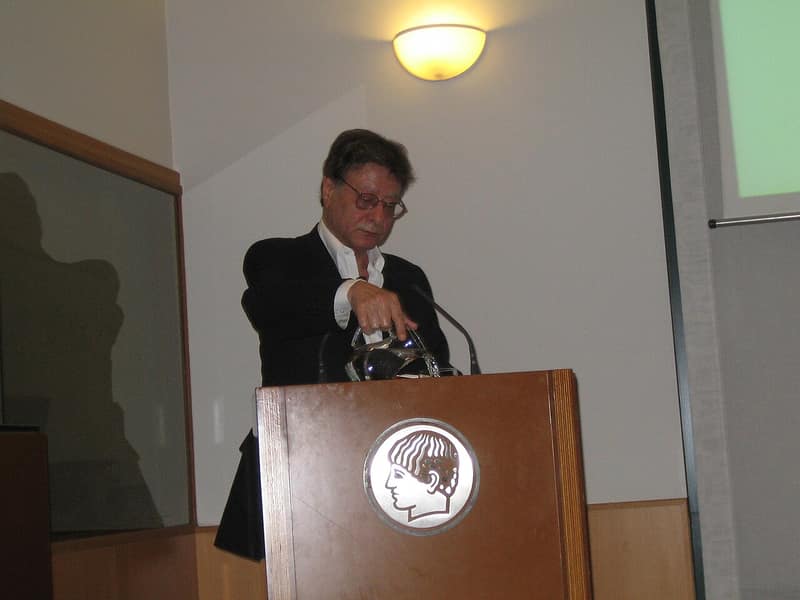
Mahmoud DarwishPoet
1941–2008
The national poet: identity, memory, and the olive trees.
The national poet of Palestine, Darwish turned exile, memory, and resistance into some of the most widely read Arabic poetry of the modern era.
- 03
Identity CardPoem
Mahmoud Darwish
“Record! I am an Arab” — the poem that made a checkpoint answerable to verse.
Darwish's most famous early poem turned an ID number into defiance: its refrain 'Record! I am an Arab' made the young poet famous overnight and remains one of the most quoted lines in modern Arabic poetry.
- 04
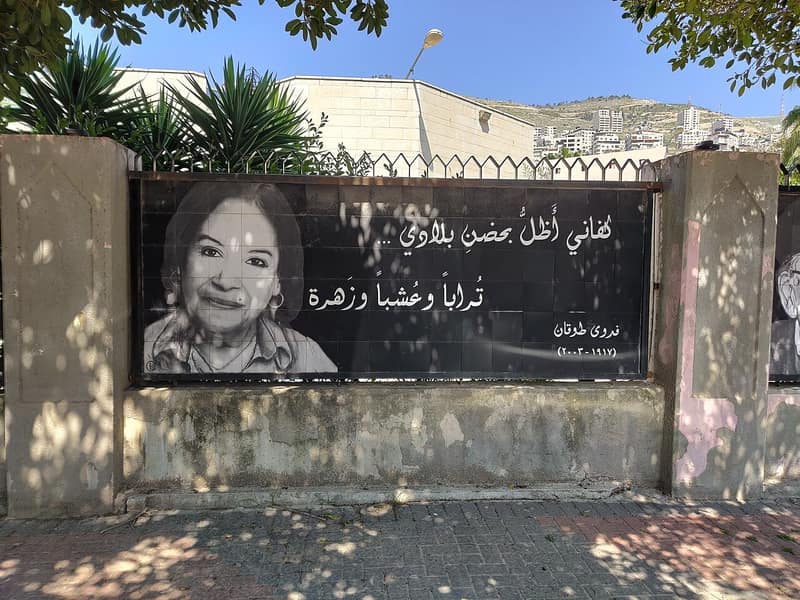
Fadwa TouqanPoet
1917–2003
Nablus's sister of sorrow: love, loss, and refusal.
One of the most celebrated female poets of the Arab world, Touqan gave voice to love, loss, and the Palestinian struggle from her home in Nablus.
- 05
Enough for MePoem
Fadwa Touqan
The poem carved on her gravestone — in Arabic and English.
Touqan's brief late poem asks for one thing only — to die on her country's soil and remain there as dust, grass, and a flower. Its lines are carved on her gravestone in Nablus.
- 06
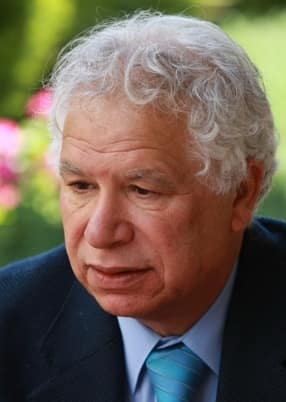
Mourid BarghoutiPoet
1944–2021
The man who crossed a bridge and found home had become a metaphor.
Poet of exile and return, Barghouti turned the absurdities and griefs of displacement into luminous, ironic prose and verse.
- 07
Refaat AlareerPoet
1979–2023
Gaza's professor of literature, killed in December 2023.
Professor, editor, and poet of Gaza, Alareer taught a generation of young writers to write back — and left behind a poem asking to be remembered.
- 08
If I Must DiePoem
Refaat Alareer
Read by Brian Cox at the end of the exhibition — the white kite, and the tale.
Written in 2011 and shared again weeks before an Israeli airstrike killed him in December 2023, Alareer's final poem became a global testament — a request to be remembered as a story, and a kite, bringing hope.
Open this record↑ Stop 7End of the walk
End of the walk
You have passed 8 stops across 2 rooms of the archive. Every one of them is a full record with its own sources — the exhibition supplied only the order.
Exit through the archive
Cite this page
Every claim above carries its sources — citation is the point.
- Chicago
“The Poets of Exile.” Exhibitions, FALASTEEN.AI. Accessed 22 August 2026. https://falasteen.ai/exhibitions/the-poets-of-exile.- MLA
“The Poets of Exile.” Exhibitions, FALASTEEN.AI, 2026, https://falasteen.ai/exhibitions/the-poets-of-exile. Accessed 22 August 2026.- BibTeX
@misc{falasteen-the-poets-of-exile,
  title        = {The Poets of Exile},
  howpublished = {\url{https://falasteen.ai/exhibitions/the-poets-of-exile}},
  organization = {FALASTEEN.AI — A Living Archive for Palestine},
  year         = {2026},
  note         = {Accessed 2026-08-22}
}