Hebron
الخليل
Hebron — al-Khalil, the city of Abraham — is one of the oldest living cities in the world, built around the Ibrahimi Mosque over the Cave of the Patriarchs, famed for its glass and its hospitality, and divided since 1997 into the sharpest microcosm of the occupation.
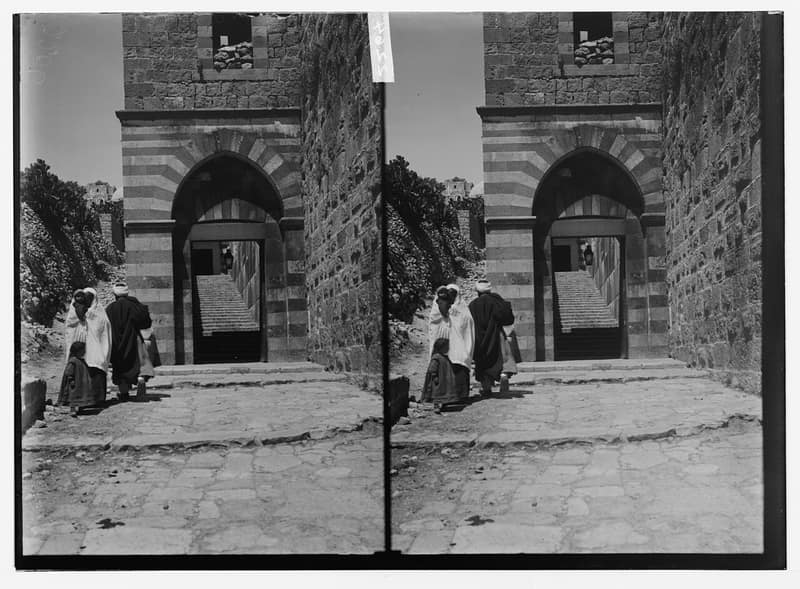
Al-Khalil — “the Friend,” meaning Abraham, the friend of God — has been a city for some five thousand years. Settlement at Tell Rumeida reaches back to the Bronze Age; tradition holds that Abraham purchased the Cave of Machpelah here as a burial place, and over it Herod the Great raised the massive stone enclosure that today holds the Ibrahimi Mosque, venerated by Muslims as by Jews and Christians and in continuous religious use since the early Roman period. The Old Town that grew around the shrine — Mamluk courtyard houses, suqs, khans and Sufi lodges — was inscribed as a UNESCO World Heritage site in 2017, and simultaneously placed on the list of World Heritage in Danger.
Hebron’s character is hospitality made civic. The Takiyya, a hospice said to descend from Abraham’s own table, has served free meals to the poor and to travellers since at least the ninth century. Its crafts traveled further: Hebron glass, blown in furnace-fired workshops by a tradition locals trace back generations, along with ceramics and leatherwork, and the grapes of the surrounding hills cooked down into dibs, the thick molasses of the harvest.
Its modern history is the occupation at its most intimate. Occupied in 1967, the city saw Israeli settlers take up residence in its heart from 1968. In February 1994 an American-born settler opened fire on dawn worshippers in the Ibrahimi Mosque, killing twenty-nine; the mosque was then partitioned. Under the 1997 Hebron Protocol the city was split in two: H1, the bulk of it, under the Palestinian Authority, and H2 — some twenty percent, including the Old City — under Israeli military control, where several hundred settlers live among tens of thousands of Palestinians under army guard. Al-Shuhada Street, once the market spine of the Old City, has been closed to Palestinians for decades, its shops welded shut, its families reaching their homes by back lanes and rooftops.
And yet the Takiyya still ladles out its daily meals, the glassblowers still fire their furnaces, and the Old City’s families still refuse to leave. Hebron endures as it began: Abraham’s city, generous and unyielding at once.
Sources
Cited works
2- whc.unesco.org(opens in a new tab)https://whc.unesco.org/en/list/1565/
- ochaopt.org — h2 spotlight april 2019PDF(opens in a new tab)https://www.ochaopt.org/sites/default/files/h2_spotlight_april_2019.pdf
Cite this page
Every claim above carries its sources — citation is the point.
- Chicago
“Hebron.” Places, FALASTEEN.AI. Accessed 22 August 2026. https://falasteen.ai/places/hebron.- MLA
“Hebron.” Places, FALASTEEN.AI, 2026, https://falasteen.ai/places/hebron. Accessed 22 August 2026.- BibTeX
@misc{falasteen-hebron,
  title        = {Hebron},
  howpublished = {\url{https://falasteen.ai/places/hebron}},
  organization = {FALASTEEN.AI — A Living Archive for Palestine},
  year         = {2026},
  note         = {Accessed 2026-08-22}
}