Khan Younis
خان يونس
Khan Younis began in 1387 as a Mamluk caravanserai on the Egypt road and grew into the Gaza district's second town; 1948 made its refugee camp one of the Strip's largest, November 1956 left it a massacre to mourn, and the war since 2023 has left much of the city in ruins.
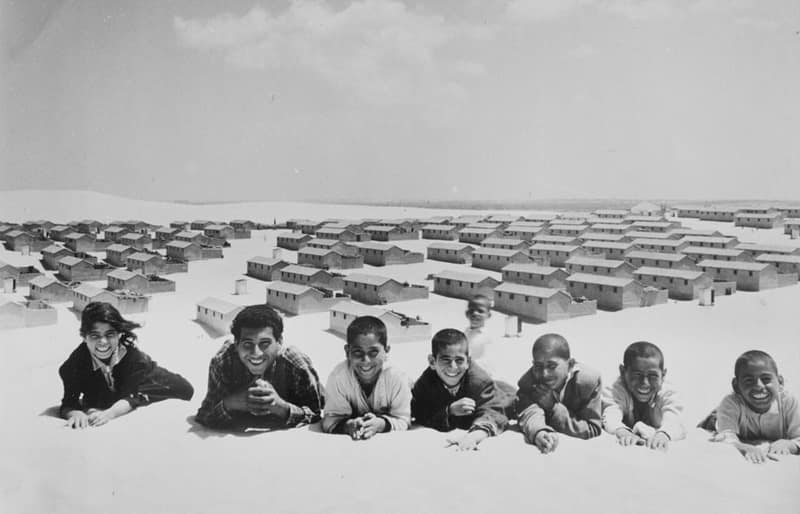
The town’s name is its origin. In 1387 the Mamluk emir Yunus al-Nuruzi, a high official of Sultan Barquq, built a khan — a fortified caravanserai — on the inland road between Egypt and the Levant, and the settlement that gathered around it took his name: Khan Yunis. For centuries it was the first substantial stop in Palestine for caravans from Cairo; the vaulted khan still stood at the town’s heart into the present century, and the cotton and market trade of the southern plain made Khan Younis, by the Mandate era, the second town of the Gaza district.
The war of 1948 remade it. The Egyptian army held the Gaza Strip, and refugees from across southern Palestine — from Bir al-Saba and the Naqab, from Majdal and the villages of the coastal plain — poured into the town. A tent camp rose on the dunes to the west, replaced in the 1950s by cement-block shelters, and Khan Younis camp became one of the largest concentrations of refugees in the Strip, town and camp growing into a single community.
In the Suez Crisis of 1956 Israel occupied Gaza, and on 3 November 1956, in Khan Younis, Israeli forces carrying out house-to-house searches killed a large number of Palestinian men. UNRWA’s records put the toll in Khan Younis at 275; other accounts give different figures, and the exact number remains contested, but the day entered Palestinian memory as the Khan Younis massacre. Nine days later scores more were killed at Rafah before Israel withdrew from the Strip in March 1957.
In the war that began in October 2023, Khan Younis was among the hardest-hit places in Gaza: the focus of a months-long ground offensive from December 2023, its people ordered to evacuate again and again toward the coast at al-Mawasi, its Nasser Hospital — the largest in the south — besieged and raided. United Nations satellite assessments through 2024 found that a majority of buildings across the Khan Younis governorate had been damaged or destroyed, and whole quarters of the city lie in ruins. Six centuries of armies have passed its khan on the Egypt road. Khan Younis remains — devastated, and not erased.
Sources
Cited works
2- palestineremembered.com — index(opens in a new tab)https://www.palestineremembered.com/GeoPoints/Khan_Yunis_1354/index.html
- news.un.org(opens in a new tab)https://news.un.org/en/story/2023/11/1144092
Cite this page
Every claim above carries its sources — citation is the point.
- Chicago
“Khan Younis.” Places, FALASTEEN.AI. Accessed 22 August 2026. https://falasteen.ai/places/khan-younis.- MLA
“Khan Younis.” Places, FALASTEEN.AI, 2026, https://falasteen.ai/places/khan-younis. Accessed 22 August 2026.- BibTeX
@misc{falasteen-khan-younis,
  title        = {Khan Younis},
  howpublished = {\url{https://falasteen.ai/places/khan-younis}},
  organization = {FALASTEEN.AI — A Living Archive for Palestine},
  year         = {2026},
  note         = {Accessed 2026-08-22}
}