Tulkarm
طولكرم
Tulkarm — the 'Mount of the Vineyard' — was the market town where the Samarian hills meet the coastal plain, until the 1949 armistice line took most of its fields; its refugee camp is among the largest in the West Bank, and its streets have known every army of the last century.
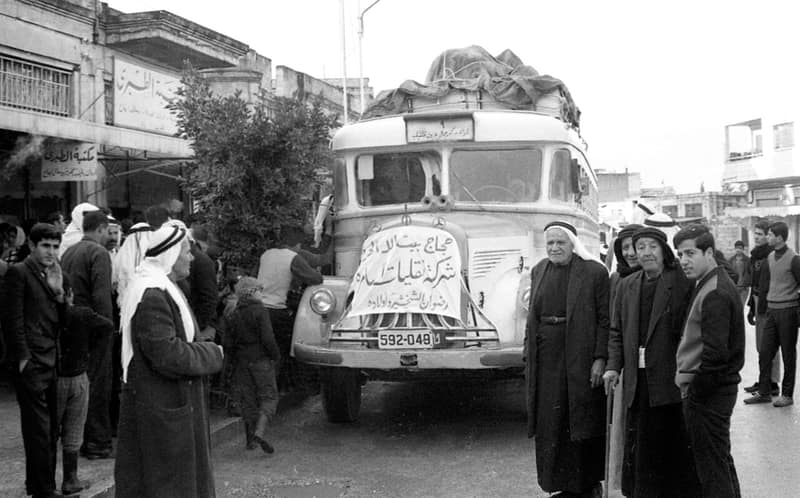
The name is Aramaic and older than the alphabet it is now written in: Tur Karma, the Mount of the Vineyard, a name the town’s terraced hills earned honestly. Tulkarm stands where the western slopes of the Samarian hills open onto the coastal plain, and geography made it a market: the place where hill villages sold their oil and bought what the plain grew, where the road from Nablus met the road along the coast. Under the Ottomans it was the seat of a district; the railway reached it, and in September 1918, in the great cavalry battle that ended Ottoman rule in Palestine, British and Australian horsemen took the town in a single day.
Under the Mandate, Tulkarm became the capital of its district, a busy market town of citrus groves and camel markets — and a stronghold of the 1936–1939 revolt, for which the British punished it more than once. The war of 1948 did not reach the town itself, but the armistice line of 1949 did: drawn just west of the houses, it left most of Tulkarm’s farmland — tens of thousands of dunams of citrus and field land — on the Israeli side, and cut the town off from the coastal villages it had traded with for centuries. Refugees from Jaffa, Haifa, Caesarea and the lost villages of the plain crowded in, and in 1950 a camp was established within the town that is today among the largest refugee camps in the West Bank, a dense quarter of a few dunams holding tens of thousands.
Occupied in 1967, Tulkarm was among the first West Bank cities transferred to Palestinian administration in the mid-1990s; in the second intifada it was raided and re-occupied repeatedly, and the separation barrier, built along the old armistice line, sealed its western face. In January 2025 the Israeli army extended its northern West Bank offensive to Tulkarm and the neighboring Nur Shams camp, displacing thousands and demolishing whole streets of the camps.
Through all of it the town kept its older vocation. The photograph above shows Tulkarm’s pilgrims gathering for the hajj buses to Mecca in 1971 — a market town’s piety and sociability intact under occupation. The vines of the Mount of the Vineyard are mostly gone to concrete now, but the name keeps the memory, and the town keeps the market.
Sources
Cited works
2- palestineremembered.com — index(opens in a new tab)https://www.palestineremembered.com/GeoPoints/Tulkarm_523/index.html
- unrwa.org — west bank(opens in a new tab)https://www.unrwa.org/where-we-work/west-bank
Cite this page
Every claim above carries its sources — citation is the point.
- Chicago
“Tulkarm.” Places, FALASTEEN.AI. Accessed 22 August 2026. https://falasteen.ai/places/tulkarm.- MLA
“Tulkarm.” Places, FALASTEEN.AI, 2026, https://falasteen.ai/places/tulkarm. Accessed 22 August 2026.- BibTeX
@misc{falasteen-tulkarm,
  title        = {Tulkarm},
  howpublished = {\url{https://falasteen.ai/places/tulkarm}},
  organization = {FALASTEEN.AI — A Living Archive for Palestine},
  year         = {2026},
  note         = {Accessed 2026-08-22}
}