The Olive Harvest
The autumn gathering of olives — a season of family, economy, and rootedness in a land where some trees are centuries old.
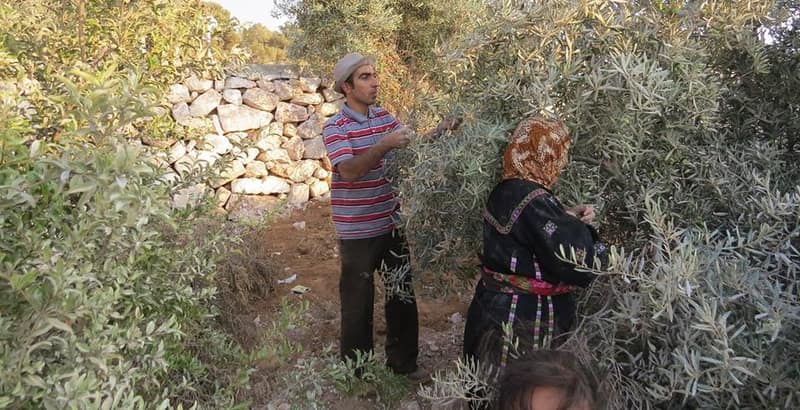
The olive tree is at the center of Palestinian agriculture and imagination. Tens of thousands of families depend on the olive season, and some of Palestine’s trees are centuries old — a living inheritance passed down through generations. Olives and olive oil anchor the Palestinian table, and a family’s oil for the year is pressed in the weeks after the harvest.
Each autumn, typically in October and November, the harvest becomes a collective ritual: families take time off work and school, spread tarps beneath the trees, and pick by hand from dawn, sharing meals and songs in the groves. It is a season of homecoming for Palestinians in cities and in exile.
The olive tree has also become a front line. Palestinian farmers routinely face attacks on their groves and restrictions on access to their land, and hundreds of thousands of olive trees have been uprooted or destroyed over the decades of occupation. To tend and harvest the tree is thus also an act of sumud — steadfastness — and the olive branch remains Palestine’s emblem of peace and rootedness.
Sources
Connected in the archive
10 connected records10 records elsewhere in the archive are linked to this one, each by a piece of evidence you can read below.
named in this record — 2 records
One record names the other. A pointer for reading, not a claim that they belong to each other.
- Sumud
Evidence — Inferred from the text — read the evidence: To tend and harvest the tree is thus also an act of sumud — steadfastness — and the olive branch remains Palestine's emblem of peace and rootedness.
- Sumud
Evidence — Inferred from the text — read the evidence: To tend and harvest the tree is thus also an act of sumud — steadfastness — and the olive branch remains Palestine's emblem of peace and rootedness.
on a related subject — 8 records
Filed near each other — the same Mandate district, or the same uncommon subject tags.
- Baladi Seeds
Evidence — From a recorded field in this archive: Shared tags: "farming", "land".
- Land Day
Evidence — Inferred from the text — read the evidence: Shared tag: "land".
- Musakhan and Maqluba
Evidence — Inferred from the text — read the evidence: Shared tag: "olive oil".
- Nabulsi Soap
Evidence — Inferred from the text — read the evidence: Shared tag: "olive oil".
- The Sabr
Evidence — Inferred from the text — read the evidence: Shared tag: "land".
- The Taboon
Evidence — Inferred from the text — read the evidence: Shared tag: "olive oil".
- and 2 more
Cite this page
Every claim above carries its sources — citation is the point.
- Chicago
“The Olive Harvest.” Culture, FALASTEEN.AI. Accessed 22 August 2026. https://falasteen.ai/culture/olive-harvest.- MLA
“The Olive Harvest.” Culture, FALASTEEN.AI, 2026, https://falasteen.ai/culture/olive-harvest. Accessed 22 August 2026.- BibTeX
@misc{falasteen-olive-harvest,
  title        = {The Olive Harvest},
  howpublished = {\url{https://falasteen.ai/culture/olive-harvest}},
  organization = {FALASTEEN.AI — A Living Archive for Palestine},
  year         = {2026},
  note         = {Accessed 2026-08-22}
}