Sumud
صمود
Steadfastness — the Palestinian ethic of remaining on the land and enduring, turned from a posture of survival into a way of life.
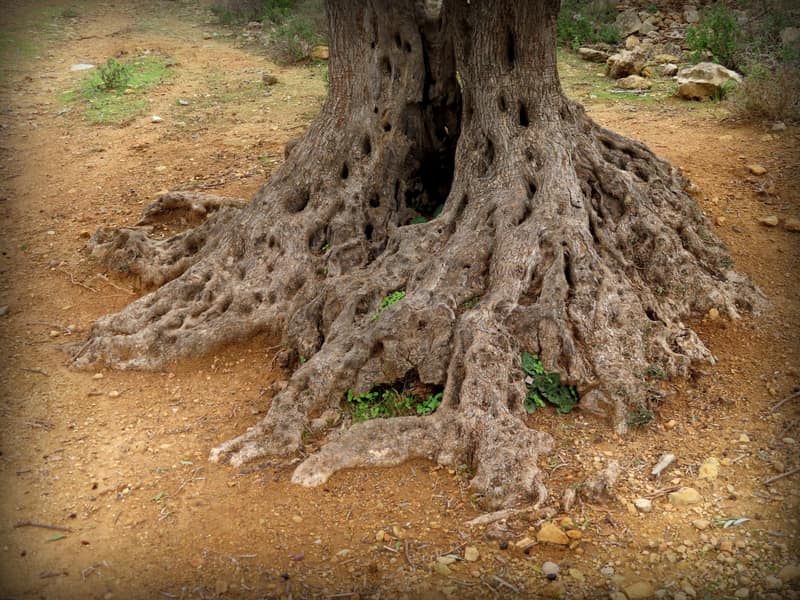
Sumud, from the Arabic root meaning “to stand firm,” is the concept Palestinians use for steadfastness: remaining on the land, preserving family, village, and memory, and refusing disappearance. It crystallized as a political idea after 1967, when life under occupation made staying — in one’s house, on one’s land, in one’s homeland — an achievement in itself.
Sumud is often described as a quiet resistance: replanting an uprooted olive grove, rebuilding a demolished home, opening a shop during a strike, teaching children their grandparents’ village names. Palestinian poets and artists have given it voice — in Mahmoud Darwish’s “Record! I am an Arab” (Sajjil ana Arabi), and in Tawfiq Zayyad’s vow “as if we were twenty impossibles… it is easier for me to die than to be uprooted.”
As an ethic, sumud binds the ordinary to the historical. It holds that presence itself — living, planting, marrying, mourning, and celebrating on the land — is the foundation on which all political claims rest.
Connected in the archive
17 connected records17 records elsewhere in the archive are linked to this one, each by a piece of evidence you can read below.
names this record — 6 records
One record names the other. A pointer for reading, not a claim that they belong to each other.
- Gaza: Siege and Sumud
Evidence — From a recorded field in this archive: Steadfastness — the word Gaza keeps demonstrating.
- Here We Will Stay
Evidence — Inferred from the text — read the evidence: Written for the Palestinians who remained inside Israel after 1948, it became the defining anthem of sumud — steadfastness on the land — and is still recited at Land Day commemorations and protests.
- Samah Jabr — Radiance in Pain and Resilience, and the recorded lectures
Evidence — Inferred from the text — read the evidence: …Psychiatry and Behavioral Sciences at George Washington University, a trainer in the Istanbul Protocol for the documentation of torture, and a co-founder of the Sumud Network for Mental Health.…
- Tatreez
Evidence — Inferred from the text — read the evidence: In refugee camps and across the diaspora, displaced women stitched the motifs of villages they could no longer visit, and the thob became an emblem of Palestinian identity and sumud.
- Tawfiq Ziyadتوفيق زيّاد
Evidence — Inferred from the text — read the evidence: His poetry fused that political life with the idiom of sumud, steadfastness.
- The Olive Harvest
Evidence — Inferred from the text — read the evidence: To tend and harvest the tree is thus also an act of sumud — steadfastness — and the olive branch remains Palestine's emblem of peace and rootedness.
named in this record — 2 records
One record names the other. A pointer for reading, not a claim that they belong to each other.
- Mahmoud Darwishمحمود درويش
Evidence — Inferred from the text — read the evidence: Palestinian poets and artists have given it voice — in Mahmoud Darwish's "Record!
- Sumud
Evidence — Inferred from the text — read the evidence: Sumud, from the Arabic root meaning "to stand firm," is the concept Palestinians use for steadfastness: remaining on the land, preserving family, village, and memory, and refusing disappearance.
on a related subject — 9 records
Filed near each other — the same Mandate district, or the same uncommon subject tags.
- Baladi Seeds
Evidence — Inferred from the text — read the evidence: Shared tag: "land".
- Hamas Contained: The Rise and Pacification of Palestinian Resistance
Evidence — Inferred from the text — read the evidence: Shared tag: "resistance".
- Jeninجنين
Evidence — Inferred from the text — read the evidence: Shared tag: "resistance".
- Keffiyeh
Evidence — Inferred from the text — read the evidence: Shared tag: "resistance".
- Land Day
Evidence — Inferred from the text — read the evidence: Shared tag: "land".
- Perfect Victims: And the Politics of Appeal
Evidence — Inferred from the text — read the evidence: Shared tag: "resistance".
- and 3 more
Cite this page
Every claim above carries its sources — citation is the point.
- Chicago
“Sumud.” Culture, FALASTEEN.AI. Accessed 22 August 2026. https://falasteen.ai/culture/sumud.- MLA
“Sumud.” Culture, FALASTEEN.AI, 2026, https://falasteen.ai/culture/sumud. Accessed 22 August 2026.- BibTeX
@misc{falasteen-sumud,
  title        = {Sumud},
  howpublished = {\url{https://falasteen.ai/culture/sumud}},
  organization = {FALASTEEN.AI — A Living Archive for Palestine},
  year         = {2026},
  note         = {Accessed 2026-08-22}
}