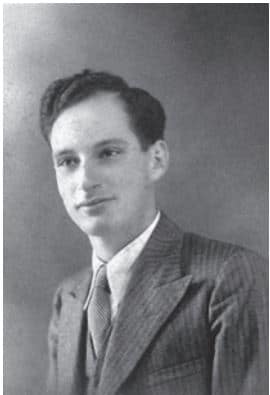
Dimitri Baramki
ديمتري برامكي
Archaeologist
Chief archaeologist of Mandate Palestine and excavator of Hisham's Palace at Jericho, who lost his country in 1948 and rebuilt his career in the museum of the American University of Beirut.
Dimitri Baramki was born in Jerusalem in 1909 and joined the Department of Antiquities of Mandatory Palestine, rising to chief archaeologist from 1938 to 1948 in succession to Robert Hamilton. He was one of the very few Palestinians to hold a senior post in the Mandate’s antiquities administration, in a period when the country’s archaeology was overwhelmingly the work of European and American expeditions.
His major excavation was Khirbat al-Mafjar near Jericho — the early Islamic desert estate known as Hisham’s Palace — which he dug between 1934 and 1948. Among the finds was graffiti naming Hisham ibn Abd al-Malik, on the basis of which he dated the construction to the caliph’s reign, 724–743 CE. The site’s carved stucco, bath hall, and the great mosaic of the Tree of Life are among the finest surviving works of Umayyad art; Baramki published the excavation in successive reports in the Quarterly of the Department of Antiquities in Palestine.
The end of the Mandate ended that career. Baramki briefly headed the Rockefeller Museum in Jerusalem in 1948, then worked as a consultant and librarian for the American School of Oriental Research, and declined an appointment to head a West Bank Department of Antiquities under Jordanian rule. In 1952 he was invited to the American University of Beirut as curator of its Archaeological Museum, and taught there as a professor of archaeology until retiring in 1975; his AUB doctorate, completed in 1953, was on Arab culture and architecture of the Umayyad period. He died in California in 1984. The excavator of Palestine’s most important Umayyad site spent the second half of his working life unable to work in the country whose antiquities he had been responsible for.
Selected works
- Excavation reports on Khirbat al-Mafjar, Quarterly of the Department of Antiquities in Palestine
- Phoenicia and the Phoenicians (1961)
- The Art and Architecture of Ancient Palestine (1969)
Sources
Further reading
An external biography or archive holding more on this life than the entry above.
Connected in the archive
12 connected records12 records elsewhere in the archive are linked to this one, each by a piece of evidence you can read below.
born in — 1 record
- Jerusalemالقدس
Evidence — From a recorded field in this archive: birthplace: "Jerusalem, Palestine" → Jerusalem (Jerusalem Governorate)
named in this record — 1 record
One record names the other. A pointer for reading, not a claim that they belong to each other.
- Jerichoأريحا
Evidence — Inferred from the text — read the evidence: His major excavation was Khirbat al-Mafjar near Jericho — the early Islamic desert estate known as Hisham's Palace — which he dug between 1934 and 1948.
names this person — 1 record
One record names the other. A pointer for reading, not a claim that they belong to each other.
- Bayt Nattifبيت نتِّيف
Evidence — Inferred from the text — read the evidence: The village sat on an archaeological site of caves, cisterns, mosaic floors, columns and the remains of a Roman road; in 1934 Dimitri Baramki of the Mandate Department of Antiquities excavated two cisterns here, which yielded pottery of the first to third centuries.
on a related subject — 9 records
Filed near each other — the same Mandate district, or the same uncommon subject tags.
- Abd al-Qadir al-Husayniعبد القادر الحسيني
Evidence — From a recorded field in this archive: Shared tags: "1948", "Jerusalem".
- Armenian Ceramics of Jerusalem
Evidence — Inferred from the text — read the evidence: Shared tag: "Jerusalem".
- Expulsion of the Palestinians: The Concept of "Transfer" in Zionist Political Thought, 1882–1948
Evidence — Inferred from the text — read the evidence: Shared tag: "1948".
- Mapping My Return: A Palestinian Memoir
Evidence — Inferred from the text — read the evidence: Shared tag: "1948".
- Nazarethالناصرة
Evidence — Inferred from the text — read the evidence: Shared tag: "1948".
- Palestine: A Four Thousand Year History
Evidence — Inferred from the text — read the evidence: Shared tag: "archaeology".
- and 3 more
Cite this page
Every claim above carries its sources — citation is the point.
- Chicago
“Dimitri Baramki.” Figures, FALASTEEN.AI. Accessed 22 August 2026. https://falasteen.ai/figures/dimitri-baramki.- MLA
“Dimitri Baramki.” Figures, FALASTEEN.AI, 2026, https://falasteen.ai/figures/dimitri-baramki. Accessed 22 August 2026.- BibTeX
@misc{falasteen-dimitri-baramki,
  title        = {Dimitri Baramki},
  howpublished = {\url{https://falasteen.ai/figures/dimitri-baramki}},
  organization = {FALASTEEN.AI — A Living Archive for Palestine},
  year         = {2026},
  note         = {Accessed 2026-08-22}
}