Ramla district · depopulated 1967 · 1 min read
Yalo
يالو
Yalo stood in the Latrun salient on the road from Ramla to Jerusalem until June 1967, when its people were expelled and the village bulldozed together with Imwas and Bayt Nuba. Its lands now lie inside Canada Park, planted over the ruins.
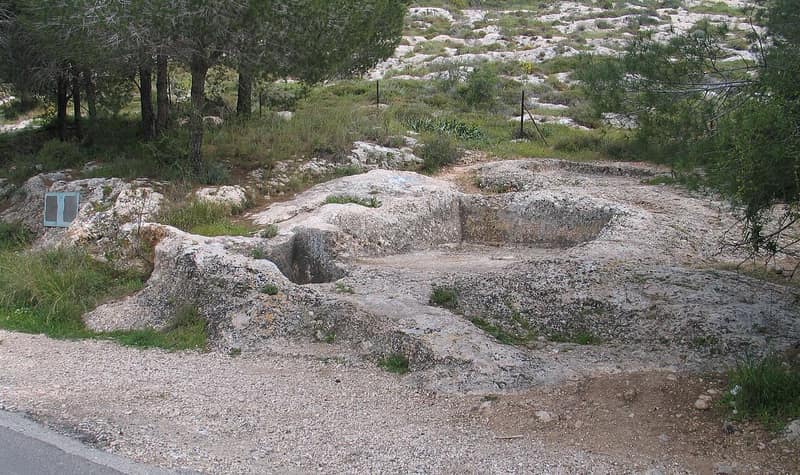
Yalo (also transliterated Yalu) climbed the foothills of the Latrun salient, thirteen kilometers southeast of Ramla, overlooking the Ayalon valley and the ancient road from Jaffa to Jerusalem. Its houses of stone and mud brick sat among olive groves, figs, and grain fields; the 1945 British survey counted 1,220 residents, all Muslims, and a Jordanian census in 1961 found the village had grown to about 1,650. After the 1948 war the salient fell on the Jordanian side of the armistice line, and Yalo spent nineteen years in the West Bank.
In the first days of June 1967, during the Six-Day War, Israeli forces seized Latrun; the residents of Yalo, together with those of neighboring Imwas and Bayt Nuba, were ordered out and walked east toward Ramallah. In the weeks that followed, the three villages were bulldozed — an operation ordered, by most accounts, by chief of staff Yitzhak Rabin. A plea in the Knesset that same month to let Yalo’s people return was denied.
The villagers scattered to Ramallah and its refugee camps, among them Qaddura and al-Am’ari. Their lands were folded into Canada Park, a recreation forest established in the early 1970s with donations raised by the Jewish National Fund of Canada — much of it, as Zochrot and former residents point out, across the 1949 armistice line. Terraces, olive trees, and broken stone survive between the picnic groves, and former residents still return with tour groups to name what the park’s signs do not.
Sources
Cited works
3- palestineremembered.com — index(opens in a new tab)https://www.palestineremembered.com/al-Ramla/Yalu/index.html
- zochrot.org — en(opens in a new tab)https://www.zochrot.org/villages/village_details/52875/en
- en.wikipedia.org — Yalo(opens in a new tab)https://en.wikipedia.org/wiki/Yalo
Connected in the archive
29 connected records29 records elsewhere in the archive are linked to this one, each by a piece of evidence you can read below.
named in this record — 6 records
One record names the other. A pointer for reading, not a claim that they belong to each other.
- Bayt Nubaبيت نوبا
Evidence — Inferred from the text — read the evidence: In the first days of June 1967, during the Six-Day War, Israeli forces seized Latrun; the residents of Yalo, together with those of neighboring Imwas and Bayt Nuba, were ordered out and walked east toward Ramallah.
- Jaffaيافا
Evidence — Inferred from the text — read the evidence: Yalo (also transliterated Yalu) climbed the foothills of the Latrun salient, thirteen kilometers southeast of Ramla, overlooking the Ayalon valley and the ancient road from Jaffa to Jerusalem.
- Jerusalemالقدس
Evidence — Inferred from the text — read the evidence: Yalo (also transliterated Yalu) climbed the foothills of the Latrun salient, thirteen kilometers southeast of Ramla, overlooking the Ayalon valley and the ancient road from Jaffa to Jerusalem.
- Ramallahرام الله
Evidence — Inferred from the text — read the evidence: In the first days of June 1967, during the Six-Day War, Israeli forces seized Latrun; the residents of Yalo, together with those of neighboring Imwas and Bayt Nuba, were ordered out and walked east toward Ramallah.
- Ramleالرملة
Evidence — Inferred from the text — read the evidence: Yalo (also transliterated Yalu) climbed the foothills of the Latrun salient, thirteen kilometers southeast of Ramla, overlooking the Ayalon valley and the ancient road from Jaffa to Jerusalem.
- The Six-Day War
Evidence — Inferred from the text — read the evidence: In the first days of June 1967, during the Six-Day War, Israeli forces seized Latrun; the residents of Yalo, together with those of neighboring Imwas and Bayt Nuba, were ordered out and walked east toward Ramallah.
names this place — 2 records
One record names the other. A pointer for reading, not a claim that they belong to each other.
- Ahmad Abughoush
Evidence — Inferred from the text — read the evidence: Within days the army demolished Imwas along with the neighboring villages of Yalu and Beit Nuba.
- Imwasعمواس
Evidence — Inferred from the text — read the evidence: In June 1967 Israeli forces captured the salient, and Imwas shared the fate of Yalo and Bayt Nuba: its residents — Muslims and Christians alike — were driven out on foot toward Ramallah, and within weeks the village was bulldozed on orders attributed to Yitzhak Rabin.
in the same district — 21 records
Filed near each other — the same Mandate district, or the same uncommon subject tags.
- Abu Shushaأبو شوشة
Evidence — From a recorded field in this archive: Both recorded in the Ramla district.
- Al-Magharالمَغار
Evidence — From a recorded field in this archive: Both recorded in the Ramla district.
- Al-Muzayri'aالمُزَيْرِعَة
Evidence — From a recorded field in this archive: Both recorded in the Ramla district.
- Al-Na'aniالنَعاني
Evidence — From a recorded field in this archive: Both recorded in the Ramla district.
- Al-Nabi Rubinالنبي رُوبِين
Evidence — From a recorded field in this archive: Both recorded in the Ramla district.
- Al-Qubabالقُباب
Evidence — From a recorded field in this archive: Both recorded in the Ramla district.
- and 15 more
Cite this page
Every claim above carries its sources — citation is the point.
- Chicago
“Yalo.” Village Memory, FALASTEEN.AI. Accessed 22 August 2026. https://falasteen.ai/memory/yalo.- MLA
“Yalo.” Village Memory, FALASTEEN.AI, 2026, https://falasteen.ai/memory/yalo. Accessed 22 August 2026.- BibTeX
@misc{falasteen-yalo,
  title        = {Yalo},
  howpublished = {\url{https://falasteen.ai/memory/yalo}},
  organization = {FALASTEEN.AI — A Living Archive for Palestine},
  year         = {2026},
  note         = {Accessed 2026-08-22}
}