Haifa district · depopulated 1948 · 2 min read
Ayn Hawd
عين حوض
Ayn Hawd, a Carmel hillside village south of Haifa said to descend from a commander of Saladin, was depopulated in July 1948. Its houses were never demolished: they became the Ein Hod artists' colony and its mosque a restaurant — while villagers who stayed built a new, long-unrecognized Ayn Hawd nearby.
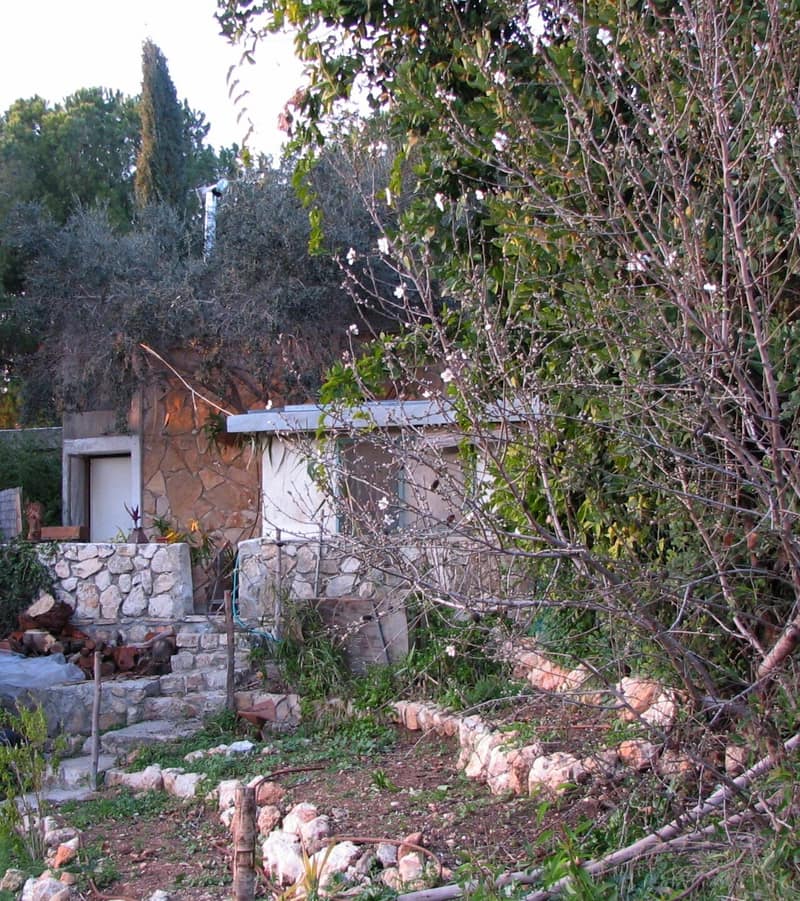
Ayn Hawd lay at the foot of a prominent hill on the western slopes of Mount Carmel, fourteen and a half kilometers south of Haifa, overlooking the coastal plain and the sea. Its people believed the village had been founded by Abu al-Hayja, a commander of Saladin said to have died after the battle of Hittin in 1187. In the Ottoman register of 1596 it counted forty-four souls; by the Mandate years its villagers were selling wheat, carob, and sesame in Haifa and Acre, along with building stone cut from three quarries and the whitewash made from it. The 1945 survey counted 650 people.
The village was attacked together with neighboring Ayn Ghazal on 11 April 1948, and again on 20 May, after Arab snipers allegedly halted traffic on the Tel Aviv–Haifa road; both times the residents stayed put. Ayn Hawd was probably occupied only around 15 July 1948, in the operation against the villages south of Haifa launched during the ‘Ten Days’ between the truces — an assault in which Israeli naval forces bombarded the coastal villages from the sea. Its people likely met the fate of nearby al-Tira: expelled southwards or sent to prisoner-of-war camps, according to Benny Morris.
Ayn Hawd was one of the few villages not demolished. In 1949 the settlement of Nir Etzion was established on its lands, and in 1953–54 the village itself became Ein Hod, an artists’ colony founded around the painter Marcel Janco; the mosque was turned into a restaurant and bar. The villagers who remained inside the country settled on a nearby hillside and built a new village, also named Ayn Hawd, which Israel refused for decades to recognize — denying it water, electricity, and roads, and fencing it in during the 1970s — before granting recognition in the 1990s; its residents built a new mosque to replace the one lost below.
Sources
Cited works
3- palestineremembered.com — index(opens in a new tab)https://www.palestineremembered.com/Haifa/Ayn-Hawd/index.html
- zochrot.org — en(opens in a new tab)https://www.zochrot.org/villages/village_details/49423/en
- palquest.org — ayn hawd(opens in a new tab)https://www.palquest.org/en/place/16927/ayn-hawd
Connected in the archive
20 connected records20 records elsewhere in the archive are linked to this one, each by a piece of evidence you can read below.
named in this record — 3 records
One record names the other. A pointer for reading, not a claim that they belong to each other.
- Ayn Ghazalعين غزال
Evidence — Inferred from the text — read the evidence: The village was attacked together with neighboring Ayn Ghazal on 11 April 1948, and again on 20 May, after Arab snipers allegedly halted traffic on the Tel Aviv–Haifa road; both times the residents stayed put.
- Haifaحيفا
Evidence — Inferred from the text — read the evidence: Ayn Hawd lay at the foot of a prominent hill on the western slopes of Mount Carmel, fourteen and a half kilometers south of Haifa, overlooking the coastal plain and the sea.
- Hittinحطّين
Evidence — Inferred from the text — read the evidence: Its people believed the village had been founded by Abu al-Hayja, a commander of Saladin said to have died after the battle of Hittin in 1187.
names this place — 1 record
One record names the other. A pointer for reading, not a claim that they belong to each other.
- Mornings in Jenin
Evidence — Inferred from the text — read the evidence: First published in 2006 as The Scar of David and reissued by Bloomsbury to international acclaim, Mornings in Jenin follows the Abulheja family across four generations: from their village of Ein Hod at the Nakba of 1948, through exile in the Jenin refugee camp, the 1967 war, the Sabra and Shatila massacre, and the twin pull of America and home.
in the same district — 16 records
Filed near each other — the same Mandate district, or the same uncommon subject tags.
- Abu Shushaأبو شوشة
Evidence — From a recorded field in this archive: Both recorded in the Haifa district.
- Abu Zurayqأبو زريق
Evidence — From a recorded field in this archive: Both recorded in the Haifa district.
- Al-Kafraynالكفرين
Evidence — From a recorded field in this archive: Both recorded in the Haifa district.
- Al-Sindiyanaالسنديانة
Evidence — From a recorded field in this archive: Both recorded in the Haifa district.
- Al-Tiraالطيرة
Evidence — From a recorded field in this archive: Both recorded in the Haifa district.
- Balad al-Shaykhبلد الشيخ
Evidence — From a recorded field in this archive: Both recorded in the Haifa district.
- and 10 more
Cite this page
Every claim above carries its sources — citation is the point.
- Chicago
“Ayn Hawd.” Village Memory, FALASTEEN.AI. Accessed 22 August 2026. https://falasteen.ai/memory/ayn-hawd.- MLA
“Ayn Hawd.” Village Memory, FALASTEEN.AI, 2026, https://falasteen.ai/memory/ayn-hawd. Accessed 22 August 2026.- BibTeX
@misc{falasteen-ayn-hawd,
  title        = {Ayn Hawd},
  howpublished = {\url{https://falasteen.ai/memory/ayn-hawd}},
  organization = {FALASTEEN.AI — A Living Archive for Palestine},
  year         = {2026},
  note         = {Accessed 2026-08-22}
}