Haifa district · depopulated 1948 · 3 min read
Balad al-Shaykh
بلد الشيخ
Balad al-Shaykh, seven kilometres from Haifa, was the second largest village of its subdistrict with 4,120 people in 1944/45, and holds the grave of Izz al-Din al-Qassam. On 31 December 1947 a Palmach force of 170 men attacked it under orders to harm the largest possible number of men; more than sixty villagers were left for dead, women and children among them. The village was taken by the Carmeli Brigade on 24 April 1948 and is now Tel Hanan, part of Nesher.
See Balad al-Shaykh on the Atlas32.7716°N · 35.0421°E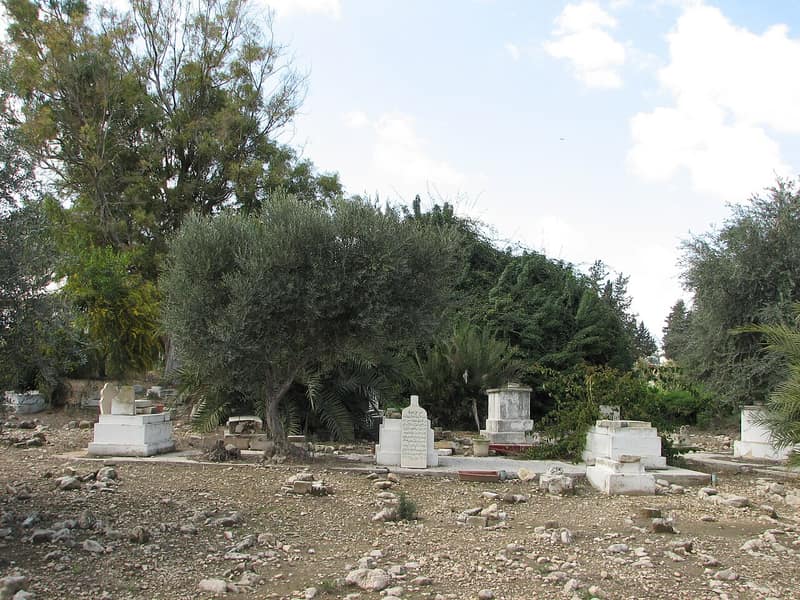
Balad al-Shaykh lay on the Haifa plain at the foot of the northwestern spur of Mount Carmel, seven kilometres from the city, with the Haifa–Jenin highway running past it to the east and the Haifa–Samakh railway half a kilometre away. It was named — the town of the Shaykh — after the Sufi Shaykh Abdallah al-Sahli, to whom Sultan Selim I granted the taxes of the village in the early years of Ottoman rule; his tomb and an adjoining khan, probably Mamluk, stood on the north side. The British vice-consul in Haifa found 350 residents working twelve faddans in 1859, and the traveller Guérin estimated five hundred in 1875 among olives, palms and springs. By 1945 it was the second largest village of the Haifa subdistrict, with 4,120 inhabitants, all Muslims, in a rectangular grid of stone and cement houses, with coffee houses and two petrol stations along the highway and an elementary school founded in 1887. The economy rested on olives, grain, fruit and livestock, with 4,410 of its 9,849 dunums in cereals, supplemented by wages earned in Haifa. During the Mandate Zionist investors leased part of the village land and built a cement factory on it, which grew into the settlement of Nesher.
In the village cemetery lies Shaykh Izz al-Din al-Qassam, the preacher whose death in action against British forces in 1935 helped trigger the revolt of 1936. On 30 December 1947 the Irgun threw a bomb from a moving car into a queue of workers outside the Haifa oil refinery, killing six Palestinians and wounding forty-two according to the newspaper Filastin; Palestinian workers inside the refinery then turned on their Jewish colleagues and killed forty-one. The following night, 31 December, the Haganah answered at Balad al-Shaykh. Its own history records that a force of 170 Palmach men was ordered to encircle the village, harm the largest possible number of men, damage property and refrain from attacking women and children. More than sixty villagers were left for dead, women and children among them, and several dozen houses were destroyed; the attacking force’s own report explained that because of the fire issuing from inside the rooms it had been impossible to avoid harming women and children as well.
The village was partially evacuated a week later, on 7 January 1948, but was not occupied until late April. Plan Dalet had assigned its capture to the Carmeli Brigade in the same operation that took Haifa. When Haifa fell on 22 April some women and children were moved out in expectation of an attack, and at dawn on 24 April Haganah units surrounded Balad al-Shaykh and demanded that it surrender its arms. The villagers handed over twenty-two old rifles and asked for a truce; the Haganah refused and at five in the morning opened fire with mortars and machine guns. A British unit arriving an hour later reported that there was virtually no reply from the village, and negotiated the evacuation of the inhabitants, women and children included, under British escort. Some went to Acre and fled again days later when panic took hold there.
Jewish immigrants settled the village in 1949 and renamed it Tel Hanan; it is now part of the township of Nesher, alongside Ramot Yitzhak, Givat Nesher and other neighbourhoods built on its land. Many of the Arab houses and shops still stand and are lived in. Most of those who fled or were driven out remain internally displaced within Israel, in the Arab neighbourhoods of Haifa and in Acre. The cemetery is visible and neglected, and al-Qassam’s grave has lost its marble slabs.
Sources
Cited works
3- palquest.org — balad al shaykh(opens in a new tab)https://www.palquest.org/en/place/16929/balad-al-shaykh
- zochrot.org — en(opens in a new tab)https://www.zochrot.org/villages/village_details/49032/en
- en.wikipedia.org — Balad al Shaykh(opens in a new tab)https://en.wikipedia.org/wiki/Balad_al-Shaykh
Connected in the archive
23 connected records23 records elsewhere in the archive are linked to this one, each by a piece of evidence you can read below.
named in this record — 5 records
One record names the other. A pointer for reading, not a claim that they belong to each other.
- Acreعكا
Evidence — Inferred from the text — read the evidence: Some went to Acre and fled again days later when panic took hold there.
- Haifaحيفا
Evidence — Inferred from the text — read the evidence: The British vice-consul in Haifa found 350 residents working twelve faddans in 1859, and the traveller Guérin estimated five hundred in 1875 among olives, palms and springs.
- Izz al-Din al-Qassamعز الدين القسّام
Evidence — Inferred from the text — read the evidence: In the village cemetery lies Shaykh Izz al-Din al-Qassam, the preacher whose death in action against British forces in 1935 helped trigger the revolt of 1936.
- Plan Dalet
Evidence — Inferred from the text — read the evidence: Plan Dalet had assigned its capture to the Carmeli Brigade in the same operation that took Haifa.
- Plan Dalet
Evidence — Inferred from the text — read the evidence: Plan Dalet had assigned its capture to the Carmeli Brigade in the same operation that took Haifa.
names this place — 2 records
One record names the other. A pointer for reading, not a claim that they belong to each other.
- Shatila Campمخيّم شاتيلا
Evidence — Inferred from the text — read the evidence: Most came from Majd al-Kroum, the rest from some twenty-five other Galilee villages — al-Birwa, Dayr al-Qasi, Shaab, Saffuriyya, Amqa, al-Kabri, Balad al-Shaykh, Kuwaykat, Safsaf, al-Manshiyya — with around twenty-five families from Jaffa.
- Yajurياجور
Evidence — Inferred from the text — read the evidence: After the Haganah launched a major attack on Balad al-Shaykh, a large village just to the northeast, the people of Yajur decided not to wait for the same assault.
in the same district — 16 records
Filed near each other — the same Mandate district, or the same uncommon subject tags.
- Abu Shushaأبو شوشة
Evidence — From a recorded field in this archive: Both recorded in the Haifa district.
- Abu Zurayqأبو زريق
Evidence — From a recorded field in this archive: Both recorded in the Haifa district.
- Al-Kafraynالكفرين
Evidence — From a recorded field in this archive: Both recorded in the Haifa district.
- Al-Sindiyanaالسنديانة
Evidence — From a recorded field in this archive: Both recorded in the Haifa district.
- Al-Tiraالطيرة
Evidence — From a recorded field in this archive: Both recorded in the Haifa district.
- Ayn Ghazalعين غزال
Evidence — From a recorded field in this archive: Both recorded in the Haifa district.
- and 10 more
Cite this page
Every claim above carries its sources — citation is the point.
- Chicago
“Balad al-Shaykh.” Village Memory, FALASTEEN.AI. Accessed 22 August 2026. https://falasteen.ai/memory/balad-al-shaykh.- MLA
“Balad al-Shaykh.” Village Memory, FALASTEEN.AI, 2026, https://falasteen.ai/memory/balad-al-shaykh. Accessed 22 August 2026.- BibTeX
@misc{falasteen-balad-al-shaykh,
  title        = {Balad al-Shaykh},
  howpublished = {\url{https://falasteen.ai/memory/balad-al-shaykh}},
  organization = {FALASTEEN.AI — A Living Archive for Palestine},
  year         = {2026},
  note         = {Accessed 2026-08-22}
}