Acre district · depopulated 1948 · 2 min read
Tarshiha
ترشيحا
Tarshiha was a large Muslim-Christian town of the upper Galilee, a tobacco-growing and craft center, bombed and captured in Operation Hiram in late October 1948. Most of its people fled or were driven into Lebanon, but several hundred remained or returned; its old core survives inside the merged city of Ma'alot-Tarshiha.
See Tarshiha on the Atlas33.0090°N · 35.2683°E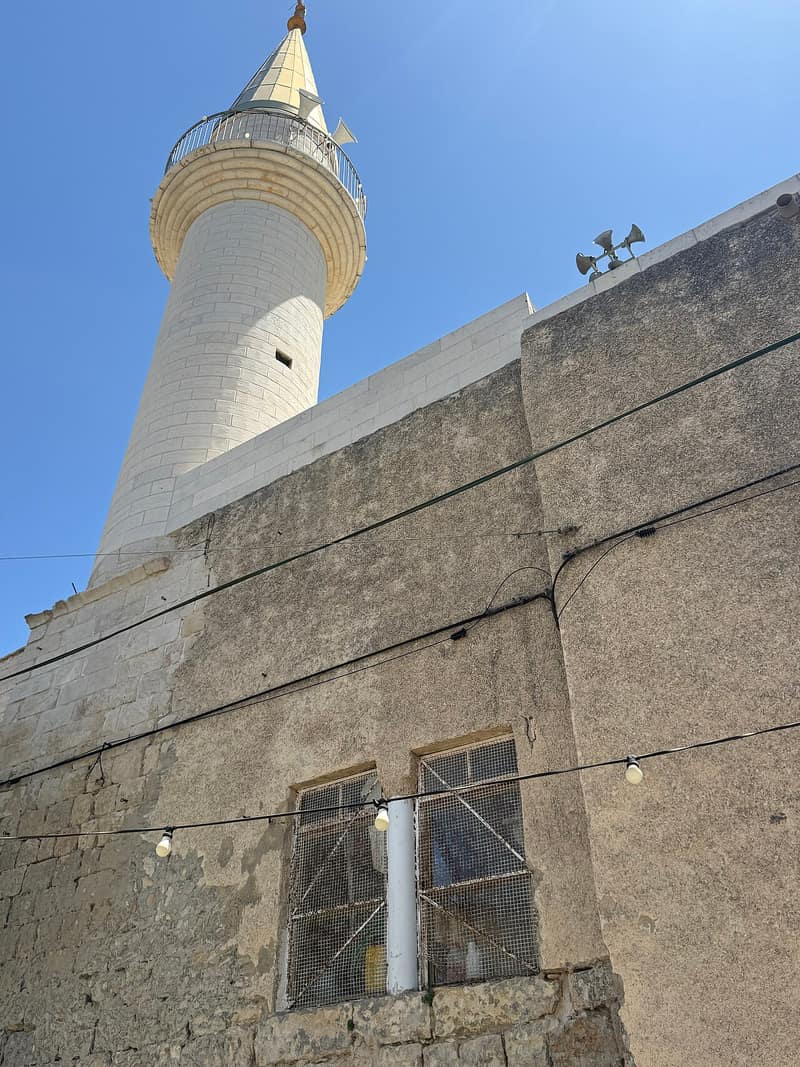
Tarshiha stood in the hills of the upper Galilee, about twenty kilometers east of Nahariya and some 600 meters above sea level. Crusader records knew it as Terschia, and under the Ottomans it grew into one of the leading villages of the district — a center of cotton and later tobacco growing, and the seat of the nahiya. In 1596 it counted 107 households; by the late nineteenth century travelers described a large stone village of Muslims and Melkite Christians with a fine mosque and a new church. Its people were notably enterprising: Tarshiha was reputedly the first Palestinian village to establish a development fund, collecting a pound a year from each adult man, and its Christians built a successful handicrafts industry. In the 1945 survey it counted 3,840 people — 3,140 Muslims and 690 Christians — sharing with neighboring al-Kabri more than 47,000 dunums of land.
The village lay in the territory allotted to the Arab state under the 1947 partition plan, but it fell in the war’s final northern offensive. During Operation Hiram, Israeli planes bombed Tarshiha on the evening of 29 October 1948 — reportedly killing at least two dozen people — and after an artillery barrage and a second air raid the next morning, the defenders and most of the population retreated north into Lebanon; the town was captured by the end of 30 October. A UN observer reported on 1 November that the villages around Tarshiha were deserted and had been extensively looted, with army trucks carrying off the goods. Most of the refugees settled in Lebanon — Tarshiha families long formed the majority of Beirut’s Bourj al Barajneh camp, and another large group was sent to al-Neirab camp near Aleppo. Yet Tarshiha was not emptied entirely: by December 1948 some 700 villagers, mostly Christians, had returned. A January 1949 raid selected 33 heads of families and 101 relatives for deportation to Jenin, and later that year the Israeli Foreign Ministry blocked an army plan to clear the remaining Arabs from Tarshiha and five other border villages.
Unlike most depopulated villages, Tarshiha was never demolished. Its old core — with the mid-eighteenth-century mosque, churches, and stone houses of its quarters — survived, and in 1963 the town was merged with Ma’alot, a Jewish development town founded in 1957, to form the mixed city of Ma’alot-Tarshiha; Me’ona, Kfar Vradim, and Ein Ya’akov also stand on village lands. Several hundred of Tarshiha’s original inhabitants and their descendants still live in the town, alongside internally displaced Palestinians from neighboring villages, while the refugee community in Lebanon numbers in the thousands.
Sources
Cited works
3- palestineremembered.com — index(opens in a new tab)https://www.palestineremembered.com/Acre/Tarshiha/index.html
- zochrot.org — en(opens in a new tab)https://www.zochrot.org/villages/village_details/49508/en
- en.wikipedia.org — Ma'alot Tarshiha(opens in a new tab)https://en.wikipedia.org/wiki/Ma%27alot-Tarshiha
Connected in the archive
22 connected records22 records elsewhere in the archive are linked to this one, each by a piece of evidence you can read below.
named in this record — 1 record
One record names the other. A pointer for reading, not a claim that they belong to each other.
- Jeninجنين
Evidence — Inferred from the text — read the evidence: A January 1949 raid selected 33 heads of families and 101 relatives for deportation to Jenin, and later that year the Israeli Foreign Ministry blocked an army plan to clear the remaining Arabs from Tarshiha and five other border villages.
names this place — 1 record
One record names the other. A pointer for reading, not a claim that they belong to each other.
- Dayr al-Qassiدير القاسي
Evidence — Inferred from the text — read the evidence: Its people were not expelled at once: some 700 were still living there, in al-Bassa and in Tarshiha that December.
in the same district — 20 records
Filed near each other — the same Mandate district, or the same uncommon subject tags.
- Al-Bassaالبصة
Evidence — From a recorded field in this archive: Both recorded in the Acre district.
- Al-Birwaالبروة
Evidence — From a recorded field in this archive: Both recorded in the Acre district.
- Al-Damunالدامون
Evidence — From a recorded field in this archive: Both recorded in the Acre district.
- Al-Ghabisiyyaالغابسية
Evidence — From a recorded field in this archive: Both recorded in the Acre district.
- Al-Kabriالكابري
Evidence — From a recorded field in this archive: Both recorded in the Acre district.
- Al-Manshiyya (Acre)المَنْشِيَّة
Evidence — From a recorded field in this archive: Both recorded in the Acre district.
- and 14 more
Cite this page
Every claim above carries its sources — citation is the point.
- Chicago
“Tarshiha.” Village Memory, FALASTEEN.AI. Accessed 22 August 2026. https://falasteen.ai/memory/tarshiha.- MLA
“Tarshiha.” Village Memory, FALASTEEN.AI, 2026, https://falasteen.ai/memory/tarshiha. Accessed 22 August 2026.- BibTeX
@misc{falasteen-tarshiha,
  title        = {Tarshiha},
  howpublished = {\url{https://falasteen.ai/memory/tarshiha}},
  organization = {FALASTEEN.AI — A Living Archive for Palestine},
  year         = {2026},
  note         = {Accessed 2026-08-22}
}