Acre district · depopulated 1948 · 3 min read
Kuwaykat
كويكات
Kuwaykat lay nine kilometres northeast of Acre on some of the most fertile land in the subdistrict, 1,050 people holding 4,733 dunums in 1944/45. Its militia repulsed attacks in January, February and June 1948; on the night the first truce ended, 9 July, the village was shelled without warning during Operation Dekel and its people fled. Kibbutz Beit HaEmek was founded on its lands in January 1949.
See Kuwaykat on the Atlas32.9711°N · 35.1465°E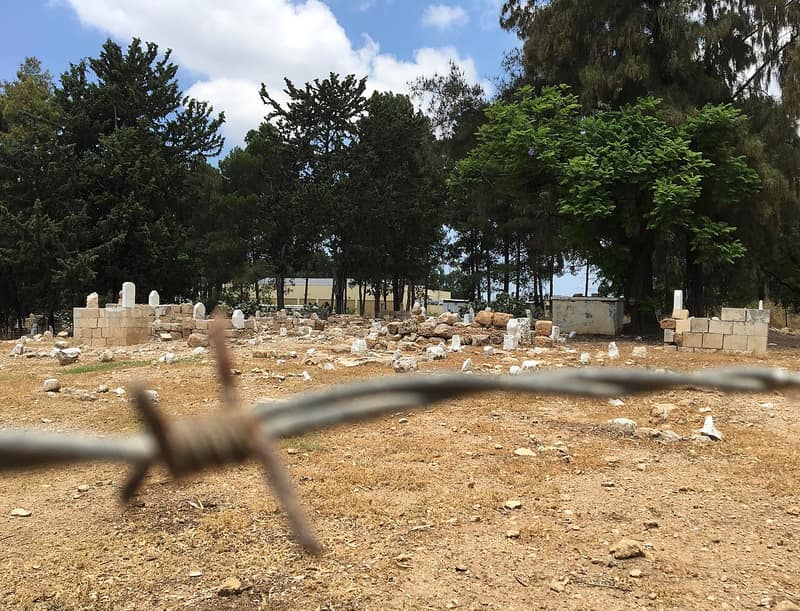
Kuwaykat stood on a slight rise in the eastern part of the plain of Acre, nine kilometres from the city, linked by secondary roads to the Acre–Safad highway. The Crusaders knew it as Coket. Travellers in the late nineteenth century found a stone-built village of some three hundred people at the foot of the hills, cultivating olives; later most of its houses were of adobe, built close together and separated by narrow alleys crossing at right angles. Its people were all Muslims. The village had an elementary school built by the Ottomans in 1887, a mosque, and the shrine of the Druze Shaykh Abu Muhammad al-Qurayshi, and its nearness to Acre gave it access to the city’s schools, doctors and markets. Its lands were reckoned among the most fertile in the subdistrict: of 4,733 dunums, 3,316 were sown in cereals and 1,246 irrigated or planted in orchards, five hundred of them in olives, with grain, olives and watermelons the chief crops alongside livestock and dairying. The 1944/45 population was 1,050.
Kuwaykat was attacked repeatedly and held. Filastin reported an assault by eighty Jewish militiamen on 18–19 January 1948 that was driven back, and another on the night of 6–7 February with the same result. A larger attack came on 11 June, just before the first truce, and was repulsed by the local militia — around sixty men with thirty-five to fifty assorted rifles and one Bren gun. During the truce representatives of the Arab Liberation Army advised the villagers not to evacuate their women and children, on the grounds that it would stiffen the militia.
On 9 July, the day the truce ended, men collaborating with the Zionist forces came to ask the mukhtar to surrender and he refused. That night Operation Dekel opened with a bombardment. One villager remembered being woken by the loudest noise they had ever heard, shells exploding and artillery fire, the whole village in panic, women screaming and children crying, most people fleeing in their pyjamas; the wife of Qassim Ahmad Sa’id ran carrying a pillow in her arms instead of her child. Two people were killed and two wounded by the shelling. The militia fell back to hills east of the village and waited four days for reinforcements that never came. Many villagers fled to Abu Sinan, Kafr Yasif and other villages that later surrendered; those who stayed, mostly the elderly, were expelled to Kafr Yasif. The units that took Kuwaykat were from the Seventh and Carmeli brigades. A company commander of the Twenty-First Battalion, quoted by Benny Morris, said he did not know whether the artillery softening-up had caused casualties, but that the psychological effect had been achieved and the village’s non-combatants had fled before the assault began.
Kibbutz ha-Bonim was established near the site on village lands in January 1949 by immigrants from England, Hungary and the Netherlands, and later renamed Beit HaEmek. Little remains but the deserted cemetery, overgrown with weeds, and rubble from the houses; two gravestones can still be read, one of Hamad Isa al-Hajj and one of Shaykh Salih Iskandar, who died in 1940. The shrine of Shaykh Abu Muhammad al-Qurayshi still stands, its stone pedestal badly cracked. A forest of pine and eucalyptus has been planted over the site.
Sources
Cited works
3- palquest.org — kuwaykat(opens in a new tab)https://www.palquest.org/en/place/17083/kuwaykat
- zochrot.org — en(opens in a new tab)https://www.zochrot.org/villages/village_details/49232/en
- en.wikipedia.org — Kuwaykat(opens in a new tab)https://en.wikipedia.org/wiki/Kuwaykat
Connected in the archive
23 connected records23 records elsewhere in the archive are linked to this one, each by a piece of evidence you can read below.
named in this record — 2 records
One record names the other. A pointer for reading, not a claim that they belong to each other.
- Acreعكا
Evidence — Inferred from the text — read the evidence: Kuwaykat stood on a slight rise in the eastern part of the plain of Acre, nine kilometres from the city, linked by secondary roads to the Acre–Safad highway.
- Mukhtar
Evidence — Inferred from the text — read the evidence: On 9 July, the day the truce ended, men collaborating with the Zionist forces came to ask the mukhtar to surrender and he refused.
in the same district — 21 records
Filed near each other — the same Mandate district, or the same uncommon subject tags.
- Al-Bassaالبصة
Evidence — From a recorded field in this archive: Both recorded in the Acre district.
- Al-Birwaالبروة
Evidence — From a recorded field in this archive: Both recorded in the Acre district.
- Al-Damunالدامون
Evidence — From a recorded field in this archive: Both recorded in the Acre district.
- Al-Ghabisiyyaالغابسية
Evidence — From a recorded field in this archive: Both recorded in the Acre district.
- Al-Kabriالكابري
Evidence — From a recorded field in this archive: Both recorded in the Acre district.
- Al-Manshiyya (Acre)المَنْشِيَّة
Evidence — From a recorded field in this archive: Both recorded in the Acre district.
- and 15 more
Cite this page
Every claim above carries its sources — citation is the point.
- Chicago
“Kuwaykat.” Village Memory, FALASTEEN.AI. Accessed 22 August 2026. https://falasteen.ai/memory/kuwaykat.- MLA
“Kuwaykat.” Village Memory, FALASTEEN.AI, 2026, https://falasteen.ai/memory/kuwaykat. Accessed 22 August 2026.- BibTeX
@misc{falasteen-kuwaykat,
  title        = {Kuwaykat},
  howpublished = {\url{https://falasteen.ai/memory/kuwaykat}},
  organization = {FALASTEEN.AI — A Living Archive for Palestine},
  year         = {2026},
  note         = {Accessed 2026-08-22}
}