Haifa district · depopulated 1948 · 2 min read
Ijzim
إجزم
Ijzim, one of the richest villages of the Carmel coast and seat of the al-Madi family, held out with two neighbors for months against Jewish forces, blocking the Tel Aviv–Haifa road. It finally fell on 24 July 1948 in Operation Shoter — a 'police action' launched during a truce — after a two-day bombardment that an Israeli officer said left 200 dead.
See Ijzim on the Atlas32.6447°N · 34.9881°E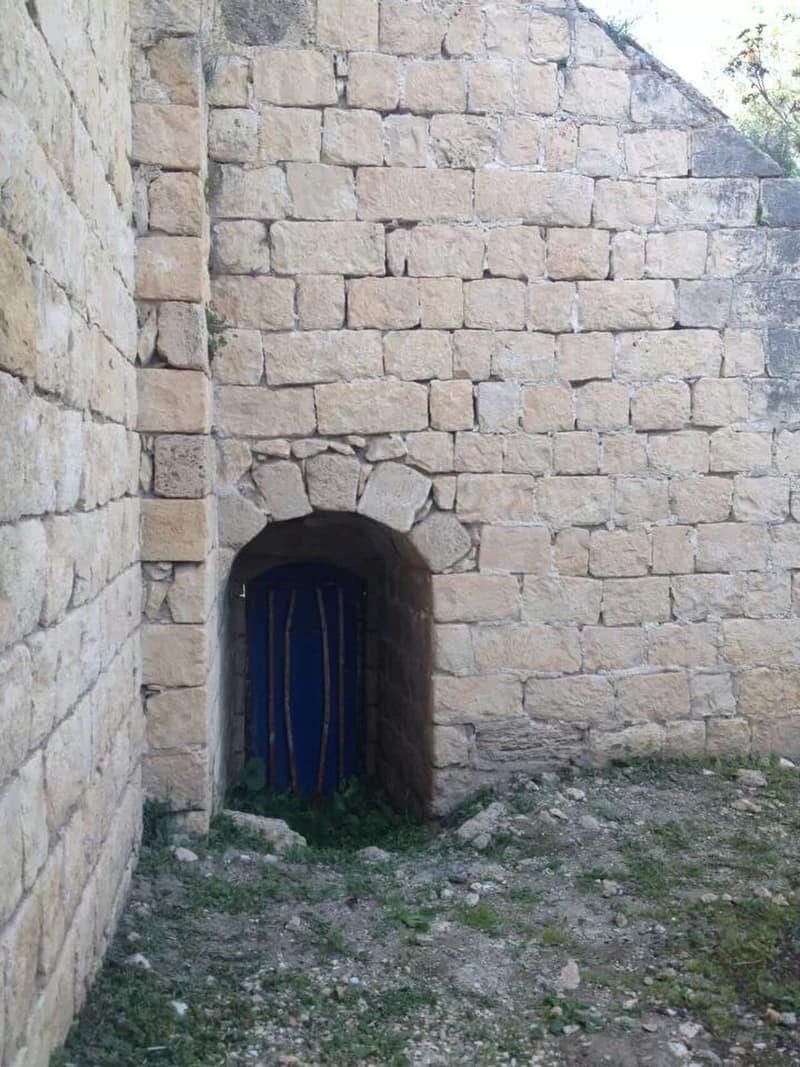
Ijzim lay nineteen and a half kilometers south of Haifa, at the southern edge of the Carmel coast. Under the early Ottomans it belonged to the Turabay Emirate, and in the eighteenth and early nineteenth centuries it was the seat of the al-Madi family, then the most influential clan of the southern Galilee and the coast; Mas’ud al-Madi was governor of Gaza at the time of the Egyptian invasion and was killed in the peasant revolt of 1834. The village’s great families — the Madis, the Nabhanis, and the Alhassans — together owned more than 40,000 dunums, making Ijzim one of the richest villages in Palestine. It was also a place of learning: the jurist and poet Yusuf an-Nabhani and, later, Taqiuddin al-Nabhani, the founder of Hizb ut-Tahrir, came from Ijzim. The 1945 survey counted 2,970 people — 2,830 Muslims and 140 Christians — on 45,905 dunums planted with olives and grain.
Together with Jaba’ and Ayn Ghazal, Ijzim formed the ‘Little Triangle’ whose armed villagers blocked Jewish traffic on the Tel Aviv–Haifa highway for months in 1948. Jewish forces tried twice to take the village and failed. The third assault came during the second truce: on 24 July 1948, in Operation Shoter, Israeli forces attacked with cannon fire and air strikes in a battle that lasted two days — because the truce was formally in force, the government called it a ‘police action’ and later denied to the United Nations that military planes had been used. An Israeli intelligence officer reported that on entering the village on 28 July, ‘our forces collected 200 corpses, many of them civilians killed by our bombardment.’ Most of the survivors were expelled or fled across the armistice lines to the Jenin area; others took refuge in Daliyat al-Carmel and Fureidis. A few dozen villagers with Jewish protectors were at first allowed to remain, but the district commander later ordered their eviction too.
Unusually, Ijzim’s houses were not demolished: in the summer of 1949 a moshav of immigrants from Czechoslovakia and Romania, Kerem Maharal, was installed in the village’s homes. The al-Madi family’s seventeenth-century madafeh, its grand guest house, became a museum and then a private home; the school became a synagogue and the cemetery a public park, while the large nineteenth-century mosque was left to fall into ruin. One Arab family that refused all pressure to leave still lives in its own house beside the sacred spring of Sitt Maqura, where both Arabs and Jews come to pray.
Sources
Cited works
3- palestineremembered.com — index(opens in a new tab)https://www.palestineremembered.com/Haifa/Ijzim/index.html
- zochrot.org — en(opens in a new tab)https://www.zochrot.org/villages/village_details/48978/en
- palquest.org — ijzim(opens in a new tab)https://www.palquest.org/en/place/17008/ijzim
Connected in the archive
18 connected records18 records elsewhere in the archive are linked to this one, each by a piece of evidence you can read below.
named in this record — 2 records
One record names the other. A pointer for reading, not a claim that they belong to each other.
- Ayn Ghazalعين غزال
Evidence — Inferred from the text — read the evidence: Together with Jaba' and Ayn Ghazal, Ijzim formed the 'Little Triangle' whose armed villagers blocked Jewish traffic on the Tel Aviv–Haifa highway for months in 1948.
- Haifaحيفا
Evidence — Inferred from the text — read the evidence: Ijzim lay nineteen and a half kilometers south of Haifa, at the southern edge of the Carmel coast.
in the same district — 16 records
Filed near each other — the same Mandate district, or the same uncommon subject tags.
- Abu Shushaأبو شوشة
Evidence — From a recorded field in this archive: Both recorded in the Haifa district.
- Abu Zurayqأبو زريق
Evidence — From a recorded field in this archive: Both recorded in the Haifa district.
- Al-Kafraynالكفرين
Evidence — From a recorded field in this archive: Both recorded in the Haifa district.
- Al-Sindiyanaالسنديانة
Evidence — From a recorded field in this archive: Both recorded in the Haifa district.
- Al-Tiraالطيرة
Evidence — From a recorded field in this archive: Both recorded in the Haifa district.
- Ayn Hawdعين حوض
Evidence — From a recorded field in this archive: Both recorded in the Haifa district.
- and 10 more
Cite this page
Every claim above carries its sources — citation is the point.
- Chicago
“Ijzim.” Village Memory, FALASTEEN.AI. Accessed 22 August 2026. https://falasteen.ai/memory/ijzim.- MLA
“Ijzim.” Village Memory, FALASTEEN.AI, 2026, https://falasteen.ai/memory/ijzim. Accessed 22 August 2026.- BibTeX
@misc{falasteen-ijzim,
  title        = {Ijzim},
  howpublished = {\url{https://falasteen.ai/memory/ijzim}},
  organization = {FALASTEEN.AI — A Living Archive for Palestine},
  year         = {2026},
  note         = {Accessed 2026-08-22}
}