Gaza district · depopulated 1948 · 2 min read
Isdud
إسدود
Isdud — ancient Ashdod — was a market town of nearly five thousand on the coastal highway north of Gaza, with two mosques, three shrines, schools, a train station, and a Wednesday market. It was the Egyptian army's northernmost stand of 1948, falling in late October during Operation Yoav; modern Ashdod rose on its lands.
See Isdud on the Atlas31.7536°N · 34.6617°E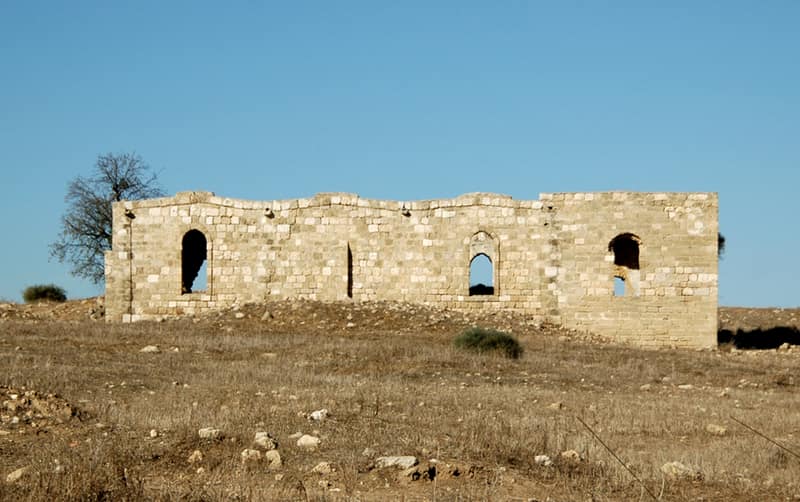
Isdud stood on a sandy hill about five kilometers from the sea, on the coastal highway and railway some thirty-five kilometers northeast of Gaza — a hill that was itself the accumulated ruin of earlier towns bearing the same name, back to the Philistine city of Ashdod, one of the five cities of the biblical pentapolis. The town had two mosques and three tomb-shrines, among them one built in the era of the Mamluk sultan Baybars and another for Shaykh al-Matbuli; a boys’ school opened in 1922 and a girls’ school in 1942. Its Wednesday market drew the surrounding villages, and its station sat on the coastal railway. Citrus, grapes, figs, and wheat filled its lands. The 1945 survey counted 4,910 people on the town’s lands — 4,620 Arabs, overwhelmingly Muslim, and 290 Jews.
When Egyptian forces entered Palestine in May 1948 they made Isdud their forward position — the northernmost point of their advance. Gamal Abdel Nasser, then a staff officer of the Egyptian Sixth Battalion, was stationed there through the first truce. Israeli attacks in early June drove thousands from the area, but the town held out until the autumn offensive: bombed from sea and air at the start of Operation Yoav, Isdud was abandoned by the retreating Egyptian columns, and most of the remaining townspeople fled with them. Israeli forces entered on 28 October 1948; according to Benny Morris, some three hundred people who stayed behind, waving white flags, were almost immediately expelled southwards.
The town was not rebuilt. Sde Uzziyahu and Shtulim (1950), Bene Darom (1949), and Gan ha-Darom (1953) were founded on its lands, and in 1956 the city of Ashdod was established on the sands by the site, its southern neighborhoods reaching the old town. Of Isdud itself there remain rubble under grass and thorns, two deserted school buildings, a neglected shrine, the trace of the main street — and, just south of the center, a large ruined mosque whose arched entrances and crumbling pillars still stand.
Sources
Cited works
3- palestineremembered.com — index(opens in a new tab)https://www.palestineremembered.com/Gaza/Isdud/index.html
- zochrot.org — en(opens in a new tab)https://www.zochrot.org/villages/village_details/48983/en
- palquest.org — isdud(opens in a new tab)https://www.palquest.org/en/place/17014/isdud
Connected in the archive
35 connected records35 records elsewhere in the archive are linked to this one, each by a piece of evidence you can read below.
names this place — 1 record
One record names the other. A pointer for reading, not a claim that they belong to each other.
- Gaza, by Name
Evidence — From a recorded field in this archive: Ancient Ashdod: a market town of nearly five thousand on the coastal highway, with a Wednesday market and a railway station. The Egyptian army's northernmost stand.
in the same district — 34 records
Filed near each other — the same Mandate district, or the same uncommon subject tags.
- 'Iraq al-Manshiyyaعِراق المَنْشِيَّة
Evidence — From a recorded field in this archive: Both recorded in the Gaza district.
- Al-Falujaالفالوجة
Evidence — From a recorded field in this archive: Both recorded in the Gaza district.
- Al-Jiyyaالجِيَّة
Evidence — From a recorded field in this archive: Both recorded in the Gaza district.
- Al-Juraالجُورَة
Evidence — From a recorded field in this archive: Both recorded in the Gaza district.
- Al-Majdalالمجدل
Evidence — From a recorded field in this archive: Both recorded in the Gaza district.
- Al-Masmiyya al-Kabiraالمَسْمِيَّة الكَبِيرَة
Evidence — From a recorded field in this archive: Both recorded in the Gaza district.
- and 28 more
Cite this page
Every claim above carries its sources — citation is the point.
- Chicago
“Isdud.” Village Memory, FALASTEEN.AI. Accessed 22 August 2026. https://falasteen.ai/memory/isdud.- MLA
“Isdud.” Village Memory, FALASTEEN.AI, 2026, https://falasteen.ai/memory/isdud. Accessed 22 August 2026.- BibTeX
@misc{falasteen-isdud,
  title        = {Isdud},
  howpublished = {\url{https://falasteen.ai/memory/isdud}},
  organization = {FALASTEEN.AI — A Living Archive for Palestine},
  year         = {2026},
  note         = {Accessed 2026-08-22}
}