Gaza district · depopulated 1948 · 2 min read
Bayt Darras
بيت دراس
Bayt Darras was a farming town northeast of Gaza, defended by Sudanese troops and local militiamen until the Givati Brigade overran it in May 1948. Its people fled south into the Gaza Strip, where their descendants live in refugee camps to this day.
See Bayt Darras on the Atlas31.7232°N · 34.6828°E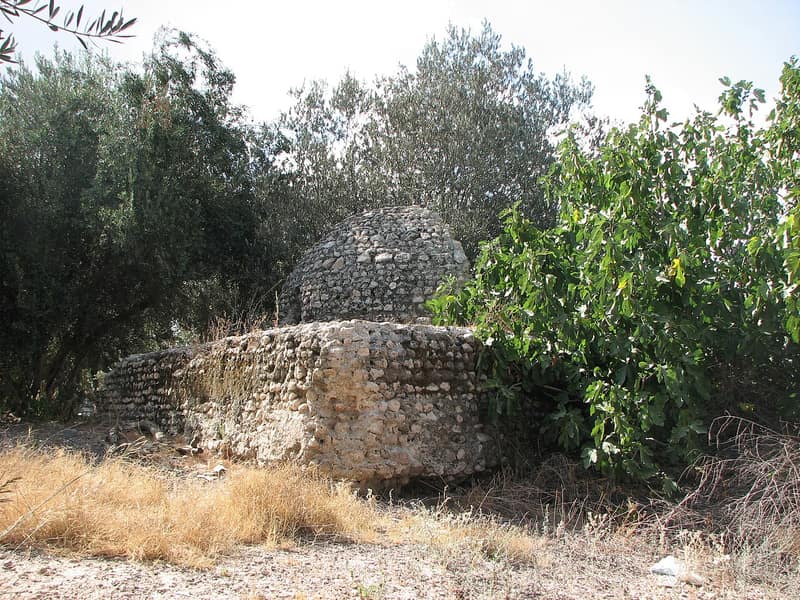
Bayt Darras lay on the coastal plain thirty-two kilometers northeast of Gaza, its flat fields rising westward into a low hill where the Crusaders had built a castle and the Mamluks a khan on the mail route between Gaza and Damascus. By 1945 it was a town of 2,750 people, all Muslims, with two mosques, two elementary schools, and more than sixteen thousand dunams planted in grain, citrus, and bananas.
The town was attacked from the first months of the war: a mortar bombardment on 27–28 March 1948 killed nine villagers, according to the commander of the area’s Arab militia, and set fire to crops and livestock. In May the Givati Brigade, opening Operation Barak, bombarded Bayt Darras again and stormed it despite its defense by Sudanese regulars and local militiamen; Benny Morris dates the fall of the town to 10 May, days before the Mandate ended, though Egyptian accounts place the occupation later. Most of its more than three thousand people fled south toward Gaza as their houses were blown up behind them — a flight that survivors, in the account of Bayt Darras native Ramzy Baroud, remember as a massacre. In the fighting after the first truce, Sudanese soldiers briefly retook the ruins, only to be shelled out of them by their own side after a signal error — an episode Gamal Abdel Nasser, then a staff officer, later recounted in his memoirs.
In 1950 the moshavim Giv’ati, Azrikam, and Emunim were established on the town’s lands. Of Bayt Darras itself, visitors in the 1990s found only the foundations of one house, scattered rubble, and a single recognizable street among the cactus and eucalyptus. The town survives instead in Gaza’s refugee camps, where its families have produced the writers Abdallah Tayeh and Ramzy Baroud and the singer Mohammed Assaf — a few miles away, across a closed border.
Sources
Cited works
3- palestineremembered.com — index(opens in a new tab)https://www.palestineremembered.com/Gaza/Bayt-Daras/index.html
- zochrot.org — en(opens in a new tab)https://www.zochrot.org/villages/village_details/49058/en
- palquest.org — bayt daras(opens in a new tab)https://www.palquest.org/en/place/16952/bayt-daras
Connected in the archive
34 connected records34 records elsewhere in the archive are linked to this one, each by a piece of evidence you can read below.
names this place — 4 records
One record names the other. A pointer for reading, not a claim that they belong to each other.
- Al-Sawafir al-Gharbiyyaالسَوافِير الغربية
Evidence — Inferred from the text — read the evidence: Its inhabitants were driven out either after the extensive attack on nearby Bayt Daras on 10 May 1948 or during the direct military attack on its sister village al-Sawafir al-Sharqiyya on 18 May; the village itself may also have been attacked that day, and Zochrot gives 18 May.
- Al-Sawafir al-Shamaliyyaالسوافير الشمالية
Evidence — Inferred from the text — read the evidence: …PalQuest's account, following Khalidi, says the villagers may have been pushed out by the attack on nearby Bayt Daras on 10 May, which was preceded by a mortar attack, but that it is more likely they left during an attack on the village itself that led to its capture on 12 May, along with nearby Bashshit, according…
- Al-Sawafir al-Sharqiyyaالسَوافِير الشرقية
Evidence — Inferred from the text — read the evidence: PalQuest records that the Sixth Battalion was ordered to retake the village when the truce ended on 9 July, but that the planned advance stalled at Bayt Daras.
- Yasurياصُور
Evidence — Inferred from the text — read the evidence: During the Mamluk period it was a station on the postal route between Gaza and Damascus; the station was later moved to Bayt Daras.
in the same district — 30 records
Filed near each other — the same Mandate district, or the same uncommon subject tags.
- 'Iraq al-Manshiyyaعِراق المَنْشِيَّة
Evidence — From a recorded field in this archive: Both recorded in the Gaza district.
- Al-Falujaالفالوجة
Evidence — From a recorded field in this archive: Both recorded in the Gaza district.
- Al-Jiyyaالجِيَّة
Evidence — From a recorded field in this archive: Both recorded in the Gaza district.
- Al-Juraالجُورَة
Evidence — From a recorded field in this archive: Both recorded in the Gaza district.
- Al-Majdalالمجدل
Evidence — From a recorded field in this archive: Both recorded in the Gaza district.
- Al-Masmiyya al-Kabiraالمَسْمِيَّة الكَبِيرَة
Evidence — From a recorded field in this archive: Both recorded in the Gaza district.
- and 24 more
Cite this page
Every claim above carries its sources — citation is the point.
- Chicago
“Bayt Darras.” Village Memory, FALASTEEN.AI. Accessed 22 August 2026. https://falasteen.ai/memory/bayt-darras.- MLA
“Bayt Darras.” Village Memory, FALASTEEN.AI, 2026, https://falasteen.ai/memory/bayt-darras. Accessed 22 August 2026.- BibTeX
@misc{falasteen-bayt-darras,
  title        = {Bayt Darras},
  howpublished = {\url{https://falasteen.ai/memory/bayt-darras}},
  organization = {FALASTEEN.AI — A Living Archive for Palestine},
  year         = {2026},
  note         = {Accessed 2026-08-22}
}